
As an Amazon Associate I earn from qualifying purchases.
If your cat’s been dealing with digestive issues or just seems a little off, probiotics for cats might be the missing piece in their health routine. These good bacteria support your cat’s gut health just like they do for us. Let’s be honest—when our cats aren’t feeling great, most of us will try anything to help.
Probiotics for cats come in all sorts of forms. Powders you sprinkle on food, treats they might actually want to eat—there’s something for every feline personality. These supplements contain live microorganisms that help balance the good and bad bacteria in your cat’s digestive system.
The right probiotic can help with everything from loose stools to supporting their immune system. About 70% of immune function starts in the gut, so it’s pretty important.
Choosing the right probiotic for your cat can get confusing fast. You’ll want to check the number of live cultures (CFUs), the types of bacterial strains, and make sure it’s formulated for cats—not dogs or humans.
Some need refrigeration, others are shelf-stable. I spent weeks comparing and researching cat probiotics to find the ones that actually deliver results without costing a fortune.
Best Probiotics for Cats
I’ve tested a bunch of probiotics for cats to find the ones that genuinely work for digestive health and overall wellness. These picks have proven themselves for supporting gut health and the immune system.
Pro Plan FortiFlora
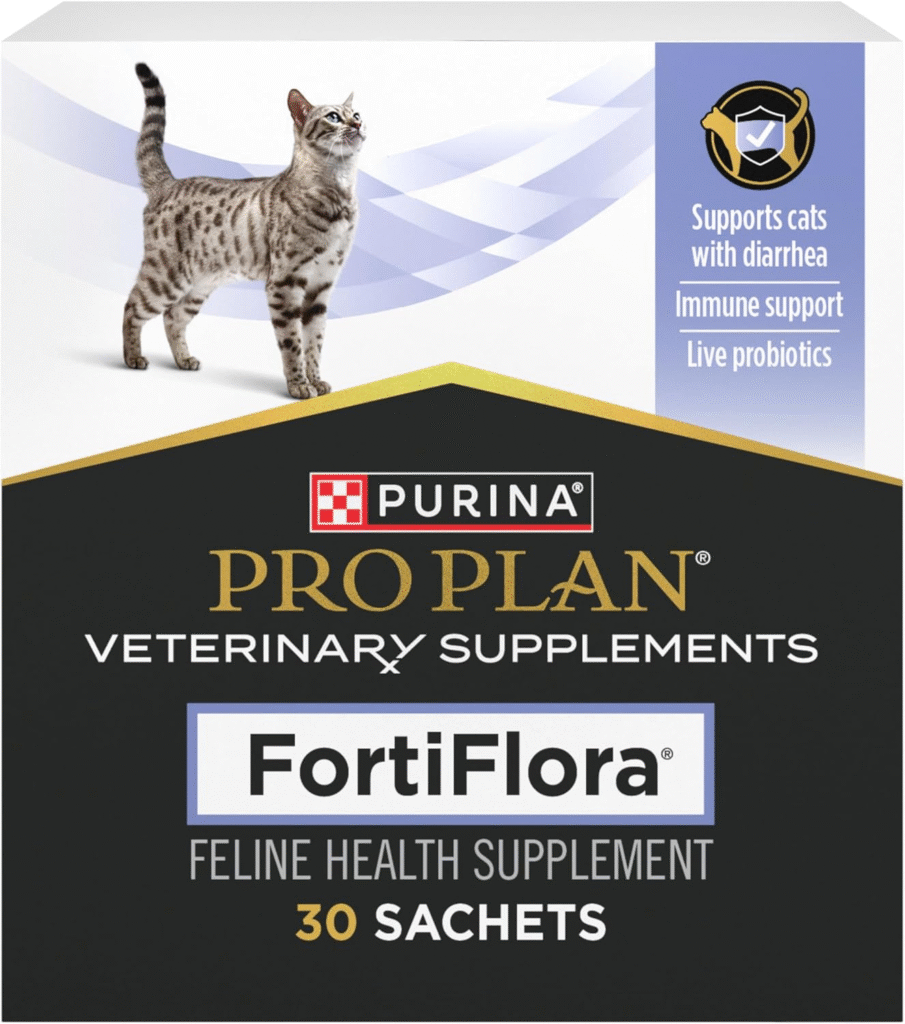
This vet-recommended probiotic powder works fast for cats with digestive issues, though you’ll pay premium prices for the convenience.
Pros
Cons
I tried Pro Plan FortiFlora when my cat had stomach troubles after switching foods. The results honestly surprised me with how fast they showed up.
Within three days, my cat’s loose stools firmed up completely. She seemed more comfortable after meals and stopped that anxious pacing she’d been doing. The powder has a slightly sweet smell that cats seem to love—mine actually got excited when she saw me reach for the packet.
Each box has 30 individual packets, which makes dosing super simple. I just sprinkle one packet over her wet food and mix it in. The powder dissolves easily and doesn’t change the texture of her meal.
The biggest downside hit my wallet. At about $25 for a month’s supply, this gets pricey if your cat needs probiotics long-term. I also wish it had more probiotic strains since other products offer a wider variety of beneficial bacteria.
The packets work great for short-term digestive issues or post-antibiotic recovery. For ongoing gut health, I might look for a more budget-friendly option that still delivers decent results.
Nutramax Proviable Probiotics
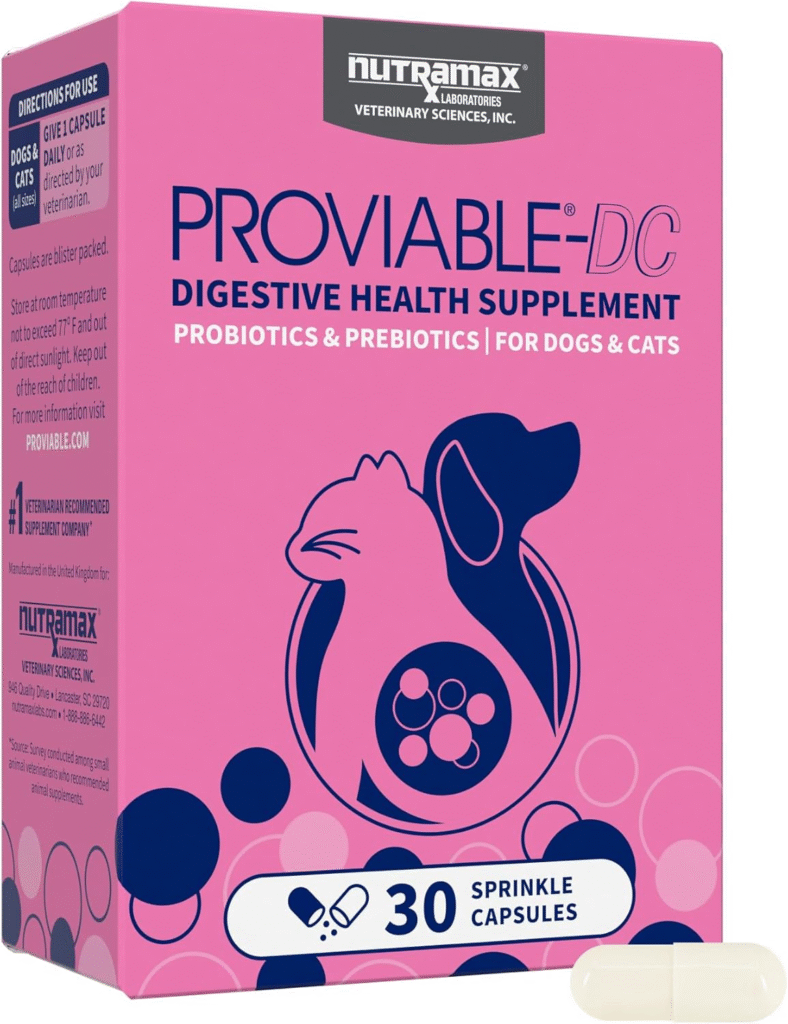
This vet-recommended probiotic delivers real results for cats with digestive issues, though the capsule format might challenge picky eaters.
Pros
Cons
I’ve been using Nutramax Proviable for my cat’s sensitive stomach, and the results impressed me within the first week. My tabby had been dealing with loose stools after a diet change, and this probiotic helped normalize everything quickly.
Opening the capsules takes a bit of practice, but sprinkling the powder onto wet food works well. The powder barely has any smell, which helps with finicky cats. I noticed my cat’s litter box visits became more regular and less messy after just a few days.
What I like most is that this contains prebiotics along with the beneficial bacteria. My vet explained that prebiotics feed the good bacteria, making the supplement more effective. The 5 billion CFUs per capsule seems like the right amount—not too much, not too little.
The biggest downside is convincing picky cats to eat their food with the powder mixed in. I had to try different wet foods to find one that masked the texture change. Also, at one capsule a day, the 30-count bottle runs out pretty fast if you’re using it long-term.
CK Formulations S. Boulardii + FOS
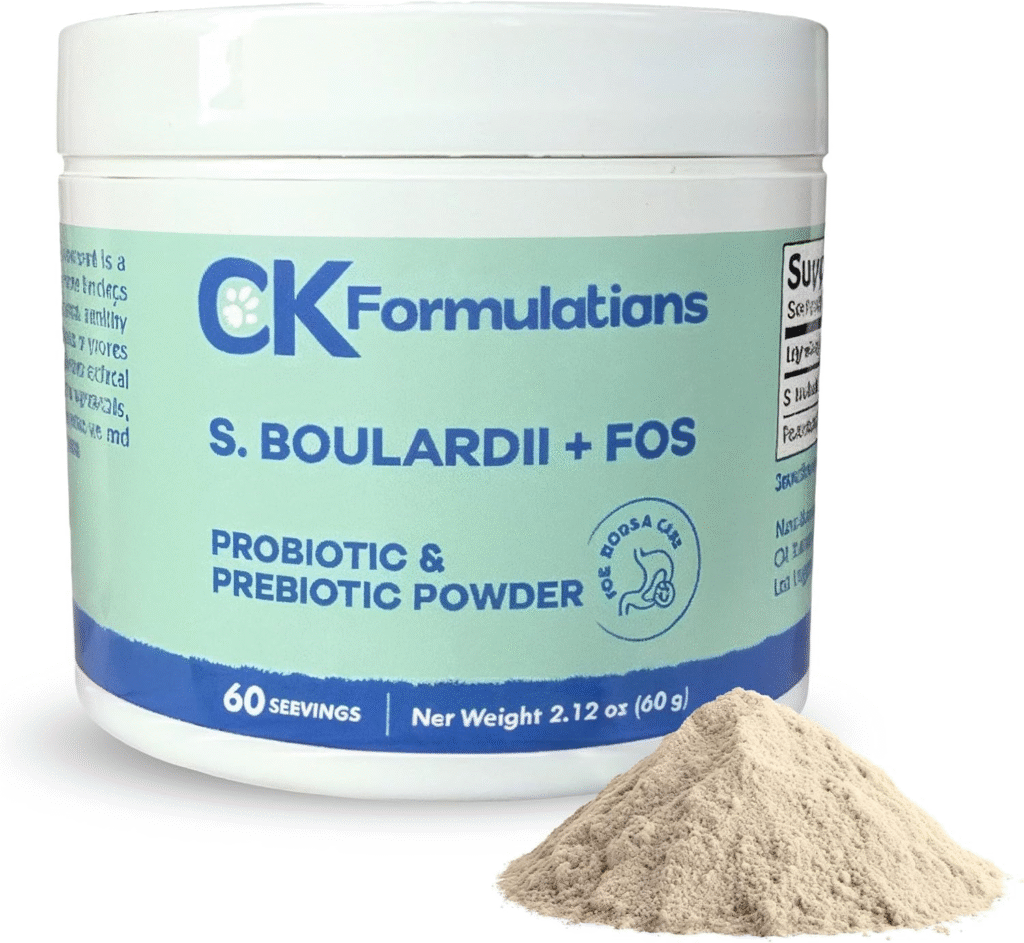
I found this probiotic blend helpful for cats with digestive issues, though the powder format requires careful mixing.
Pros
Cons
When my friend’s cat started having digestive troubles, I recommended this S. Boulardii probiotic blend. The combination of beneficial yeast and prebiotic FOS caught my attention because it targets gut health from two angles.
I’ve used this supplement with several cats now. The powder dissolves well in wet food, but some finicky eaters notice the texture change. I had better luck sprinkling small amounts over their favorite treats first.
The results showed up within three days. Loose stools became firmer, and the cats seemed more comfortable after meals. What I like most is that S. Boulardii survives stomach acid better than typical probiotics, so more of the good stuff actually reaches the intestines.
The scoop makes dosing easy, though I wish the company gave clearer guidelines for different cat sizes. At two ounces, one container lasts about a month for an average cat, so it’s a reasonable investment for digestive health.
Pet Honesty Probiotics
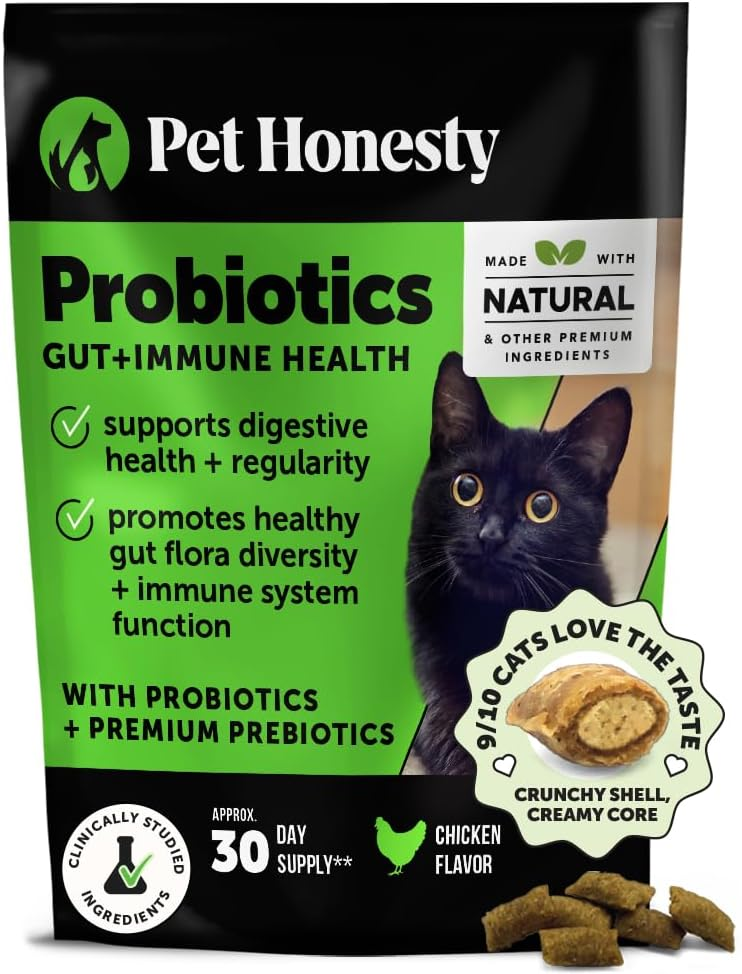
These probiotics for cats work well for digestive issues and my cats actually enjoy eating them as treats.
Pros
Cons
I was skeptical about probiotics until my long-haired tabby started having hairball problems. These Pet Honesty chews changed everything for us.
The first thing I noticed was how much my cat enjoyed them. She actually comes running when she hears me open the bottle. The chicken flavor really appeals to her, and the crunchy texture satisfies her need to chew on things.
Within three days of starting these probiotics, I saw a big difference in her digestion. The constant hairball coughing stopped completely. Her litter box situation also improved—no more loose stools or constipation issues.
I like that I can give these as treats instead of trying to mix powder into her food. The dosing is straightforward too. My 8-pound cat gets one chew daily, and I can split it between morning and evening if needed.
The only downside is the cost adds up fast if you have multiple cats. My friend with three cats spends quite a bit each month on these. I also wish they made smaller sizes for kittens since breaking the chews can be messy.
FANGCUN 3-in-1 Cat Probiotics
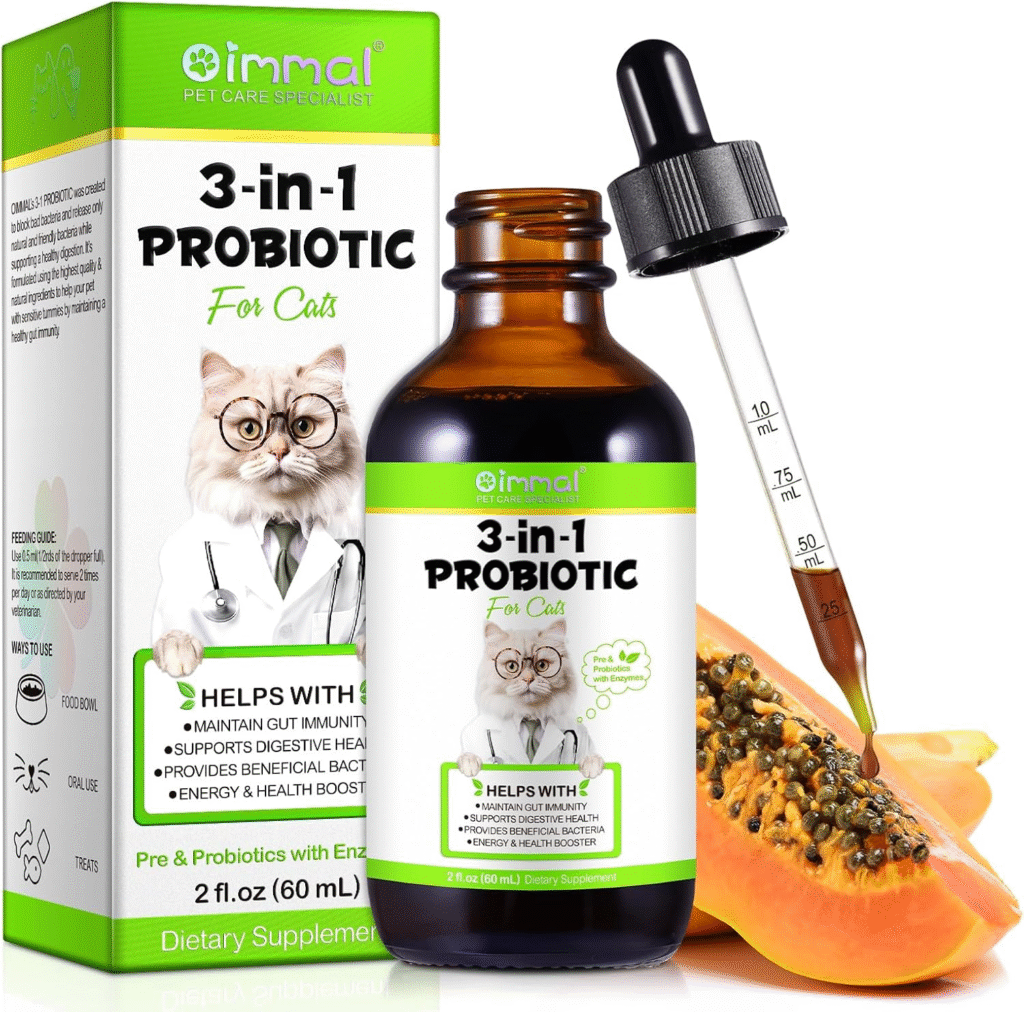
This liquid probiotic is worth a shot if your cat struggles with digestive issues. The thick consistency can make dosing a bit of a hassle, though.
Pros
Cons
I was honestly surprised by how much my cats liked this probiotic when I first tried it. The taste seems to be a real winner with most felines.
My pickiest eater actually licks it right off the dropper without any fuss. The formula works fast for digestive troubles.
I noticed fewer hairballs and firmer stools within the first week of use. One of my cats had soft stools, and this helped get things back to normal pretty quickly.
The dropper situation is annoying, though. The liquid is much thicker than I expected, so it’s tough to draw up into the dropper.
I had to keep a spare syringe handy because the included dropper kept clogging. Some users report getting bottles with cracked glass droppers right out of the box.
The 60ml bottle lasts about a month with daily use for one cat. I mix it into wet food most days, though my cats will take it straight if needed.
This one stands out for palatability despite the dispensing issues.
Buying Guide
When I’m shopping for probiotics for cats, I look at a few key factors to find the right product. The strain types, CFU count, and delivery method all matter for your cat’s health.
Probiotic Strains to Look For
I always check the label for specific bacterial strains. These proven options are worth seeking out:
- Enterococcus faecium – Supports digestive balance
- Lactobacillus acidophilus – Helps with nutrient absorption
- Bifidobacterium animalis – Boosts immune function
Multi-strain formulas usually work better than single-strain products. I prefer products that list the exact strain names, not just generic terms.
CFU Count and Potency
CFU stands for “colony forming units.” This number tells you how many live bacteria are in each dose.
| Cat Size | Recommended CFU |
|---|---|
| Small cats (under 8 lbs) | 1-5 billion |
| Medium cats (8-12 lbs) | 5-10 billion |
| Large cats (over 12 lbs) | 10+ billion |
I look for products with guaranteed potency through the expiration date. Some brands only guarantee potency at manufacturing time, which isn’t ideal.
Product Form Options
Powder: Mixes easily into wet food. Great for picky eaters.
Capsules: Easy to dose but harder to give to cats.
Treats: Cats love them, but may contain extra calories.
Paste: Simple to administer directly or mix with food.
Storage and Expiration
I check if the product needs refrigeration. Some probiotics for cats are shelf-stable, while others require cold storage.
Always verify the expiration date before buying. Fresh products just work better.
Frequently Asked Questions
Cat owners often wonder about giving probiotics to their furry friends and how these supplements can help with digestive problems. Pet parents also want to know if homemade options work as well as store-bought products.
What’s the scoop on the top probiotics for felines facing tummy troubles?
I’ve found that the best probiotics for cats contain specific strains like Lactobacillus acidophilus and Bifidobacterium animalis. These good bacteria help balance your cat’s gut health.
Look for products made just for cats. Human probiotics don’t work the same way for our feline friends.
The top brands I recommend include paste forms and powder supplements. They’re easy to mix into wet food.
Make sure the probiotic has at least 1 billion CFUs (colony forming units). That gives your cat enough good bacteria to make a difference.
You know that look your cat gives you when it’s not feeling great? Could DIY probiotics be the answer?
Plain Greek yogurt can work as a natural probiotic for some cats. But many cats can’t digest dairy well, so this isn’t always the best choice.
Fermented pumpkin is another option I’ve seen work. You can make this at home, but it takes time and the right process.
Honestly, I think store-bought probiotics for cats work better than homemade versions. They’re made specifically for feline digestive systems.
If you want to try DIY options, talk to your vet first. They can tell you if it’s safe for your specific cat.
Ever seen your furball experience discomfort during bathroom breaks? What can probiotics do for them?
Probiotics for cats can help with both loose stools and constipation. They work by adding good bacteria to the digestive tract.
When your cat’s gut bacteria is balanced, food moves through their system at the right speed. This means more normal bowel movements.
I’ve noticed that cats with digestive issues often feel better within a few days of starting probiotics. But it can take up to two weeks to see full results.
The good bacteria also help break down food better. This reduces gas and bloating that might make bathroom time uncomfortable.
Got a kitty with a sensitive stomach? Here’s what you need to know about natural remedies.
Probiotics for cats are one of the gentlest ways to help sensitive stomachs. They don’t have harsh chemicals or side effects like some medicines.
Start with a small dose and work up slowly. This helps your cat’s system adjust without causing more upset.
I always suggest giving probiotics with food. This protects the good bacteria as it travels through your cat’s digestive system.
Some cats with sensitive stomachs do better with specific probiotic strains. Your vet can help you pick the right one for your kitty.
Do those powdered supplements really work wonders on whiskered friends with digestive issues?
Powdered probiotics for cats can be very effective when used correctly. The key is finding a high-quality product with live bacteria.
I like powder forms because they’re easy to mix into wet food. Most cats don’t even notice they’re there.
Make sure to store the powder in a cool, dry place. Heat and moisture can kill the good bacteria before your cat gets them.
Look for powders that don’t need refrigeration. These tend to have more stable bacteria that survive better in your cat’s digestive system.
Curious about the perks of probiotics for your purring pal? What makes them a smart choice for cat owners?
Probiotics for cats do more than just fix digestive issues—they help keep your cat’s gut running smoothly all the time.
They can even help prevent future tummy troubles, which is honestly a relief if you’ve dealt with a sick cat before.
I’ve noticed cats seem to have stronger immune systems after taking probiotics regularly. Did you know about 70% of a cat’s immune function happens right there in the gut?
Probiotics come in handy for cats on antibiotics, too. Antibiotics wipe out both good and bad bacteria, so probiotics step in to restore some balance.
Plenty of cat owners say probiotics help cut down on hairball issues. When digestion works better, hair just moves through more easily.