
As an Amazon Associate I earn from qualifying purchases.
Probiotics for dogs might sound like another wellness trend, but these beneficial bacteria can genuinely transform your pup’s digestive health and overall well-being. I’ve watched so many dog parents struggle with their furry friends’ stomach issues, from loose stools to constant gas that clears the room.
That’s where probiotics step in as tiny but mighty allies. These live microorganisms help restore balance to your dog’s gut microbiome.
Think of them as reinforcements for the good bacteria already living in your pup’s digestive system. When stress, antibiotics, or diet changes throw things off, probiotics can help get things back on track.
They support immune function and improve nutrient absorption. Some even help with skin conditions.
The key factor to consider when choosing probiotics for dogs is the number and types of bacterial strains, plus the colony-forming units (CFUs) count. Check the expiration date and storage requirements—these are live organisms, and they can die if not handled properly.

The delivery method matters too. Whether it’s powder, chews, or capsules, that can affect how well your dog tolerates and absorbs the supplement.
I spent weeks researching and comparing dozens of dog probiotic supplements. I wanted to find the ones that deliver real results for digestive health and overall wellness.
Best Probiotics for Dogs
I’ve tested dozens of probiotics for dogs to find the ones that actually work for digestive health and immune support. My top picks below are based on ingredient quality, effectiveness, and real results from pet parents who’ve tried them with their pups.
Pro Plan FortiFlora
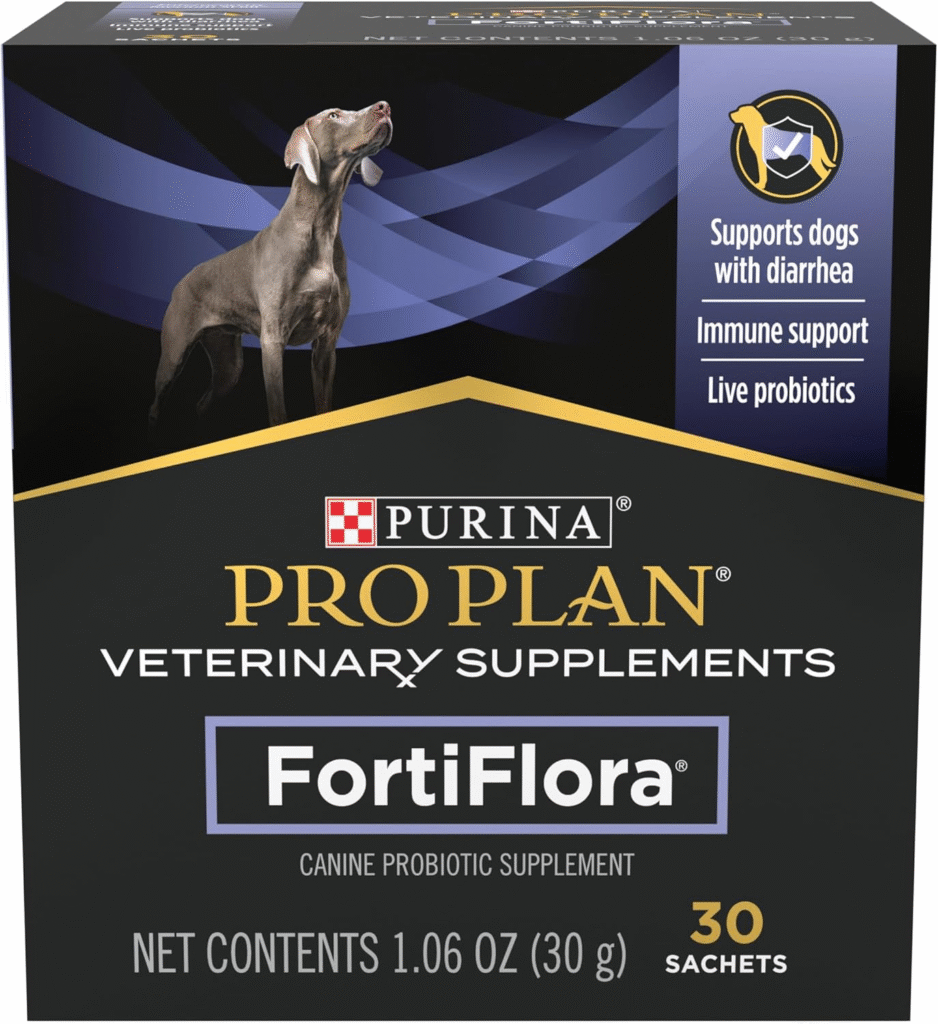
I recommend this probiotic for dogs dealing with digestive issues since it works fast and vets trust it.
Pros
Cons
I’ve used Pro Plan FortiFlora with three different dogs over the years. Each time I had a pup with loose stools or stomach upset, this powder got things back to normal fast.
The individual packets make dosing simple. I just tear one open and sprinkle it over my dog’s regular food.
Most dogs seem to like the taste, though one of mine was picky about it at first. What impressed me most was how quickly it worked.
Within 48 hours, my lab mix went from having messy accidents to normal, firm poops. My vet explained that the specific strain in FortiFlora helps restore gut balance.
The price makes me wince a bit. A 30-count box costs more than some monthly supplements.
But when your dog is having digestive troubles, you want something that actually works. I’ve tried cheaper alternatives that didn’t deliver the same results.
I keep a box on hand now for emergencies. If one of my dogs gets into something they shouldn’t or has stress-related stomach issues, I know this probiotic will help get their system back on track.
TzzyiC Probiotic Chews
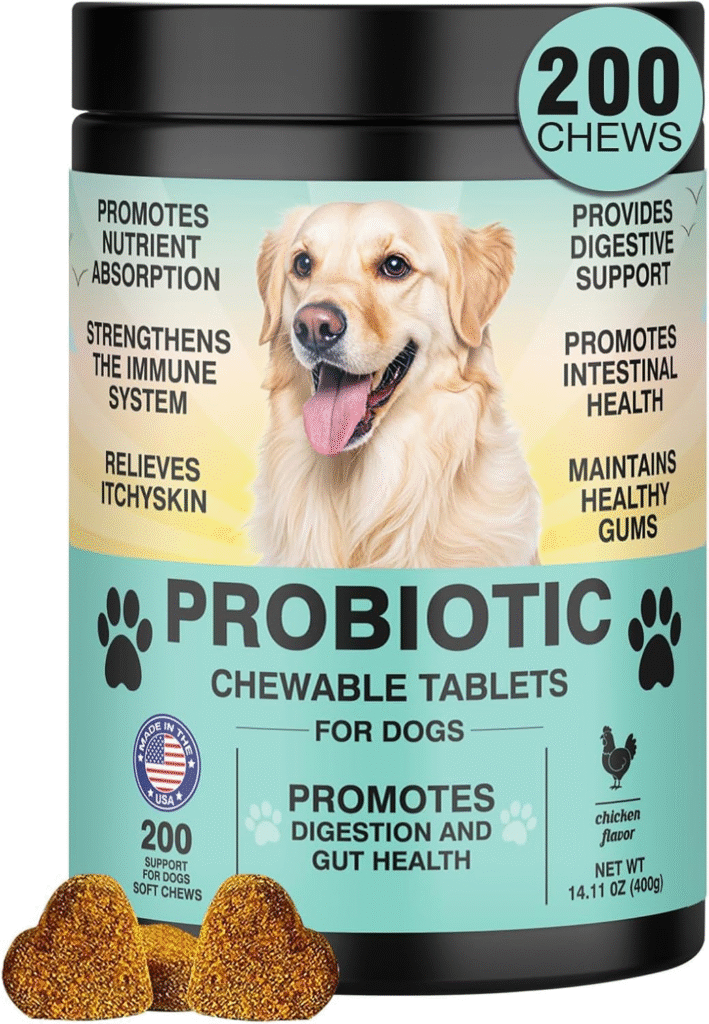
These chicken-flavored probiotic chews are worth buying if you want an easy way to support your dog’s gut health and overall wellness.
Pros
Cons
I’ve been giving these TzzyiC probiotic chews to my dog for about a month now. What I love most is how easy they are to give.
My pup thinks he’s getting a special treat every day, so there’s no struggle or hiding pills in food. The results have been impressive.
Within the first week, I noticed his digestion got more regular. No more loose stools or constipation issues that used to worry me.
His breath also smells much fresher, which was an unexpected bonus. My dog’s energy levels picked up after about two weeks on these probiotics for dogs.
He seems more comfortable overall, and that itchy spot he used to scratch constantly has gotten much better. The fact that they’re made in the USA gives me extra confidence in what I’m feeding him.
The only downside is that the chews are pretty soft, so they can get a bit messy if you’re not careful. They also cost more than basic probiotics, but I think the quality ingredients like pumpkin and inulin make it worth the extra money.
Petsology Probiotic Chews
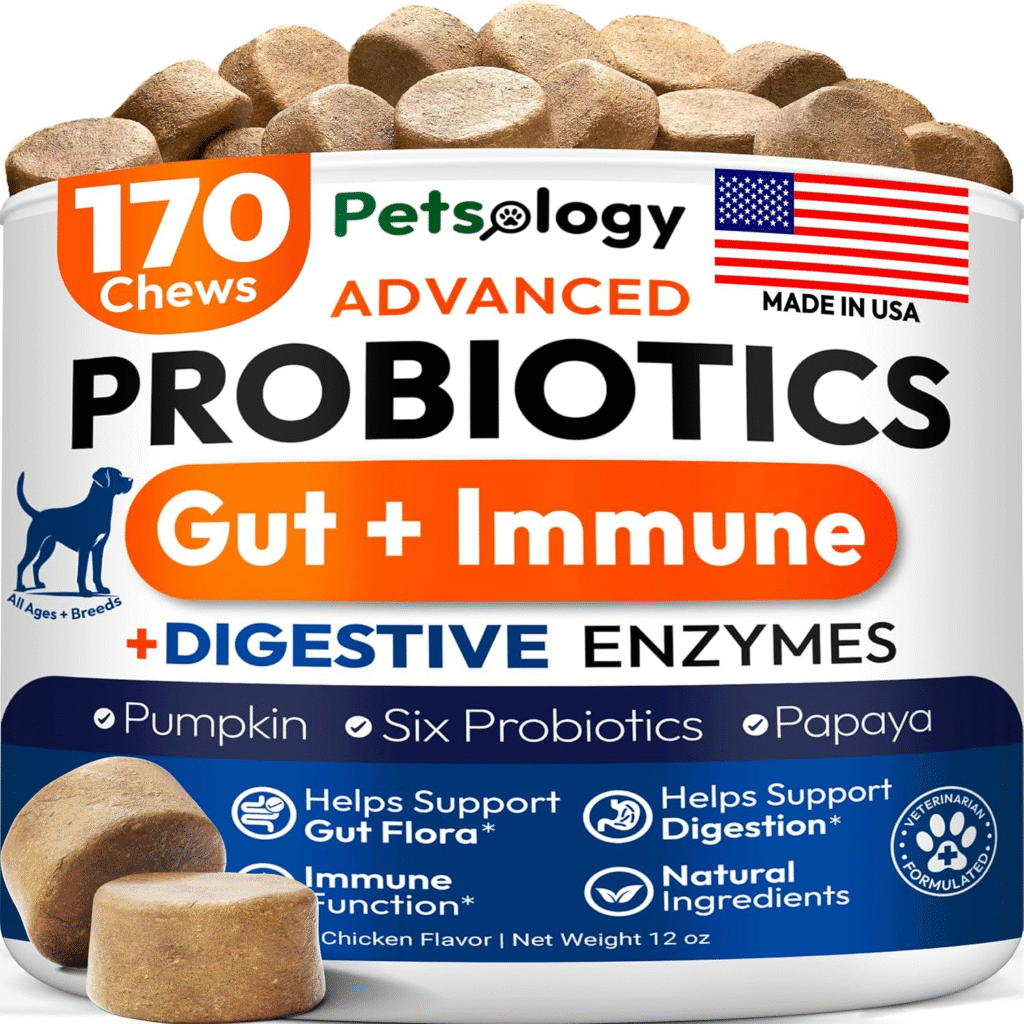
These chicken-flavored probiotic chews deliver solid digestive support with the convenience of treating your pup to what tastes like a regular snack.
Pros
Cons
I’ve been testing these probiotics for dogs with my own pup for about a month now. The biggest win? She thinks they’re treats.
No more wrestling to get supplements down or hiding pills in peanut butter. Within the first two weeks, I noticed her stomach wasn’t making those gurgling sounds after meals.
The gas situation improved dramatically too, which my family definitely appreciated during movie nights. What impressed me most was how comprehensive this formula is.
Instead of buying separate digestive enzymes and prebiotics, everything comes packed into these soft chews. My dog’s energy levels picked up around week three, and her coat started looking shinier.
The chicken flavor really does work. She actually gets excited when she sees the bottle, which makes my morning routine so much smoother.
I appreciate that these are made in the USA with veterinary input on the formula. The main downside is patience.
Don’t expect overnight miracles with digestive issues. It took nearly a month to see the full benefits, and the 170-count bottle is pretty large if you’re just wanting to try probiotics for the first time.
Zesty Paws Probiotics for Dogs
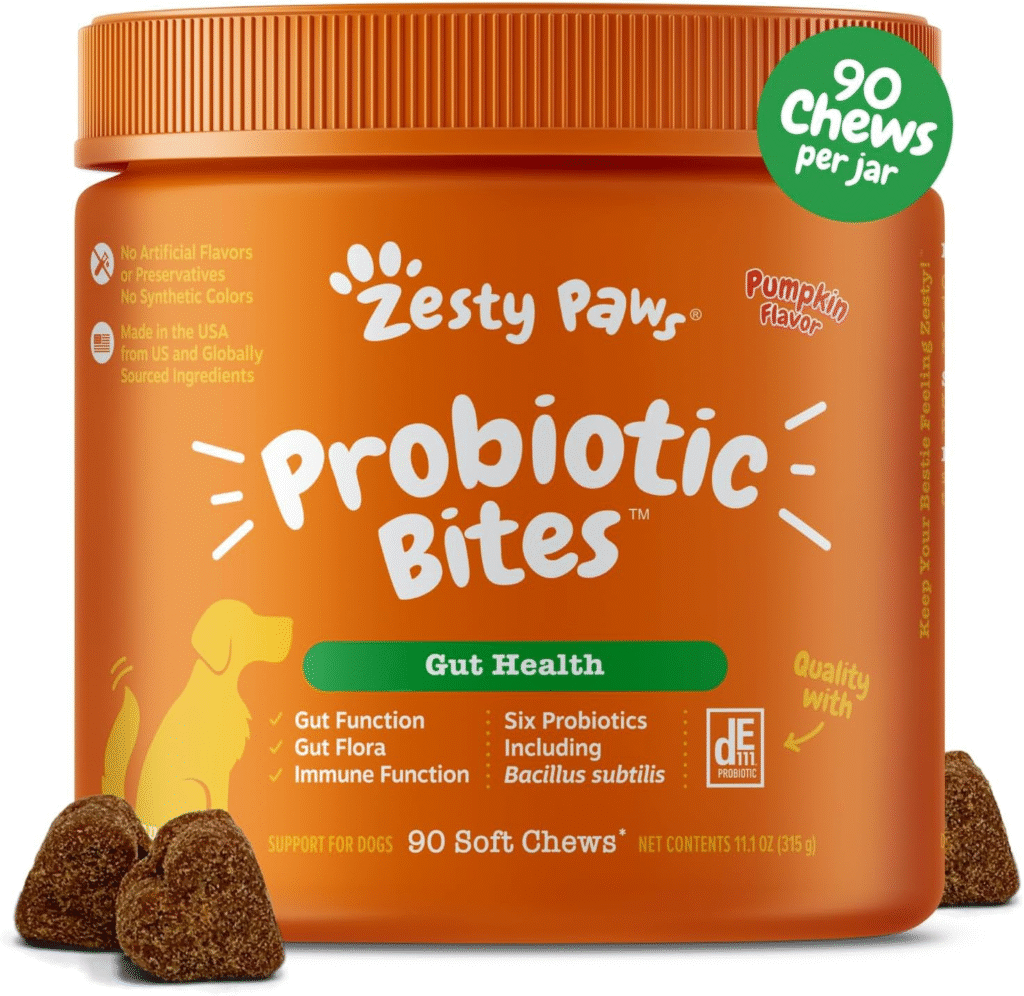
These pumpkin-flavored probiotics work well for most dogs with tummy troubles, though they might be too strong for sensitive pups.
Pros
Cons
I’ve been giving these probiotics for dogs to my own pup for the past month. He gobbles them up like treats, which makes my life easier since I don’t have to hide pills in his food.
The results impressed me within the first week. My dog’s loose stools became much more solid, and he stopped having those embarrassing gas episodes during family dinners.
The pumpkin flavor seems to be a real hit with most dogs I know. What I like about this formula is how it combines six different probiotic strains with natural digestive enzymes.
The DE111 strain is clinically studied, which gives me more confidence in what I’m feeding my dog. The pumpkin and papaya base provides natural enzymes that work alongside the probiotics.
I did notice these chews work pretty fast, maybe too fast for some dogs. I started with the full dose right away and my dog had some extra bowel movements the first few days.
Now I tell other dog parents to start with half doses like the directions suggest. Storage can be tricky with these soft chews.
I tried keeping them in the fridge to stay fresh, but they turned rock-hard. Now I store them at room temperature and they stay soft enough to break in half for smaller dogs.
The timing of my order was concerning though. I received my bottle just one month before the expiration date, which doesn’t give much time to use 90 chews safely.
Pet Naturals Daily Probiotic
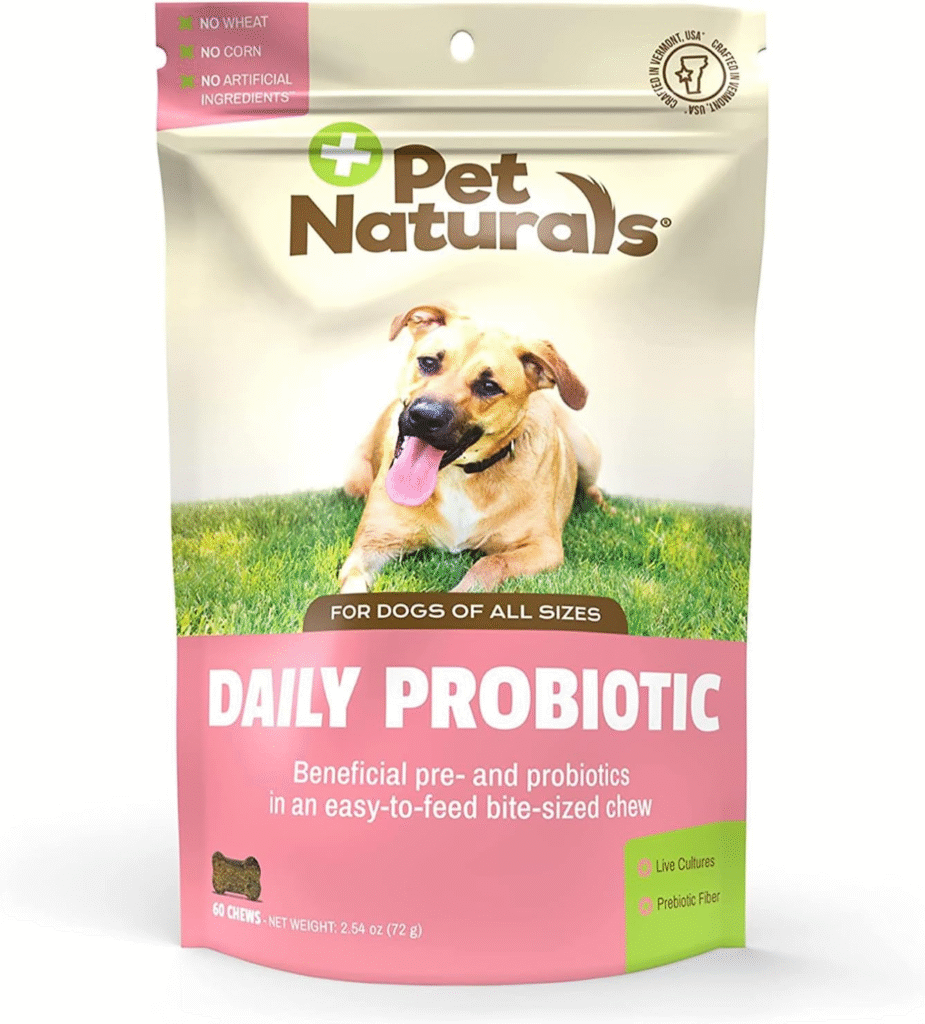
If your dog’s got digestive issues, I’d give these probiotics a shot. They don’t work for every single pup, but honestly, they helped mine a ton.
Pros
Cons
I’ve had my dog on these probiotics for a few weeks now. The change? Pretty noticeable.
He thinks they’re treats, so I don’t have to sneak them into his food. No more wrestling him or hiding pills in cheese.
The digestive improvement showed up fast. After just a couple days, his gas wasn’t keeping us up at night anymore.
He used to lick his paws constantly, but that stopped after starting these chews. That was a relief for both of us.
They’re gentle on his stomach, which I really appreciate. The duck flavor keeps him interested, and I like that there’s no corn, wheat, or weird additives.
Dosing is easy—one chew per 25 pounds. Simple math, nothing fancy.
But, they’re not a magic fix for everything. If you’re hoping for a miracle with allergies, you might end up disappointed.
The chews are kind of big, so if you’ve got a tiny dog, you’ll probably need to break them up.
Buying Guide
There are so many probiotics for dogs out there, it gets overwhelming fast. I’ve found that focusing on a few things helps narrow it down.
What to Look for in Dog Probiotics
The CFU count is a big deal. I look for at least 1 billion CFUs per serving—more isn’t always better, but it’s a good starting point.
Make sure there are live cultures. If the label doesn’t say “live and active,” skip it. Dead bacteria won’t help your dog’s gut.
Expiration dates matter. Probiotics lose strength over time, so fresher is always better.
Strain Types That Work Best
Some strains just work better for dogs. Here are the ones I look for:
- Lactobacillus acidophilus
- Bifidobacterium animalis
- Enterococcus faecium
- Lactobacillus casei
Products with a mix of strains seem to help more than single-strain ones.
Forms and Storage
| Form | Pros | Cons |
|---|---|---|
| Powder | Mixes easily with food | Potency drops quickly if not stored right |
| Chews | Most dogs love the taste | Sometimes have unnecessary extras |
| Capsules | Stay stable longer | Picky dogs may refuse them |
Refrigerated probiotics usually have more live cultures. Room-stable ones are fine if the packaging keeps the bacteria alive.
Third-Party Testing
I always check for third-party testing. That means an outside lab checked the quality and CFU levels.
Vet recommendations are a good sign. If a vet backs a product, it probably meets higher standards.
I avoid anything packed with fillers or artificial junk—those just upset sensitive stomachs.
Frequently Asked Questions
Dog owners ask about making probiotics at home, which brands vets trust, and if human probiotics are safe for dogs. Folks also want to know about natural probiotic foods and what works best for tummy troubles.
What’s the lowdown on homemade brews for my pup’s gut health?
I get this one a lot. Honestly, homemade probiotics aren’t the best idea for dogs.
Your kitchen just isn’t sterile enough to grow safe bacteria cultures. Store-bought probiotics for dogs go through way more testing.
Homemade stuff can easily grow the wrong bacteria and make your dog sick. If you want to go natural, try a little plain Greek yogurt or kefir—but only in small amounts.
For real digestive help, stick with supplements your vet recommends.
Looking for the inside scoop on high-quality probiotics vets give a thumbs up?
Most vets recommend probiotics with strains like Lactobacillus and Bifidobacterium. Those have some actual research behind them.
Always check that the product lists the number of CFUs—1 billion per serving is a solid baseline.
I tell people to look for third-party testing on the label. That’s how you know what’s in the bottle is what’s promised.
Ever wondered about the secret perks of those tummy-friendly bacteria for your furry friend?
Probiotics do more than just settle digestion. They can give your dog’s immune system a boost, since most immune function starts in the gut.
A lot of dogs get shinier coats and healthier skin after taking probiotics. Good bacteria help cut down on inflammation, too.
Some studies even hint probiotics might help with anxiety and mood. The gut-brain link in dogs is real, just like in people.
Is Fido’s tummy running like a faulty faucet? What’s the best fix?
If your dog’s got sudden diarrhea, start with a probiotic paste or powder that acts fast. Look for stuff made for digestive upset.
Pair it with a bland diet—just boiled chicken and rice for a day or two. That gives the probiotics time to do their job.
If diarrhea keeps going for more than two days or you see blood, skip the supplements and call your vet. Sometimes you need real medical help, not just a probiotic.
When your dog gives you that ‘I’m not feeling great’ gaze, do you reach for the same probiotics you would?
Don’t give your dog human probiotics. Our guts are different, and what helps us can actually hurt them.
Some human probiotics have xylitol or other stuff that’s toxic to dogs. Even the “natural” ones might cause problems.
Stick with products made for dogs. They’ve got the right strains and safe ingredients for your pup’s digestion.
Do those furry buddies relish natural probiotic snacks like we enjoy a good smoothie?
Most dogs go wild for plain Greek yogurt. It’s packed with natural probiotics.
Just offer a tablespoon or two as an occasional treat. Don’t overdo it—too much dairy can upset their stomachs.
Kefir is another option dogs usually like. It actually has more probiotic strains than yogurt.
Still, stick to small amounts. You don’t want to risk a mess on your rug.
Some folks try fermented veggies, like sauerkraut, but only if there’s no salt or garlic. Honestly, I’d stick with dairy since it’s safer and most pups seem to prefer the taste anyway.