

Ever wonder if your cat’s regular food covers all their nutritional needs? Cat vitamins and supplements can fill nutritional gaps and support your feline friend’s overall health and immune system—if you pick the right ones.
Cats, like us, sometimes need extra support for specific health issues or life stages. Supplements come in all sorts of forms, from basic multivitamins to formulas for joints, digestion, or immune health.
Some cats get shinier coats with omega fatty acids. Others need probiotics for their stomachs.
Understanding your cat’s unique needs is key. Finding quality products that actually help—that’s the tricky part.
Table of Contents
When shopping for cat vitamins and supplements, safety and proper dosing matter most. Always check that a product is made for cats; some human or dog supplements can be downright dangerous for them.
Look for third-party testing, clear ingredients, and dosage instructions based on your cat’s weight. We dug into dozens of cat vitamins and supplements to find ones that really help without unnecessary fillers or sketchy stuff.
Best Cat Vitamins and Supplements
Here’s our list of the best cat vitamins and supplements we’ve tested and reviewed. These health products can boost your cat’s immune system and fill those little nutritional gaps.
Pet Honesty Cat Multivitamin Chews
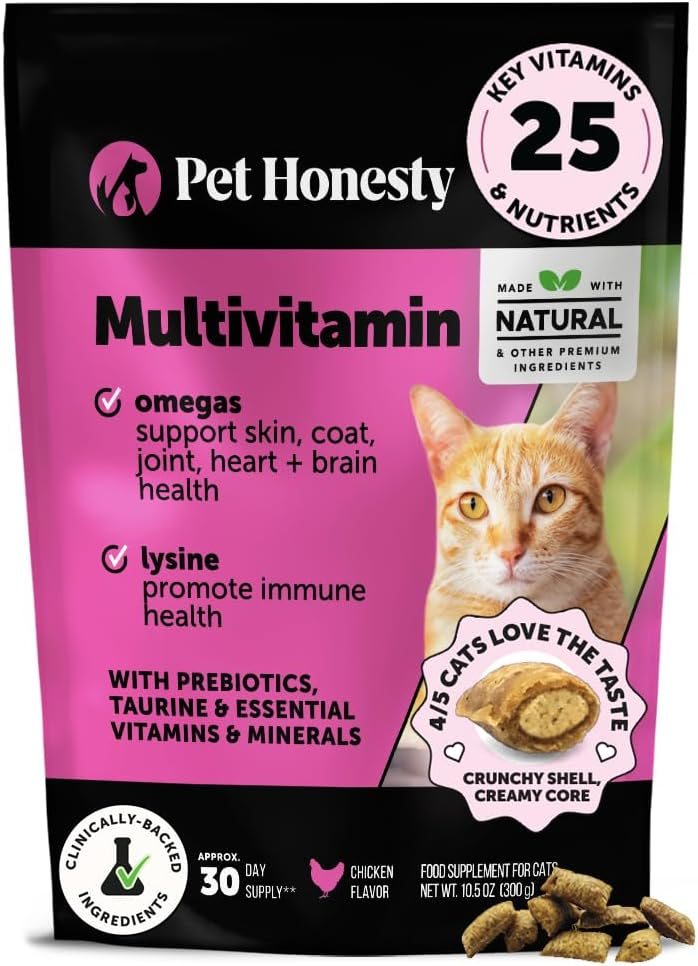
These crunchy-outside, creamy-inside chews somehow win over even the pickiest cats. They deliver real nutritional support for overall health.
Pros
Cons
We’ve tried these chews with several cats, and honestly, the texture makes a difference. The crunchy shell and creamy center seem to be a hit.
Even our pickiest cat, who usually sniffs and walks away from anything healthy, actually asks for these.
The ingredients are impressive. Lysine helps immune function, and omega-3s from different sources boost coat shine and joint comfort.
We saw more energy in our senior cat after a few weeks of regular use.
The dosing can be a pain, though. Our 15-pound cat would technically need 15 chews a day, which feels like a lot.
We tried giving half the recommended amount and still saw benefits, so maybe don’t stress if you can’t hit the full dose every day.
The chicken flavor works for most cats, but if your cat can’t have poultry, you’ll have to skip these. At about $30 per month, they’re not cheap, but the convenience is hard to beat when you’re busy.
VOSIFSDIY 15-in-1 Cat Multivitamin Drops
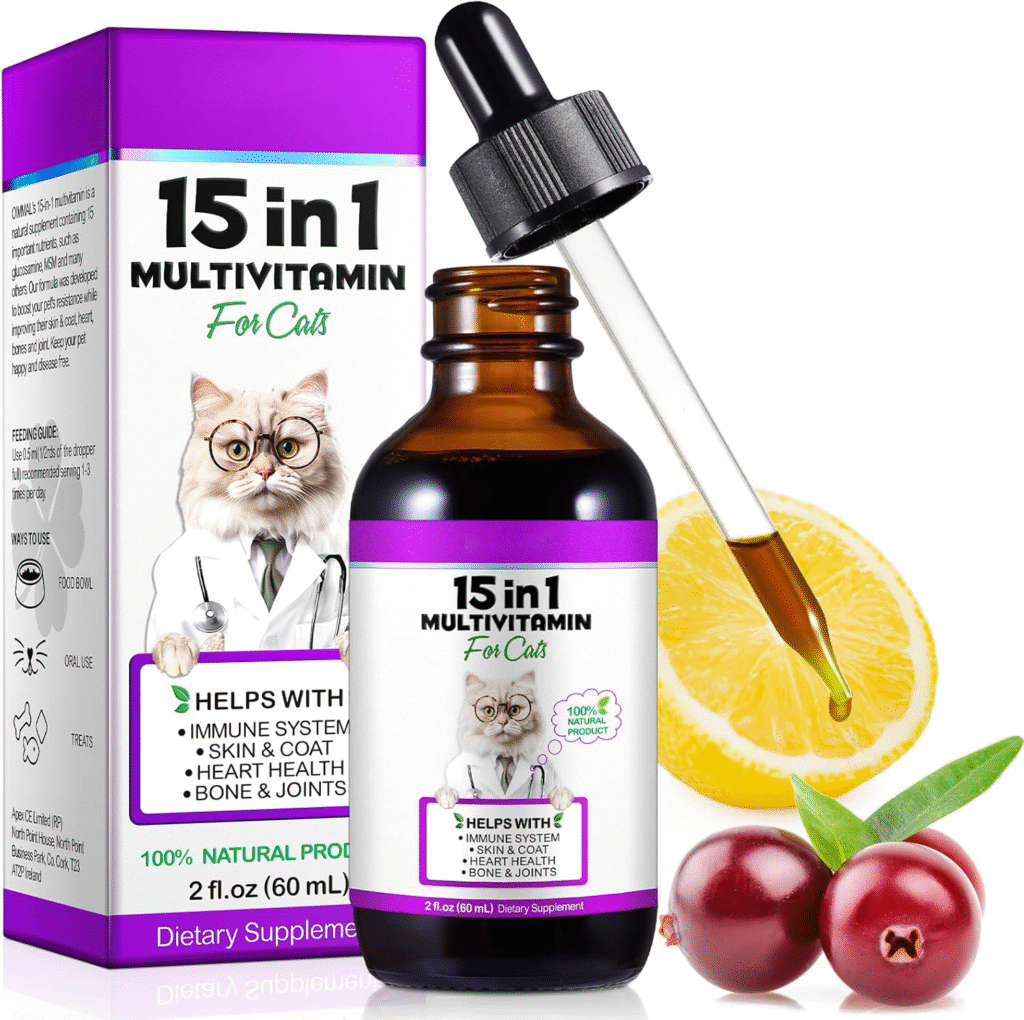
This liquid multivitamin is worth a shot for cats who need extra nutritional help, especially seniors or picky eaters who hate pills.
Pros
Cons
Let’s be honest—getting vitamins into cats can feel like wrestling a tiny tiger. We’ve been testing these drops for a month, and the biggest win is no more hiding pills in treats or getting suspicious glares.
The dropper works great for direct dosing. Our older tabby even licks it off the dropper, which surprised us.
Usually, we just mix it into wet food or that meat baby food cats go nuts for. Our 14-year-old Persian got more active after a couple of weeks—she started jumping up on her favorite windowsill again.
The joint support seems to help with stiffness. The cranberry extract for urinary health is a thoughtful addition.
One of our cats had bladder issues last year, so we like knowing she’s getting that extra support. The probiotics also helped with some digestive issues we’d noticed.
Our main complaint is the smell—definitely that classic vitamin scent. Most cats don’t care once it’s mixed with food, but a few were skeptical at first.
VOSIFSDIY 15-in-1 Cat Multivitamin Chews
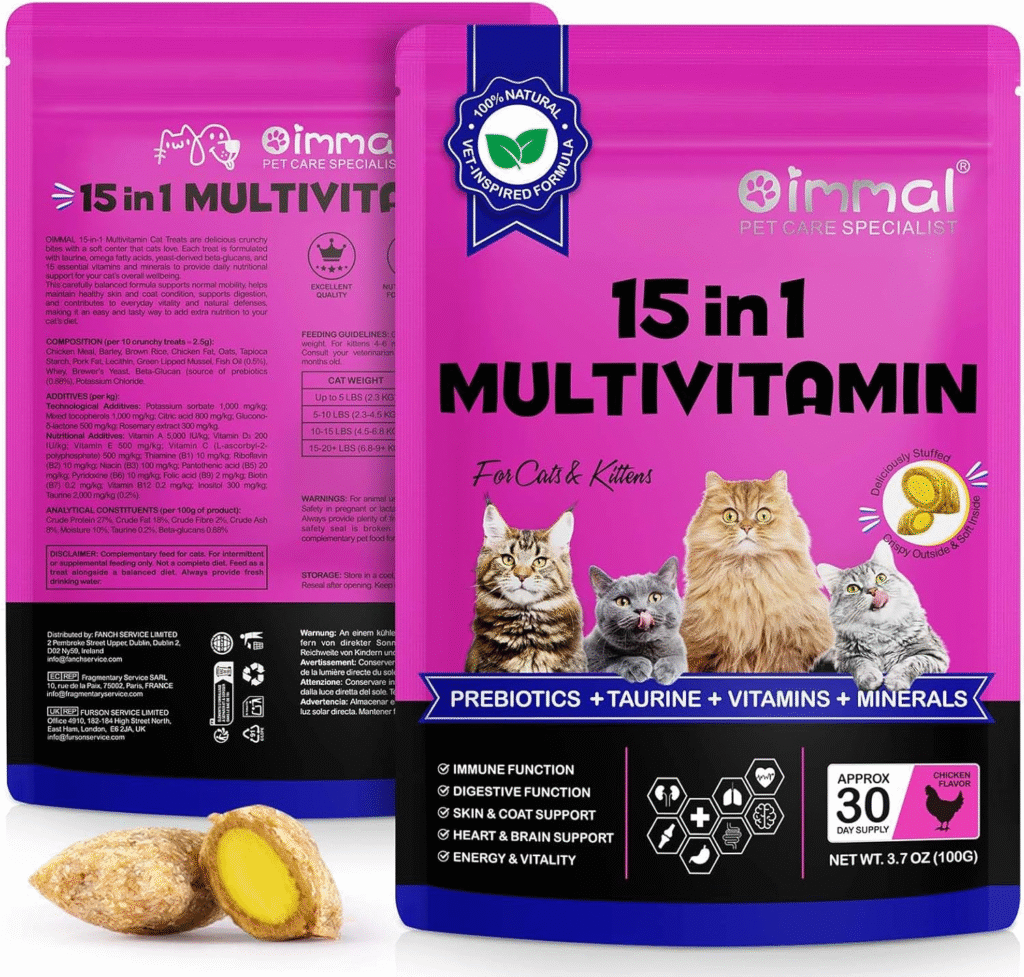
These all-in-one chews are worth a look if you want a single supplement to cover everything, though the tablet format might be a no-go for picky eaters.
Pros
Cons
We tried these chews with our indoor cats and liked the comprehensive approach. The 15-ingredient blend covers everything from probiotics to omega fatty acids.
Getting our cats to eat them was a challenge. Despite being called “treats,” the tablet format didn’t fool our pickiest eaters.
We had better luck crushing them into wet food than offering them whole. The digestive support stood out—our cats had better stool consistency within a week.
The prebiotic blend seemed to help sensitive stomachs. Joint mobility took longer to notice, but after three weeks, our senior cat moved more easily.
The green-lipped mussel extract seems to help with flexibility. We liked having heart, vision, skin, and immune support in one product, though we wish they listed exact ingredient amounts.
For cat parents who want a simple routine, the convenience wins out, despite that little uncertainty.
Cudory Cat Multivitamin Chews
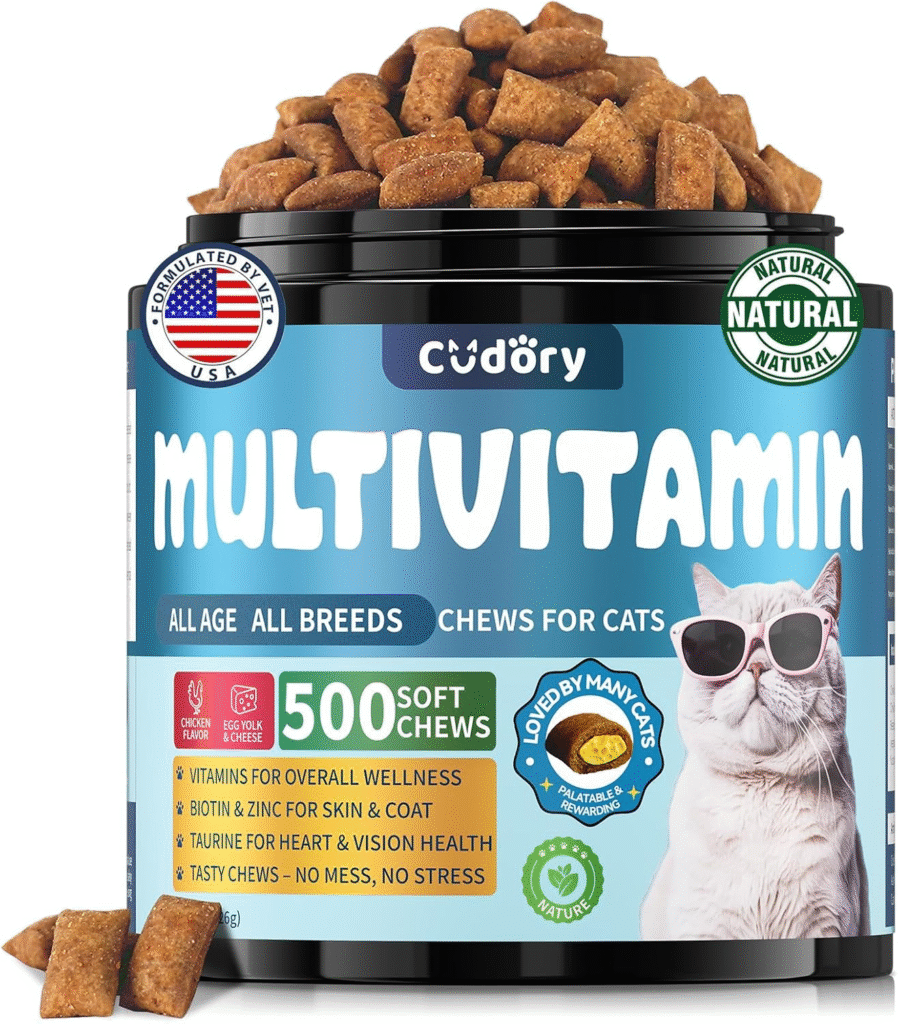
These soft chews make daily vitamins feel like treat time instead of a chore.
Pros
Cons
We’ve wasted plenty of cat vitamins over the years because our cats refused them. These Cudory chews changed that.
Our cats line up when we shake the container, which says a lot about the taste. The cheese and egg yolk flavor really works—even our pickiest eater came around.
We like that we can break them apart for smaller cats or mix them in food. After a month, our cats’ coats looked shinier, with less shedding around the house.
Their energy seemed steadier, especially our older cat who’d been slowing down. Dosing can get expensive for bigger cats since they need one chew per pound.
Our 12-pound Maine Coon goes through a lot, so we started splitting the dose between morning and evening. Storage turned into a real issue because our cats figured out where we kept them.
We had to move the container to a cat-proof cabinet after finding bite marks on the lid. Honestly, that’s a good problem to have with cat vitamins.
Wagmee Cat Multivitamin Chews
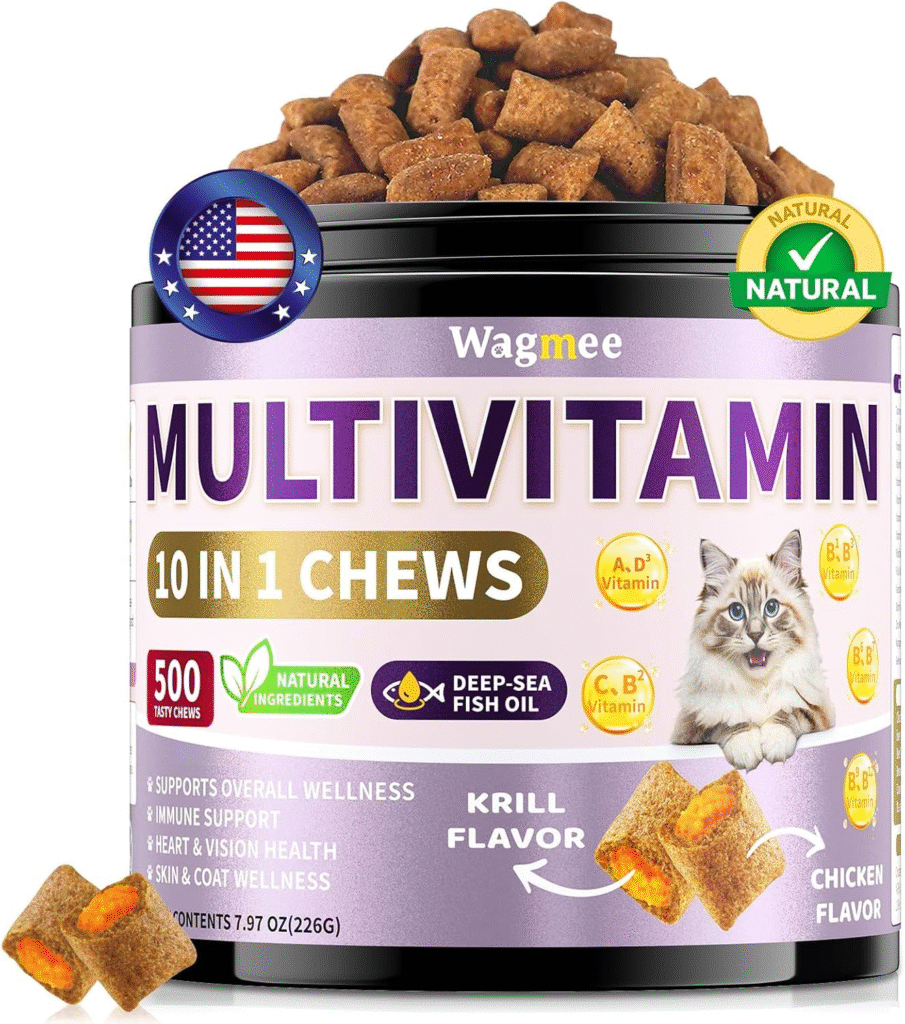
These crunchy chews pack 10 vitamins into treats that most cats actually want to eat. They make daily nutrition simple for busy pet parents.
Pros
Cons
We’ve tried dozens of cat vitamins over the years. These chews surprised us with how eagerly our cats gobbled them up.
The crunchy shell gives way to a soft center that smells distinctly fishy—exactly what our picky eaters craved.
What impressed us most was the comprehensive formula. The taurine supports heart function, while fish oil keeps coats shiny.
We noticed one of our senior cats seemed more energetic after a few weeks. The texture works for different feeding styles.
Some cats prefer them whole as treats. Others like them crumbled over dinner.
No more wrestling with liquid vitamins or hiding pills in food. However, the vitamin levels are lower than standalone supplements.
Cats with specific health needs might need extra targeted support. The manufacturing location in China also gives us pause, though the quality seems solid so far.
Cat Vitamins And Supplements – Buying Guide
Choosing the right cat vitamins and supplements can feel overwhelming. There are so many options out there.
We want to help you make the best choice for your feline friend’s health needs. Let’s break it down.
Know Your Cat’s Specific Health Needs
Start by talking to your vet about what your cat actually needs. Some cats need immune support, while others might benefit from joint health supplements.
Indoor cats often need different vitamins than outdoor cats. Senior cats have different needs than kittens.
Check the Ingredient List
Look for supplements with clear, simple ingredients you can pronounce. Avoid products with lots of fillers or artificial colors.
The best cat vitamins list the active ingredients first. Check that the amounts match what your vet recommended.
Quality Certifications Matter
| What to Look For | Why It Matters |
|---|---|
| Third-party testing | Ensures purity and potency |
| Made in USA/Canada | Higher manufacturing standards |
| NASC certification | Pet supplement quality seal |
Form and Delivery Method
Think about what your cat will actually take. We know how picky cats can be!
Soft chews work great for food-motivated cats. Powder forms mix easily into wet food.
Liquid supplements are perfect for cats who won’t eat treats. Sometimes you just have to experiment.
Age-Appropriate Formulas
Kittens need different vitamins than adult cats. Senior cats often benefit from joint support and immune boosters.
Make sure the supplement matches your cat’s life stage. Dosing varies by age and weight too.
Price vs Value
Expensive doesn’t always mean better, but very cheap supplements often lack quality. Look for products that offer good value with proven ingredients.
Buy from reputable pet stores or your vet’s office when possible. This helps ensure you’re getting authentic products that support your cat’s health.
Frequently Asked Questions
Cat owners often ask about immune support, coat health, and which supplements are safe for homemade meals. Others want to know about supplement powders and how to find trustworthy reviews.
What’s the secret to boosting your furry companion’s immune system through nutrition?
We’ve found that vitamin C and vitamin E work together to strengthen your cat’s immune system naturally. These vitamins help fight off infections and keep your kitty feeling strong.
Omega-3 fatty acids also play a huge role in immune health. They reduce inflammation and help your cat’s body respond better to threats.
Probiotics are another game-changer for immune support. These good bacteria live in your cat’s gut and make up about 70% of their immune system.
We recommend talking to your vet before adding any immune supplements. They can tell you which vitamins your cat actually needs based on their health and diet.
Have you ever wondered which vitamins might help your cat’s coat shine and eyes sparkle?
Biotin is the star vitamin for healthy fur and skin. This B vitamin helps your cat grow thick, shiny hair and keeps their skin from getting dry or flaky.
Vitamin A keeps your cat’s eyes bright and healthy. It also helps their night vision stay sharp as they age.
Omega-3 supplements make coats softer and reduce shedding. We see the best results with fish oil supplements made specifically for cats.
Zinc helps heal scratches and keeps fur growing strong. Many cats don’t get enough zinc from regular food alone.
You should see changes in your cat’s coat within 4-6 weeks of starting these vitamins. Their eyes might look clearer in just 2-3 weeks.
Curious about which supplements you can confidently add to your cat’s homemade meals?
Taurine is the most important supplement for homemade cat food. Cats can’t make this amino acid themselves, and without it, they get serious heart problems.
We always add calcium to homemade meals because cats need way more calcium than most people think. Bone meal powder works well for this.
Fish oil gives homemade meals the omega-3 fatty acids that store-bought foods often lack. Just use cat-specific fish oil, not the human kind.
A good multivitamin fills in any gaps you might miss in homemade recipes. Look for ones made specifically for cats, not dogs or humans.
Never add garlic, onions, or human vitamin D to cat food. These can poison your cat even in small amounts.
Thinking about cat supplement powders? Let’s talk about when they might be a good idea.
Supplement powders work great for picky cats who won’t take pills or liquid vitamins. You can sprinkle them right on wet food without your cat noticing.
We recommend powders for older cats who need joint support. Glucosamine powder mixes easily into food and helps with arthritis pain.
Probiotic powders are perfect for cats with sensitive stomachs. They’re gentler than pills and start working faster in your cat’s digestive system.
Powder vitamins stay fresh longer than liquid ones. They also let you control the exact amount your cat gets each day.
Always check that powder supplements don’t have artificial flavors or sweeteners. Some of these ingredients can upset your cat’s stomach.
Are you looking for real-world proof on cat supplements? Here’s how to sort through the reviews.
We look for reviews that mention specific health improvements over time. Good reviews tell you exactly how long it took to see changes in the cat.
Watch out for fake reviews that sound too perfect. Real cat owners usually mention both good and bad things about supplements.
Check if reviewers mention their cat’s age, weight, and health problems. This helps you find cats similar to yours.
Look for reviews from people who tried the supplement for at least 2-3 months. Most vitamins need time to show real results.
We trust reviews that include photos or mention working with a vet. These owners usually give more honest feedback about what worked.
Struggling to fatten up your slim kitty? Let’s explore some nutritious weight-gain helpers.
High-calorie supplements can help underweight cats gain healthy pounds. Pick ones with extra protein and healthy fats, not just empty calories.
Omega-3 supplements often boost appetite in thin cats. They also help the body absorb fat-soluble vitamins a bit better.
Digestive enzymes let skinny cats get more nutrition from their food. Some cats just can’t digest meals properly, so they stay thin no matter what.
Appetite stimulant supplements sometimes work well for cats recovering from illness. These encourage them to eat more on their own.
B-complex vitamins give metabolism and energy a helpful nudge. They help turn food into muscle, not just fat.


Leave a Reply
You must be logged in to post a comment.