
Choosing between wet vs dry cat food can feel overwhelming when you’re standing in the pet food aisle. Both wet and dry cat foods offer unique benefits, but the best choice depends on your cat’s age, health needs, hydration levels, and your budget.
Neither option is universally better. Many cat owners find that mixing both types creates the ideal feeding routine for their feline friends.
I’ve spent years watching cats thrive on different diets. This decision matters more than most people realize.
Wet food provides extra moisture that helps prevent urinary issues. Dry food offers convenience and some dental benefits.
Some cats refuse one type completely. Others happily eat both.
You’re about to learn the real differences between these two food types. We’ll break down the pros and cons of each option so you can make an informed choice that keeps your cat purring for years to come.
Key Takeaways
- Wet food contains about 80% moisture and helps keep cats hydrated, while dry food has significantly higher metal concentrations but offers convenience
- Your cat’s individual health needs, age, and preferences should guide your decision between wet and dry food
- Many cat owners successfully combine both wet and dry food to maximize nutritional benefits and keep their cats interested in meals
Key Differences Between Wet and Dry Cat Food
The biggest gap between wet and dry cat food comes down to water content. But that’s just the start.
These two food types differ in how they deliver nutrients. Cats also respond differently to their taste and texture, and their daily water intake is affected too.
Moisture Content and Hydration
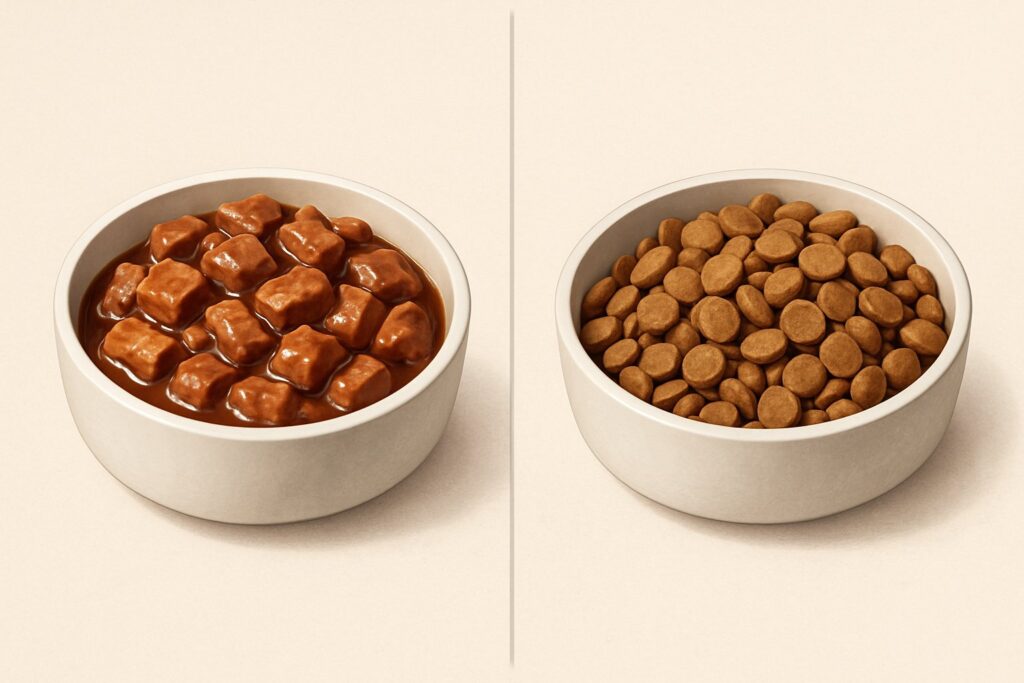
Wet cat food contains about 80% water. Dry kibble sits at just 7-10% moisture.
That difference matters more than you might think. Cats evolved as desert animals, so they don’t have a strong thirst drive.
When my cat ate only dry food, I noticed her water bowl barely changed from morning to night. Research on wet food and calorie intake confirms that canned or pouched cat food typically provides 80% moisture content.
When cats eat wet food, they get most of their daily water needs from their meals. Dry food requires cats to drink much more water to stay properly hydrated.
Key hydration facts:
- Wet food helps prevent urinary tract issues
- Cats on dry diets need to drink 2-3 times more water
- Total water intake can be equal if cats drink enough extra water with kibble
Nutritional Composition Snapshot
Both wet and dry cat food can meet your cat’s nutritional needs. The way nutrients are packaged differs, though.
Dry cat food is more calorie-dense per cup. A quarter cup of kibble might equal a full can of wet food in calories.
This concentration happens because manufacturers remove water during processing. When comparing nutrients, you need to look at dry matter basis rather than just the label.
A wet food showing 8% protein sounds low, but once you remove the water content, it might actually be 40% protein on a dry matter basis. Studies on dry foods and disease risk note differences in carbohydrate content between food types.
Dry foods often contain more carbs because they need starches to form kibble shapes.
Nutrition comparison:
| Factor | Wet Food | Dry Food |
|---|---|---|
| Calorie density | Lower | Higher |
| Carbohydrates | Usually lower | Usually higher |
| Protein per weight | Varies widely | Varies widely |
| Fat content | Moderate to high | Moderate |
Taste, Texture, and Palatability
Cats are texture snobs. I’ve watched my cat walk away from perfectly good food just because it wasn’t the right consistency.
Research on macronutrient composition and palatability shows that wet diets impact food selection in cats. The soft, meaty texture of wet food mimics fresh prey, which triggers natural eating instincts.
Wet food releases more aroma because the moisture carries scent molecules. That’s why cats often get more excited about canned food.
The smell hits them before they even reach the bowl. Dry food offers crunch, which some cats prefer.
The texture can help remove some plaque buildup, though it’s not a substitute for dental care.
What affects palatability:
- Temperature – Room temperature wet food smells stronger than cold
- Freshness – Kibble stays fresh longer once opened
- Variety – Wet food comes in more flavor and texture options
- Individual preference – Some cats are die-hard kibble fans
Health Impacts for Cats
When you’re choosing between wet vs dry cat food, the biggest differences show up in your cat’s hydration levels. Dental health and the ability to maintain a healthy weight are affected too.
Hydration and Urinary Health
I’ve seen countless cat owners surprised to learn that their cat’s water bowl isn’t enough to keep them properly hydrated, especially on a dry food diet.
Wet food contains around 70-80% moisture. Dry cat food typically has only 10% water content.
This massive difference matters because cats have a naturally low thirst drive. They evolved from desert animals who got most of their water from prey.
When cats eat primarily dry cat food, they often don’t drink enough water to make up the difference. This can lead to chronic mild dehydration, which puts stress on their kidneys and urinary system.
Research on hydration and moisture content shows that the moisture levels in cat food directly impact their overall water intake.
Key benefits of wet food for hydration:
- Helps prevent urinary crystals and stones
- Reduces risk of kidney disease
- Supports bladder health naturally
If you’re feeding dry cat food, you’ll need to actively encourage water drinking through fountains or multiple water stations.
Dental Health Considerations
Let’s tackle the myth that dry food cleans your cat’s teeth. I wish it were that simple.
Many pet owners choose dry cat food believing it scrapes away plaque and tartar. Studies on diet and oral health found that dental calculus and plaque were actually less frequent in cats fed dry food compared to wet food.
The research showed cats eating dry diets had better calculus scores overall. But here’s what I need you to know: the difference isn’t huge, and many cats swallow kibble whole without any chewing action.
The benefit depends entirely on whether your cat actually crunches the food.
Reality check on dental health:
- Dry food may help reduce tartar buildup slightly
- Wet food doesn’t actively harm teeth
- Neither type replaces proper dental care
Periodontal disease still affects around 70% of cats over two years old, regardless of diet type. Your best defense? Regular teeth brushing and annual vet dental checkups, not just relying on kibble to do the work.
Weight Management
Here’s where wet vs dry cat food makes a real difference in your cat’s waistline.
Wet cat food naturally has fewer calories per cup because of its high water content. This means your cat can eat a larger volume of food while consuming fewer calories, which helps them feel satisfied.
I find this especially helpful for cats who beg constantly or seem hungry after meals. Dry food is calorie-dense.
A small portion packs a lot of energy, which makes it easy to overfeed if you’re not measuring carefully. Free-feeding dry kibble often leads to weight gain because cats will nibble throughout the day.
Weight management comparison:
| Food Type | Calorie Density | Portion Control | Satiety Level |
|---|---|---|---|
| Wet food | Lower | Easier to measure | Higher (more volume) |
| Dry food | Higher | Easy to overpour | Lower (small portions) |
If your cat needs to lose weight, wet food gives them more food on their plate for fewer calories. Mix in some dry food for dental benefits if you want, but make wet food the foundation of their meals.
Real-Life Pros and Cons: Wet vs Dry Cat Food
When you’re standing in the pet food aisle, trying to decide between canned cat food and dry kibble, the practical stuff matters just as much as nutrition.
Storage space, your budget, and how much time you have for feeding all play into whether wet or dry cat food works better for your lifestyle.
Convenience and Cost Factors
I’ll be honest—dry cat food wins on convenience and price, hands down.
A 15-pound bag of good dry food usually costs $30 to $50 and lasts my cat about a month.
That same amount of wet food? I’m looking at $60 to $100 easily, sometimes more if I splurge on premium brands.
Here’s the real-world breakdown:
- Dry food: Pour it in the bowl, and you’re done. It sits there all day without spoiling.
- Wet food: Needs refrigeration after opening, reheating (some cats are picky about cold food), and washing bowls after every meal.
The pet food industry launches thousands of new products each year, including over 3,000 dry and 3,200 wet formulas.
That means plenty of options at every price point.
If you’re feeding exclusively canned cat food, you’ll spend roughly 2-3 times more monthly compared to dry kibble.
My cat eats both, which helps balance my budget while keeping her interested in mealtime.
Shelf Life and Storage Tips
Dry food is ridiculously forgiving when it comes to storage.
I keep mine in an airtight container in my pantry, and it stays fresh for weeks.
Unopened dry cat food lasts 12-18 months in a cool, dry place.
Once I open the bag, I try to use it within 6 weeks for peak freshness.
Wet cat food is a different story:
- Unopened cans last 2-5 years on the shelf
- Once opened, refrigerate immediately and use within 3-5 days
- Room temperature wet food spoils in 4 hours max
I learned this the hard way when I left half a can of wet food in my cat’s bowl overnight during summer.
The smell the next morning? Not pleasant.
My storage routine:
- Transfer opened wet food to a glass container with a tight lid
- Label it with the date
- Warm it slightly before serving (30 seconds in hot water works)
If you’re mixing wet and dry food like I do, the dry portion stays out while I refrigerate the wet leftovers.
Portion Control in Daily Feeding
Measuring portions is easier with dry cat food because you can see exactly what you’re scooping.
Most bags include feeding guidelines based on your cat’s weight.
Wet cat food requires more guesswork.
The methods for assessing food preferences show that cats often finish wet food bowls completely, making it tricky to tell if they’re overeating.
What I do for portion control:
- Dry food: I use a ¼ cup measuring scoop twice daily
- Wet food: I split one 3-ounce can into two meals
- Mixed feeding: I reduce dry food by ⅓ when adding wet food
My 10-pound cat needs about 200 calories daily.
A can of wet food has roughly 70-100 calories, while ¼ cup of dry kibble has about 100 calories.
Wet food is more filling but less calorie-dense.
My cat acts hungrier on all-wet diets even when she’s getting enough calories.
With dry food, she grazes throughout the day, which fits her personality better.
I weigh her monthly to make sure portions are right—if she’s gaining or losing, I adjust before it becomes a problem.
Choosing the Right Cat Food for Your Feline
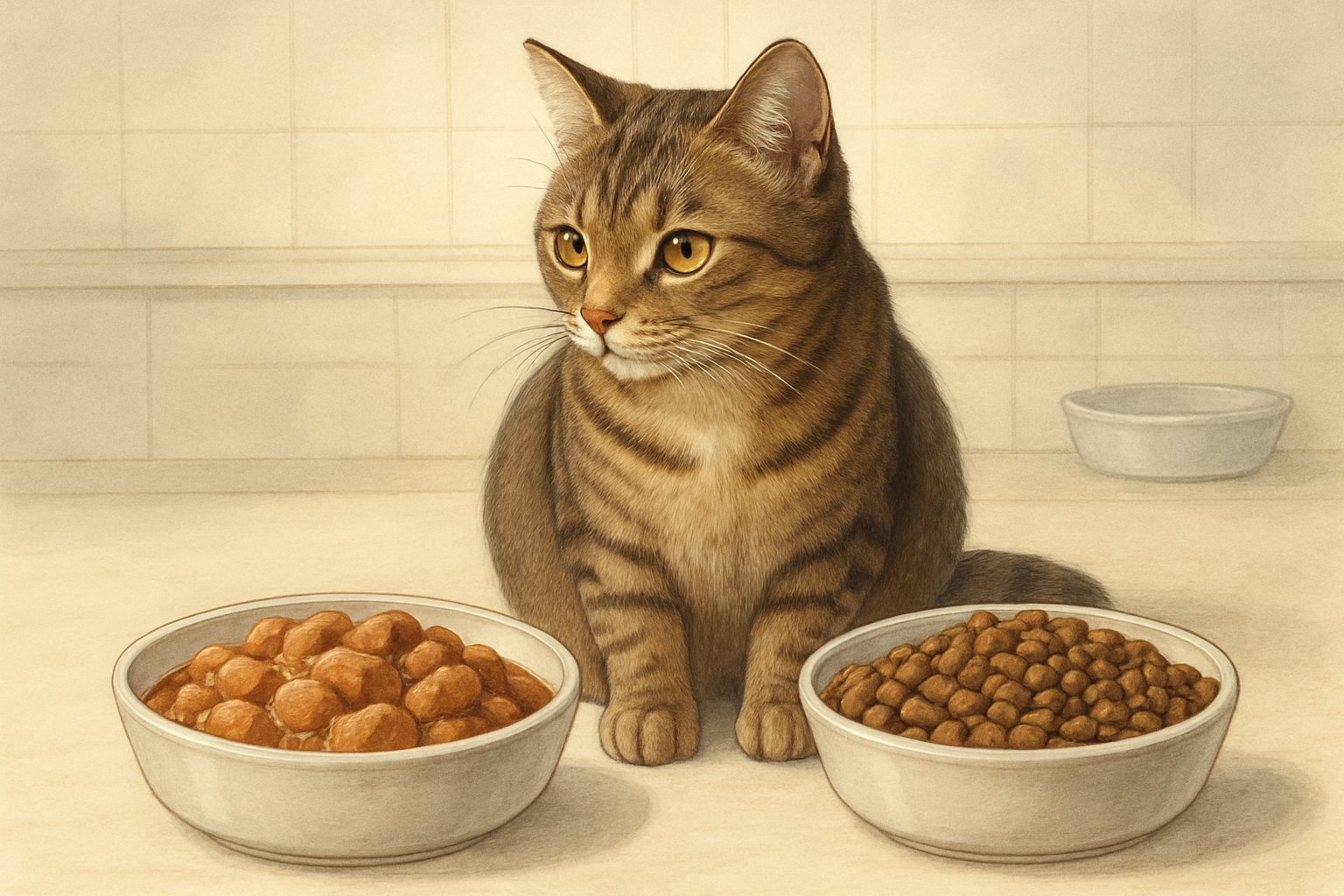
Picking between wet and dry cat food isn’t just about opening a can or pouring kibble.
Your cat’s age, health needs, and personal preferences all play a role in what ends up in their bowl.
Deciding Based on Age and Health
I always tell fellow cat parents that age matters more than most people realize when choosing between wet cat food and dry cat food.
Kittens need extra calories and moisture to fuel their growth, which makes wet food a solid choice for their developing bodies.
They benefit from the higher protein content and easier-to-chew texture.
Adult cats between three and eight years old can handle either option, but their individual health needs should guide your decision.
A nutritional assessment helps determine the best food choice based on your cat’s specific stage of life.
Senior cats over eight years often do better with wet food.
Their kidneys need extra support, and the added moisture helps keep them hydrated.
Older cats with dental issues find wet food easier to eat.
If your cat has diabetes or weight concerns, the type of food matters even more.
Dry food has been linked as a risk factor for feline type 2 diabetes, so wet food might be the safer bet for cats prone to blood sugar issues.
Mixing Wet and Dry Cat Foods
I’ve found that combining wet and dry cat food gives cats the best of both worlds.
Your cat gets the dental benefits of crunching kibble while still receiving the hydration boost from canned food.
Here’s a simple approach to mixing:
- Morning: Serve mostly dry food with a small spoonful of wet food on top
- Evening: Offer a full portion of wet food
- Adjust ratios: Start with 75% dry and 25% wet, then modify based on your cat’s response
A cat eating only dry food drinks about half the water compared to one eating canned food.
By mixing both types, you help your cat stay hydrated without relying entirely on their water bowl.
The texture variety also keeps picky eaters interested.
I’ve seen cats who ignore plain kibble suddenly dive into their bowl when I add a bit of wet food mixed in.
Customizing for Picky Eaters
My experience with finicky cats has taught me that food preference runs deep in felines.
Cats are obligate carnivores with specific food selection patterns, which means they’re hardwired to be particular about what they eat.
If your cat turns their nose up at meals, try these tactics:
Temperature matters. Warm wet cat food slightly to release more aroma.
Cold food straight from the fridge doesn’t appeal to most cats.
Texture testing. Some cats prefer pâté while others want chunks in gravy.
Buy small portions of different textures until you find your cat’s favorite.
Gradual transitions. Mix 25% new food with 75% current food for three days, then shift to 50-50, and finally switch completely over 10-14 days.
I’ve noticed that dietary composition and intrinsic variables affect diet selection in cats, so what works for one might not work for another.
Keep notes on what your cat actually eats versus what gets left in the bowl.
This helps you spot patterns in their preferences and make smarter food choices going forward.
Frequently Asked Questions
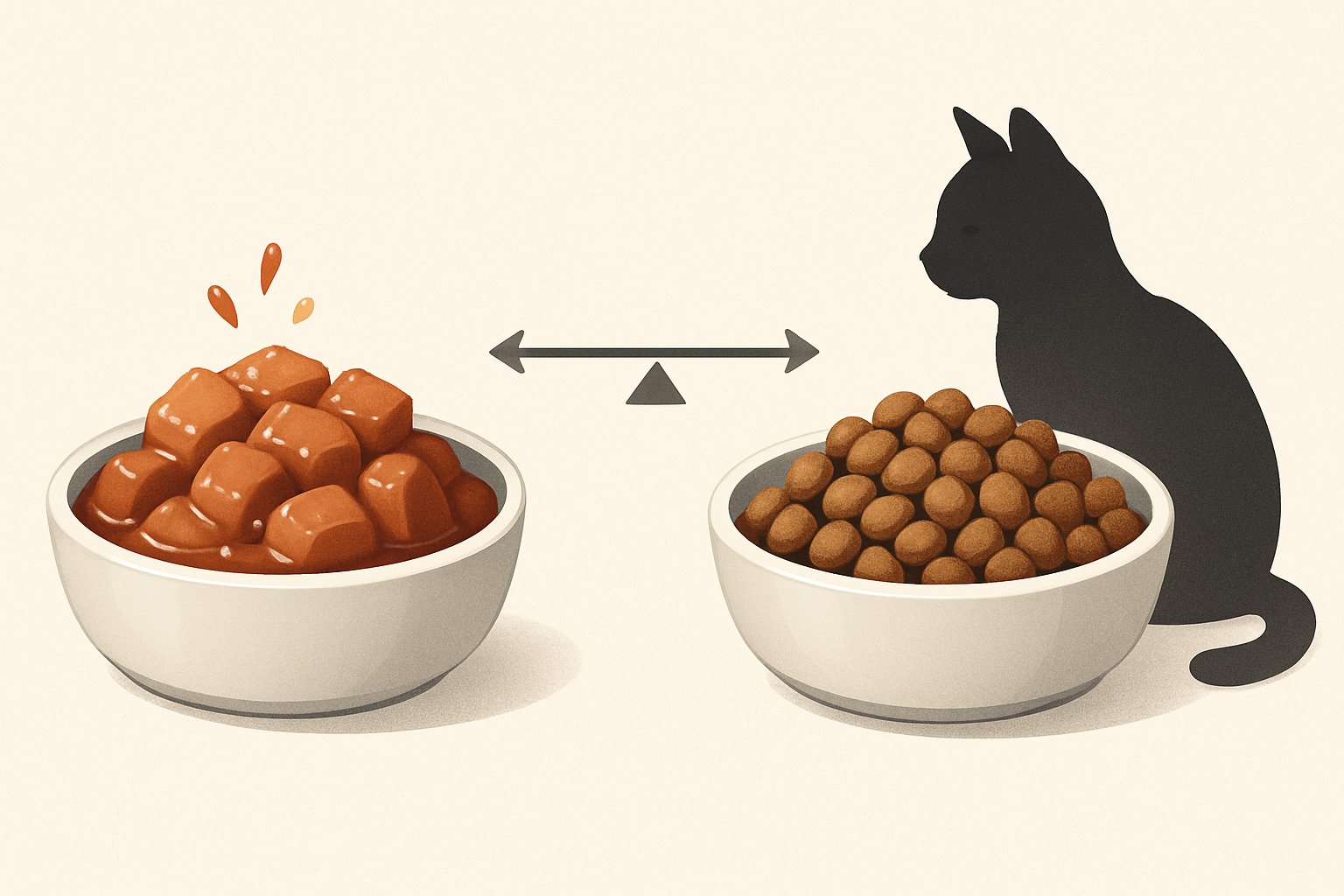
Cat owners face real questions when choosing between wet and dry food, from understanding nutritional differences to figuring out proper feeding schedules.
Here’s what you need to know about making the best choice for your feline friend.
You know how your kitty can be fussy at mealtime, right? Ever wondered if that fancy wet food offers them more than just taste?
Wet food does more than satisfy picky eaters.
It provides higher moisture content, which helps cats stay hydrated since they naturally have a low thirst drive.
Most wet foods contain 70-80% water compared to dry food’s 10% moisture level.
This extra hydration supports kidney function and urinary tract health.
Wet food also tends to be higher in protein and lower in carbohydrates than dry kibble.
That protein-rich profile matches what cats need as obligate carnivores.
The strong aroma and softer texture make wet food especially appealing to senior cats or those with dental issues.
I’ve noticed that cats who turn their noses up at kibble often devour canned food within seconds.
Let’s be real, what’s the real deal with dry kibble – could it actually be better for your cat’s choppers than the canned stuff?
The idea that dry food cleans teeth is mostly a myth.
Cats don’t chew kibble the way we crunch crackers — they typically bite down once and swallow.
That quick bite doesn’t provide enough friction to scrub away plaque buildup.
Think of it like eating pretzels and expecting them to replace brushing your teeth.
Studies on dry cat foods show that kibble offers minimal dental benefits without special formulations.
Some prescription dental diets use larger kibble size and specific textures designed to promote chewing, but regular dry food won’t keep your cat’s teeth clean.
Regular dental checkups and proper tooth brushing remain the best ways to maintain your cat’s oral health.
Dry food does offer convenience and affordability, but dental health isn’t its strong suit.
Ever caught your cat giving you ‘the look’ when you switch up their food? How often should they really be getting that gourmet wet meal?
Cats can eat wet food daily without any issues.
Many veterinarians actually recommend feeding wet food as the primary diet or at least incorporating it regularly.
You can offer wet food once or twice daily, depending on your cat’s caloric needs and your feeding schedule.
I find that splitting meals into morning and evening portions works well for most cats.
If you’re mixing wet and dry food types, you might give wet food once daily while leaving dry food available.
According to a survey of cat feeding practices, owners were more likely to free feed dry food and meal feed wet food.
The key is maintaining consistent feeding times and amounts.
Cats are creatures of habit, and sudden changes can upset their stomachs or trigger that infamous judgmental stare.
Mix it up! But seriously, is it safe to serve up a combo of wet and dry food without turning mealtime into math time?
Combining wet and dry food is totally safe. You just need to watch the portions so your cat doesn’t get too much.
Figure out your cat’s daily calorie needs based on their weight and activity. Then, split those calories between wet and dry food using each food’s calorie count.
If you want to keep things simple, try feeding wet food for one meal and dry for another. Or just stir a little wet food into their dry kibble for extra flavor and moisture—no need for a calculator.
Plenty of cat owners feed a mix without measuring every crumb. Just keep an eye on your cat’s weight and tweak the portions if they start looking a bit chunky or too skinny.
That’s the kicker — can little whiskered kittens thrive on the same food as the big cats, or do they need something special in their bowls?
Kittens really do need their own special food. Their fast-growing bodies crave more calories, protein, and specific nutrients that adult cat food just doesn’t have enough of.
Kitten food packs in more calories for all that wild kitten energy. There’s also extra calcium and phosphorus for bones, plus DHA to help their brains and eyes develop.
Stick with kitten food until they’re about a year old. Big breeds like Maine Coons? They might need kitten food up to 18-24 months since they take their sweet time growing up.
Adult cat food won’t hurt a kitten right away, but it doesn’t give them what they need when they’re most vulnerable. I’ve seen kittens on adult food end up with growth problems that could’ve been avoided.
When your cat hits adulthood, switch them to adult food slowly over a week or so. That way, their tummy can keep up.
Notice how your cat’s water bowl level stays the same all day? Does wet food help keep them hydrated, or are they better off sticking to the faucet?
Wet food gives your cat a serious hydration boost compared to dry kibble. Cats evolved from desert-dwelling ancestors, so they just don’t drink much water—even if their bodies could use it.
With 70-80% moisture in wet food, most cats get the bulk of their daily hydration from their meals. If your cat eats mostly wet food, you’ll probably notice they barely touch their water bowl.
This extra moisture matters a lot for cats prone to urinary crystals, kidney problems, or constipation. Honestly, I’ve seen some cats’ urinary issues clear up almost overnight after switching to wet food.
Dry food, on the other hand, only has about 10% moisture. Cats eating kibble need to drink a lot more water, but let’s be real—many just won’t do it.
Always keep fresh water out, no matter what food you serve. But wet food definitely makes it easier for these low-thirst felines to stay hydrated.