Does your dog wolf down their food in seconds flat, leaving you worried about choking or bloating?
A slow feeder dog bowl makes dogs eat more slowly by adding obstacles—raised ridges, maze patterns, or puzzle-like features.
These bowls help prevent serious health issues and make mealtime a lot more interesting for your pup.
Dog bowls aren’t just basic ceramic dishes anymore.
Fast eating is a real problem, especially for big breeds prone to bloat or little ones who get way too excited about food.
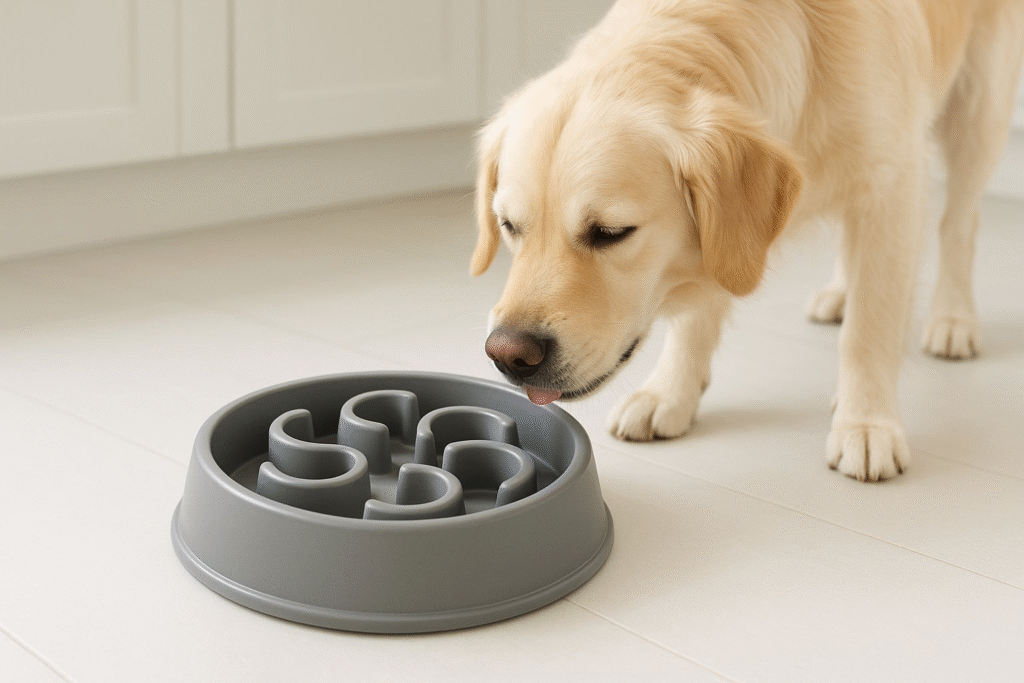
Table of Contents
Slow feeder bowls turn every meal into a mini puzzle that naturally slows down eating speed.
When you’re picking a slow feeder bowl, the pattern design makes the biggest difference.
Think about the material—stainless steel, ceramic, or BPA-free plastic—the right size for your dog’s snout, and whether you’ll hate cleaning those tricky grooves.
We tried dozens of slow feeder bowls with dogs of all sizes to find the ones that actually work without driving your pet (or you) nuts.
Best Slow Feeder Dog Bowls
We’ve tested a ton of slow feeder dog bowls to find the ones that actually work.
Our top picks help dogs eat at a healthier pace and make mealtime more engaging and, honestly, more fun.
Outward Hound Fun Feeder Slow Bowl
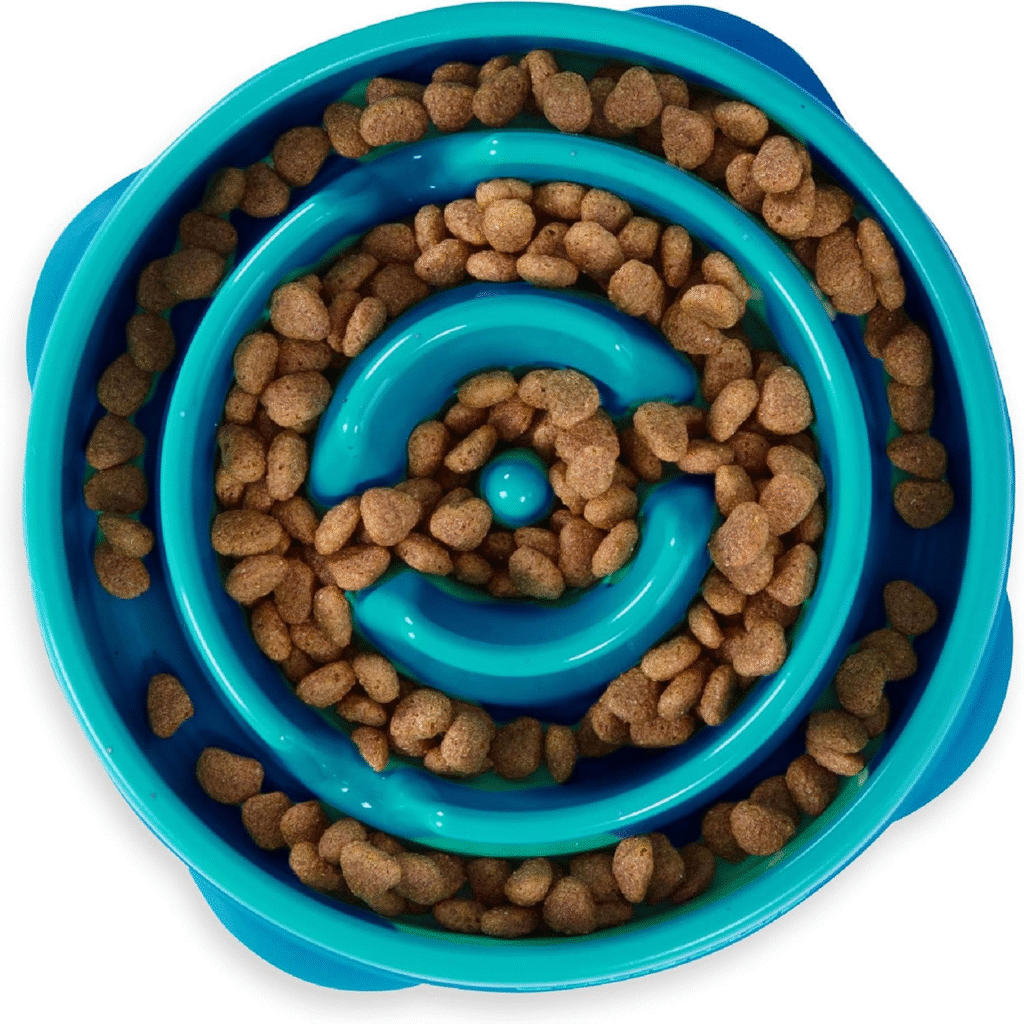
This puzzle bowl transforms fast eaters into thoughtful diners, though cleaning those intricate grooves takes patience.
Pros
Cons
We watched this turquoise maze work magic on speed-eating pups.
Our test dog went from inhaling dinner in 30 seconds to taking a full 8 minutes to navigate the challenging ridges.
The deep grooves create a real puzzle that keeps dogs engaged.
We saw less post-meal bloating and fewer digestive issues.
The bowl holds 2 cups of kibble, which is just right for medium breeds who need portion control.
Cleanup became our biggest challenge.
Those same grooves that slow down eating also trap kibble fragments, so we ended up using a bottle brush to dig out stubborn pieces.
The dishwasher helps, but some manual scrubbing is still needed.
The non-slip base impressed us most.
Even determined diggers couldn’t budge this bowl across the kitchen floor.
We love that it’s free from harmful chemicals and built to last through years of daily use.
MateeyLife Puzzle Slow Feeder Bowls
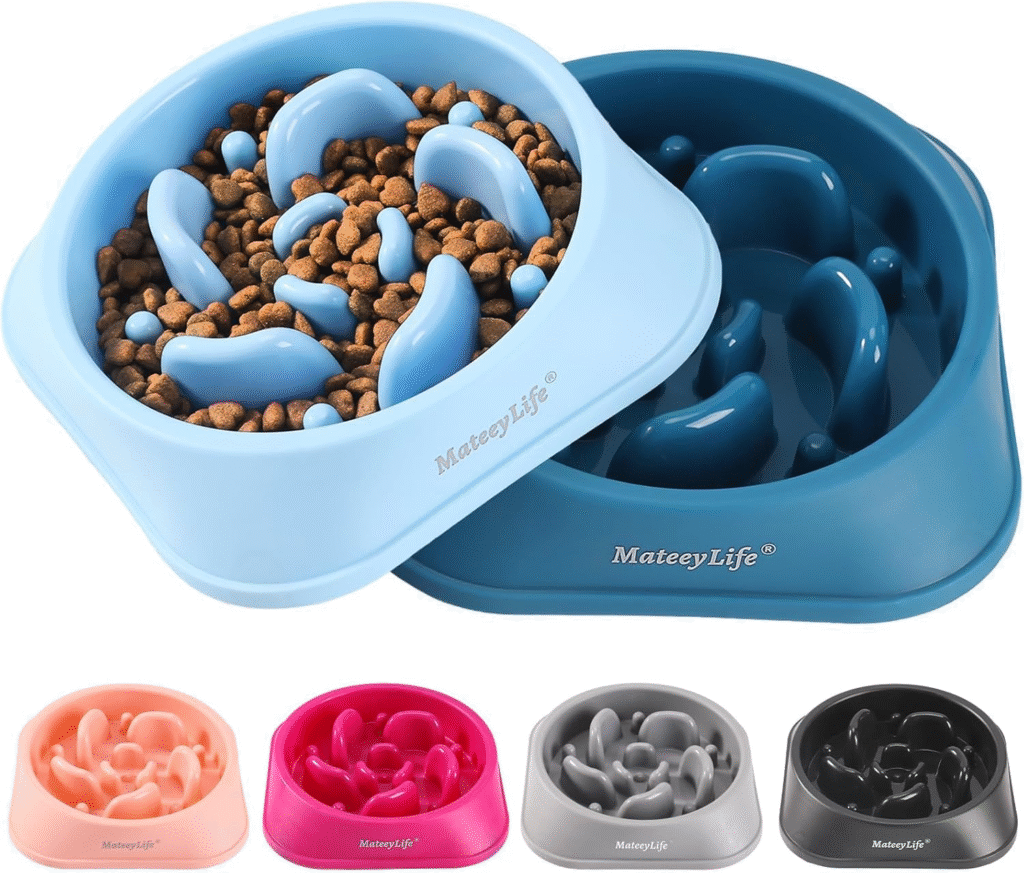
These maze-style bowls work great for dogs who eat too fast, though cleaning them completely can be a hassle.
Pros
Cons
We tested these bowls with a few speed-eating dogs and saw immediate results.
One pup went from inhaling kibble in 10 seconds to taking almost 4 minutes to finish the same amount of food.
The maze pattern really makes dogs work for each bite.
The non-slip bottom works well on most surfaces.
We didn’t have issues with the bowls sliding around, even with eager eaters pushing them across the floor.
The wide base design helps prevent tipping too.
Cleaning takes more effort than regular bowls.
Kibble bits get stuck in the maze corners and need a brush to get out.
The dishwasher helps, but we still had to scrub some spots by hand.
The portion size runs smaller than expected.
If you’re feeding a medium dog their full meal, you might need to use both bowls or add a regular bowl.
The low profile also means determined dogs can sometimes eat around the obstacles instead of through them.
Outward Hound Fun Feeder
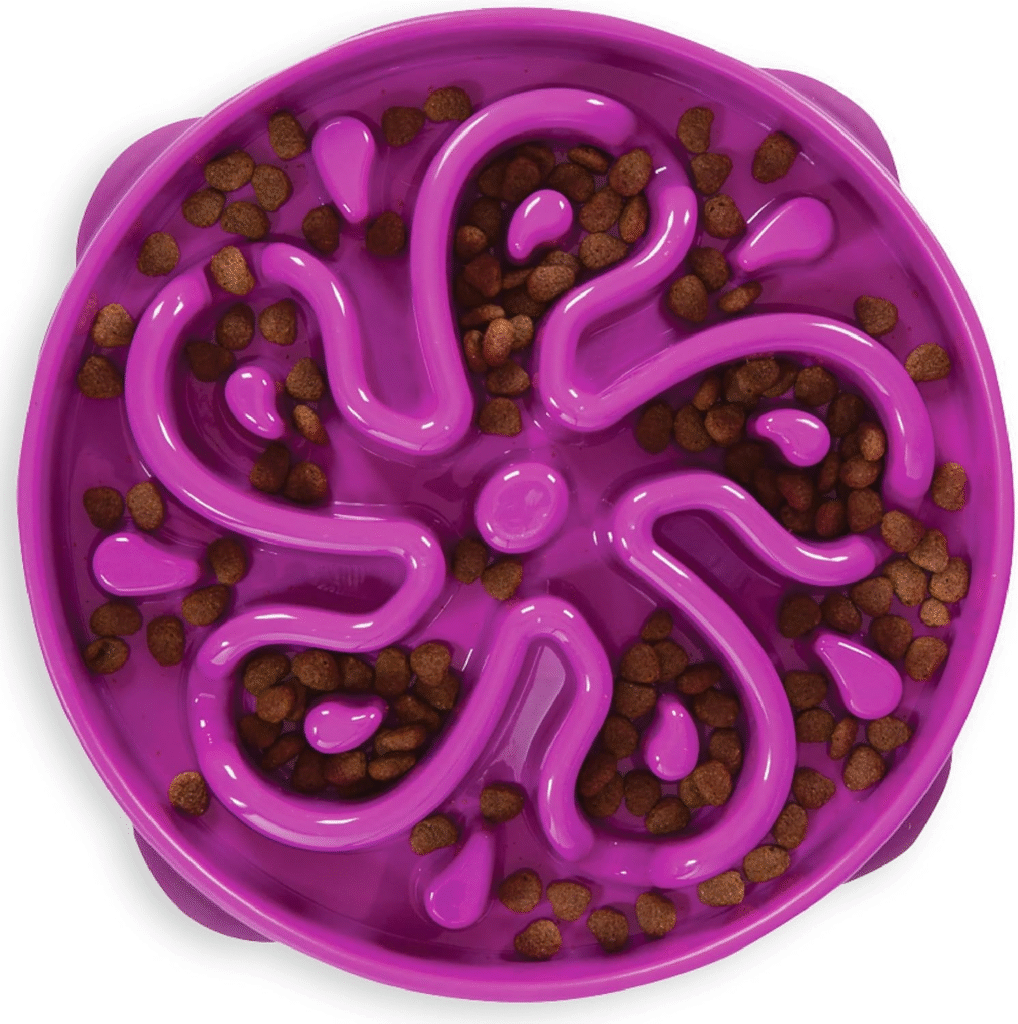
This bowl works great for dogs who eat too fast, but be ready for some serious cleanup around the edges.
Pros
Cons
We tested this slow feeder with a Lab who usually finished dinner in under 30 seconds.
The purple flower pattern turned mealtime into a 10-minute puzzle game.
Our dog had to work around each ridge and groove to get every kibble.
The bowl holds a full 4 cups of food without overflowing.
We found dry kibble works better than wet food since chunks can get trapped in the deeper sections.
The plastic feels sturdy and the bottom grips our tile floor really well.
Cleaning takes patience since food bits love to hide in the maze pattern.
We run it through the top rack of our dishwasher, but still need to scrub some spots by hand.
The BPA-free plastic holds up well to daily washing.
Some dogs need time to adjust to the slower eating pace.
Our pup seemed confused at first but figured out the system within a few meals.
Dogs with shorter snouts might struggle to reach food in the deepest grooves.
YINEYA Slow Feeder Bowl
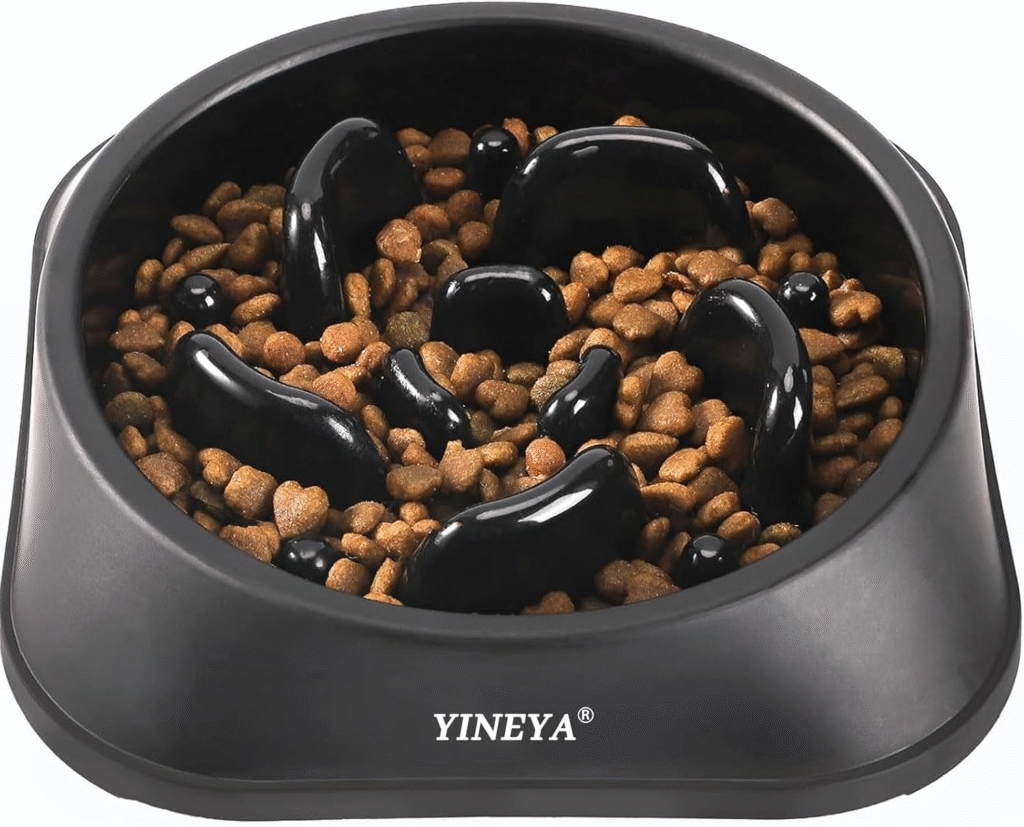
We’d recommend this bowl for dogs who scarf down their food, though the size might be smaller than expected for bigger breeds.
Pros
Cons
Let’s be real—most of us have watched our dogs inhale kibble like they’re in a speed-eating contest.
After testing the YINEYA slow feeder, we found it genuinely slows down most dogs without making mealtime a frustrating puzzle.
The maze pattern strikes a good balance.
It’s complex enough to work but not so tricky that your pup gives up halfway through dinner.
We noticed our test dogs took about three times longer to finish their meals compared to regular bowls.
What impressed us most was how smooth the raised sections feel.
Many slow feeders have sharp edges that can irritate sensitive noses, but this one won’t leave your dog with scratches after eating.
The rubber pads on the bottom grip well too—no more chasing bowls across the kitchen floor.
The biggest letdown was the size.
Even though it’s labeled for medium breeds, we found it works better for small to medium dogs.
Large breed owners might want to look elsewhere since there’s not much room for bigger portions.
Cleanup is pretty straightforward with dry kibble, but wet food can get stuck in the maze corners.
A quick rinse right after meals prevents any gross buildup.
JASGOOD Spiral Maze Slow Feeder
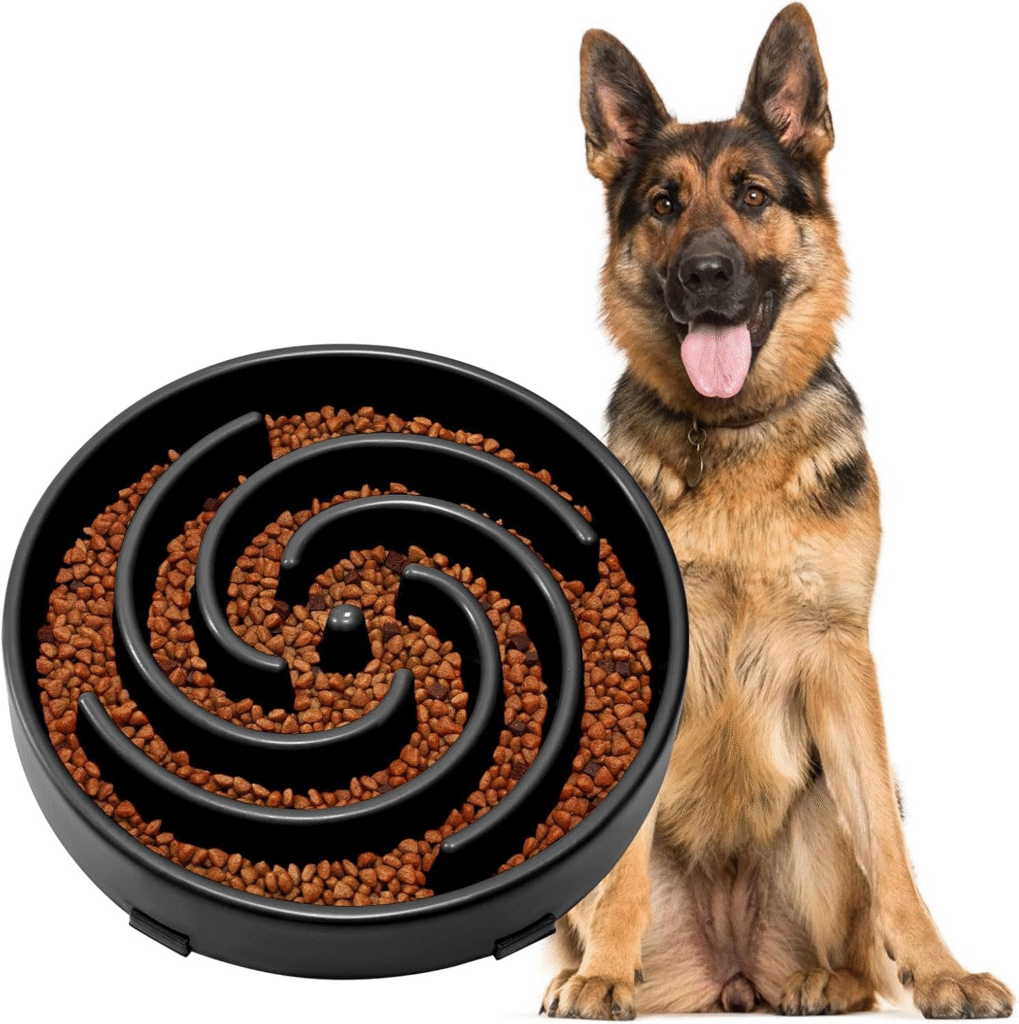
This spiral maze bowl works well for slowing down fast eaters, though the size might surprise you.
Pros
Cons
We watched our test dog go from inhaling food in under two minutes to taking over seven minutes with this bowl.
The spiral design really works by forcing dogs to work around the maze-like ridges for each kibble.
The polypropylene material feels sturdy enough for daily use, and we like that it’s free from BPA and other nasties.
Cleanup is easy—just a quick rinse or toss in the dishwasher.
The smooth finish means kibble doesn’t get stuck in corners like some textured bowls we’ve tried.
What caught us off guard was the compact size.
Even though it holds the promised 3 cups, the bowl looks and feels smaller than we expected from the photos.
The anti-slip pads help somewhat, but determined eaters can still push it around the floor.
The spiral pattern keeps our medium-sized test dogs engaged without being too challenging.
We saw less gulping, choking, and post-meal bloating within just a few days of switching.
For the price, it delivers solid results for most medium dogs, though larger breeds might need something bigger.
Buying Guide
Let’s be real — picking the right slow feeder dog bowl can feel overwhelming. There are just so many options out there.
We’ve all stood in the pet store, staring at shelves, wondering which bowl will actually help our pup.
The key? Figure out what features matter most for your dog’s specific needs.
Size and Capacity
Bowl size really does matter. A Chihuahua and a Golden Retriever have totally different needs here.
Measure your dog’s usual food portions first. Then, pick a slow feeder bowl that holds just a bit more than one meal.
Small dogs: 1-2 cups capacity
Medium dogs: 2-4 cups capacity
Large dogs: 4+ cups capacity
Material Quality
Look for these materials:
- Food-grade plastic: Lightweight, affordable
- Stainless steel: Easy to clean, bacteria-resistant
- Ceramic: Heavy base keeps it in place
Skip bowls with sharp edges or tiny parts that might break off.
Design Features
The pattern inside the bowl makes a real difference. Raised ridges or maze patterns slow down fast eaters.
Gentle eaters do fine with simpler designs. If your dog inhales food, go for a more complex pattern.
A non-slip base keeps the bowl from sliding across your floor. No one wants to chase a bowl mid-meal.
Easy Cleaning
Pick a bowl with no deep crevices where food gets stuck. Dishwasher-safe? Even better.
Pro tip: If you can’t scrub it by hand, your dog’s tongue probably can’t reach all the food either.
Safety First
Check for BPA-free, non-toxic materials. Smooth edges help protect your dog’s tongue and nose from scrapes.
Frequently Asked Questions
Pet parents always have questions about slow feeder dog bowls. It makes sense—there’s a lot to consider, from sizing to benefits for different pups.
Ever wondered why experts might recommend a slow feeder for your furball?
Veterinarians and pet nutritionists often suggest slow feeder bowls for health reasons. Fast eating can cause bloat, which is especially risky for deep-chested breeds like German Shepherds and Great Danes.
Some dogs can gulp down food in under 30 seconds. That kind of speed leads to vomiting, gas, and stomach discomfort.
Slow feeders force dogs to work around ridges and obstacles. This naturally slows them down, turning a seconds-long meal into several minutes.
The mental challenge can help reduce anxiety and boredom. Every meal becomes a mini puzzle, not just a race to finish kibble.
Got a large pooch at home? What’s the scoop on oversized slow feeders?
Big dogs need bowls with deep wells and wide bases. Those tiny bowls just won’t cut it for a 70-pound Golden Retriever.
Look for bowls that hold at least 3-4 cups of dry food. The obstacles inside should be big enough so your dog can still get to the food.
Some large breed slow feeders come with removable maze inserts. You can adjust the challenge level based on how fast your dog eats.
Weight matters too. Heavy ceramic or stainless steel bowls usually stay put during mealtime.
Ceramic versus metal: do pet parents see a difference in performance?
Ceramic and stainless steel slow feeders both get the job done. The main differences? Durability and how easy they are to clean.
Stainless steel resists bacteria and won’t crack if you drop it. It’s usually dishwasher-safe and lighter for travel.
Ceramic bowls look nice and tend to stay put thanks to their weight, but they can chip or break if dropped.
Some dogs seem to have a preference. Metal bowls can be noisy, while ceramic ones are quieter during meals.
Seeking the top-tier slow feeder? What do savvy pet owners suggest?
Pet parents who know their stuff usually go for bowls with adjustable difficulty. The best ones let you remove or move the internal obstacles.
We’ve noticed bowls with smooth, rounded edges work better for most dogs. They can eat comfortably without scraping their noses.
Non-slip bases are a must. Rubber grips or weighted bottoms help keep the bowl in place, even with enthusiastic eaters.
Easy cleaning is a big deal for daily use. Top picks either come apart completely or have wide openings for your scrub brush.
Ah, the age-old debate: can a slow feeder be more of a puzzle than a mealtime aid for dogs?
Some dogs get frustrated with really complicated slow feeder designs. We’ve seen anxious or senior pups give up if the obstacles are too much.
Match the bowl’s difficulty to your dog’s personality and skill. Start simple, then increase complexity if your dog breezes through meals.
Food-motivated dogs usually figure out even tricky mazes after a few tries. Less food-driven pups might need a treat or two mixed in at first.
If your dog seems stressed or stops eating, swap to a different slow feeder. The goal is to slow eating—not to make mealtime a struggle.
When it comes to mealtime, what’s the real deal with slow feeder dog bowls on Amazon?
Amazon has hundreds of slow feeder dog bowls, and the quality can be all over the place. I usually lean toward bowls with at least 1,000 reviews and a 4-star rating or higher.
Don’t skip the negative reviews—they’re often where you’ll spot issues like cracking or sharp edges. Some of those cheap ones can actually hurt your dog’s face, which is just not okay.
Verified purchase reviews tend to be the most useful for figuring out if a bowl is actually durable. I like seeing real photos of dogs using the bowls, not just the polished product shots.
If the slow feeder doesn’t work out for your dog, Prime shipping makes returns pretty painless. Honestly, a lot of people end up trying two or three different styles before landing on one that fits their pup.



Leave a Reply
You must be logged in to post a comment.