
As an Amazon Associate I earn from qualifying purchases.
Training your cat can feel like a challenge, especially when they seem way more interested in ignoring you than learning new tricks.
Cat treats for training are small, tasty rewards meant to motivate your cat and reinforce good behavior during sessions. They work because cats are food-motivated creatures who quickly link actions with rewards.
Not all treats work the same for training. Regular treats might be too big or just not exciting enough to get your cat’s attention.
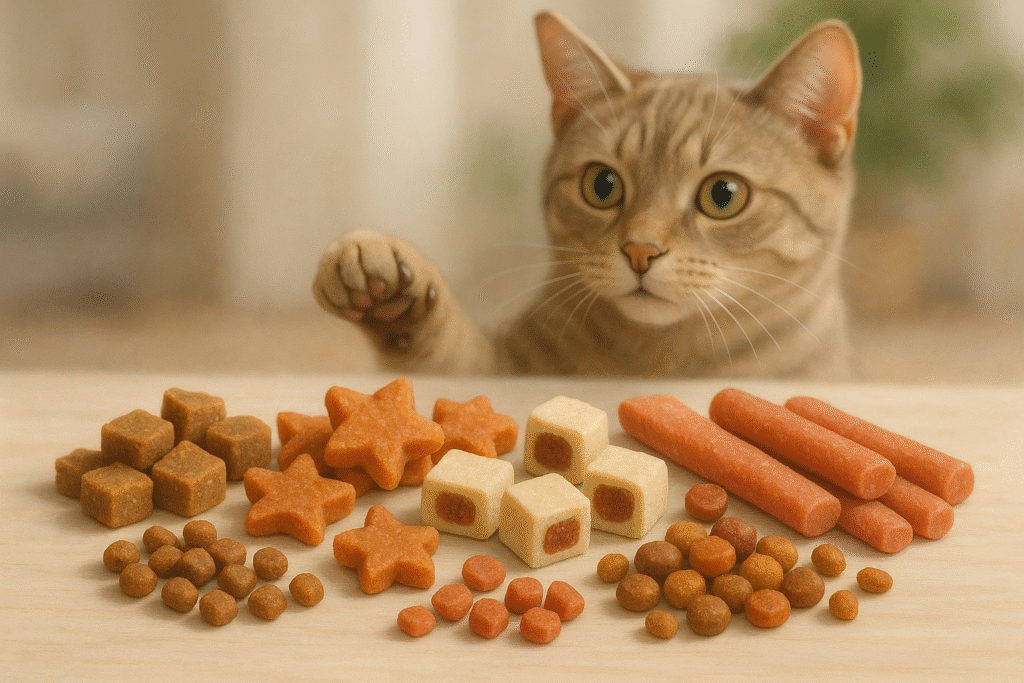
Training treats tend to be smaller, so you can offer lots of rewards without overfeeding. They’re also usually packed with stronger flavors and textures that make your cat eager to earn another one.
When you’re shopping for cat treats for training, focus on size, ingredients, and calorie content. The treat should be small enough for your cat to eat quickly and get back to work.
Look for high-quality protein as the first ingredient, and skip treats with artificial colors, flavors, or weird fillers. Since you’ll be handing out multiple rewards, stick with low-calorie picks to avoid weight gain.
Best Cat Treats for Training
We’ve tested and reviewed the top cat treats for training, so you can find the perfect reward for teaching your cat new tricks.
Here’s our full list of the best cat treats for training.
Blue Buffalo Bursts
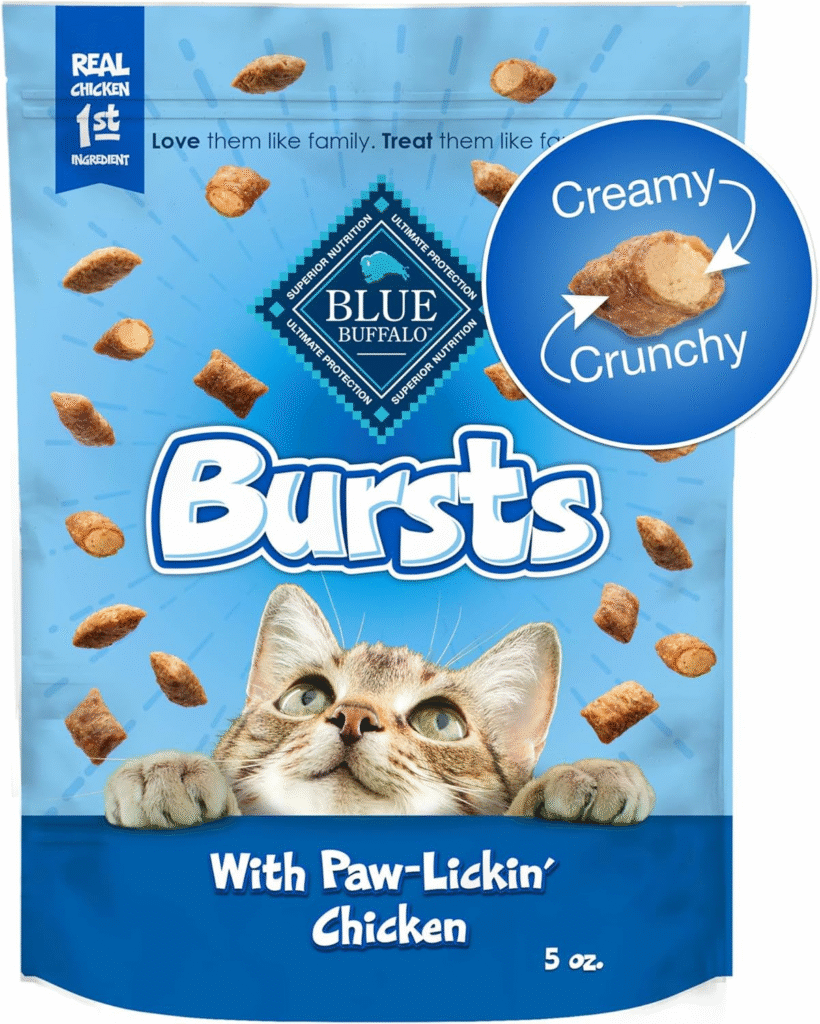
These dual-texture treats actually work for training because cats come running when they hear the bag. The real chicken first ingredient makes them a healthier choice than most alternatives.
Pros
Cons
We’ve used Blue Buffalo Bursts for training, and the results surprised us. Once we shake the bag, our cats sprint over, no matter where they’re hiding.
That instant reaction makes these treats perfect for reinforcing good behavior or teaching new tricks. The texture combo really stands out for training.
The crunchy shell gives cats something satisfying to bite, and the creamy chicken center keeps them interested enough to work for another one. Cats chew these quickly, so training sessions don’t get bogged down with awkward pauses.
Real chicken as the first ingredient seems to matter a lot. Our cats seem more motivated with these compared to treats that have vague protein sources.
Blue Buffalo skips the poultry by-products and artificial preservatives, so we don’t feel like we’re sacrificing our cats’ health just for faster training.
The 5-ounce bag goes fast if you train regularly. We use them for rewarding litter box use, coming when called, and staying calm during nail trims.
Even our pickiest cats stay engaged, though once in a while one of them turns up her nose for no reason we can figure out.
The size works great for training since you can give a few at a time without worrying about calories. We can do several short sessions throughout the day and not feel guilty.
If you’re hoping to hide medication inside, though, these won’t work since they’re small and the creamy center isn’t thick enough for pills.
Vital Essentials Salmon Bites
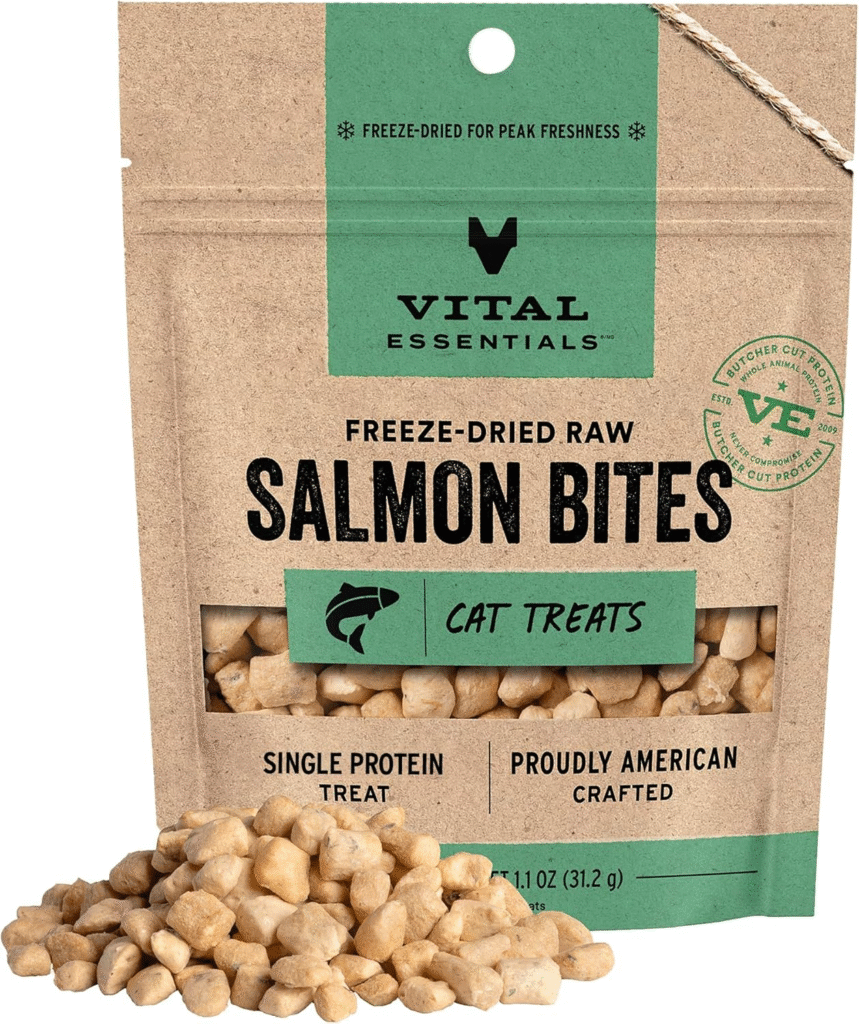
These freeze-dried raw salmon treats work great for training sessions when you need your cat’s attention fast.
Pros
Cons
We tried these Vital Essentials Salmon Bites for our cats, and the freeze-dried texture was perfect for quick rewards. The treats crumble into smaller pieces without turning into dust, which really helps during longer training sessions.
The single-ingredient thing means you know exactly what you’re giving your cat. The salmon smell is strong when you open the bag, but that’s what grabs our cats’ attention for clicker training.
They respond faster to these than the crunchy treats we tried before. One thing to watch: you’ll go through a bag pretty fast.
At 1.1 ounces, we finished one in about a week with two cats doing basic training twice a day. Breaking the pieces smaller stretches it a bit, but you’ll probably need to restock often if you train regularly.
The freeze-dried format keeps well after opening, which is better than soft treats that get sticky. We did notice one picky cat got bored with the salmon flavor after a couple weeks, so maybe rotate proteins if your cat likes variety.
Fruitables Crunchy Cat Treats
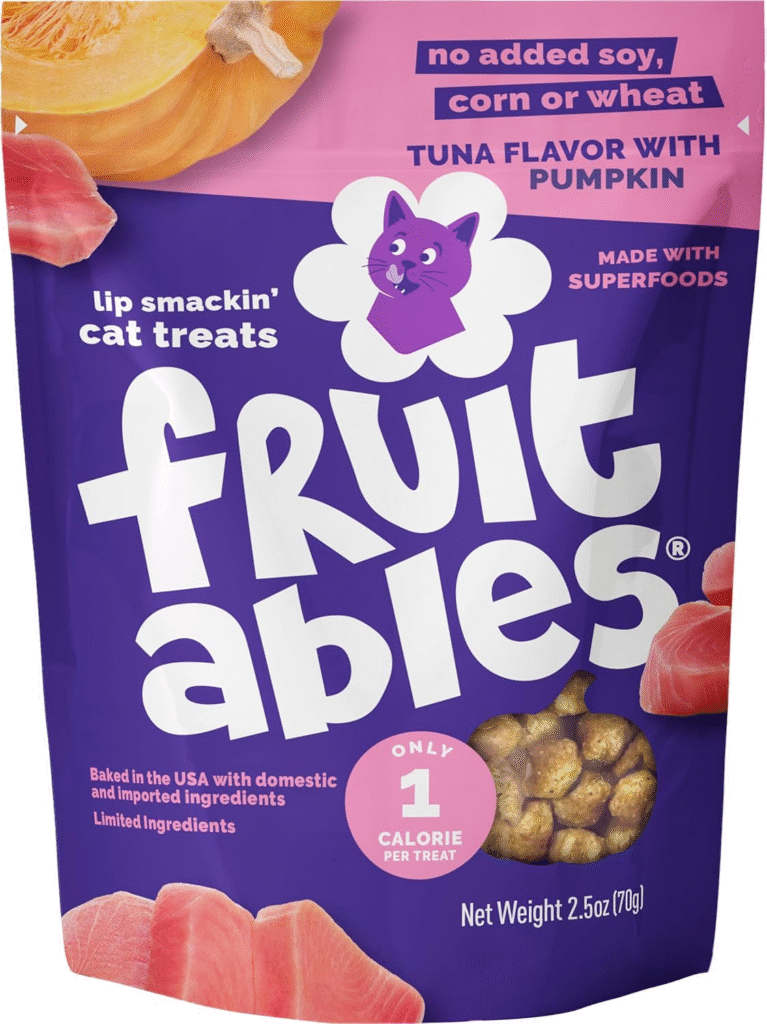
We tested these crunchy treats with several cats during training. They turned out to be an effective low-calorie option that keeps cats motivated without the guilt.
Pros
Cons
We found these Fruitables treats are a solid pick for training because you can use them over and over in a session without stressing about calories. Our test cats learned new behaviors faster with these on hand.
The low calorie count means you’re not ruining your cat’s diet while teaching them to come when called or use a scratching post. The tuna flavor really grabbed their attention during training.
Cats focused better and stayed engaged longer than with some other treats we tried. Even our pickiest tester showed up when she heard the bag open.
The pumpkin ingredient seemed to help with digestion. We didn’t notice any upset stomachs after training, which sometimes happens with richer treats.
The superfood blend gives some peace of mind that you’re rewarding good behavior with something that actually supports their health. The crunch factor is a bonus during training—cats can hear and feel the texture, which adds to the reward.
We used them for clicker training and teaching basic commands. The 2.5-ounce bag lasted about two weeks with daily 10-minute sessions for two cats.
Buying Guide
Shopping for cat treats for training can feel overwhelming with dozens of options. We’re here to help you find treats that actually work for teaching your cat new behaviors.
Size and Texture Matter
Training treats need to be small so your cat can eat them fast. Look for treats about the size of a pea or even smaller.
This way, your cat can get back to learning instead of chewing forever. Soft treats usually work best since cats can eat them quickly and stay focused.
Crunchy treats take longer to chew, which can slow down your training.
Check the Ingredient List
We always check the ingredients before buying. The first ingredient should be real meat—chicken, turkey, or fish.
Avoid treats loaded with fillers like corn or wheat. Fewer ingredients are usually better for sensitive stomachs.
Calorie Content
Training means handing out lots of treats. Low-calorie options help you prevent weight gain while working on new skills.
What to look for:
| Feature | Why It Matters |
|---|---|
| Under 2 calories per treat | Keeps training sessions guilt-free |
| Protein as main ingredient | Supports muscle health |
| No artificial colors | Better for sensitive cats |
| Resealable packaging | Keeps treats fresh |
Strong Smell and Taste
Cats respond better to treats they find exciting. Pick options with a strong natural scent your cat can’t resist.
Fish-based treats usually have the strongest smell. Try different flavors to see what your cat actually loves—some go wild for chicken, others for salmon.
Frequently Asked Questions
Cat treats for training work best when you know what to look for and how to use them. Portion control, ingredient quality, and treat motivation all matter for successful training.
You know that look your cat gives you when it’s treat time? Ever wonder what are the best options for training?
We recommend soft, bite-sized treats your cat can eat quickly during training. The best cat treats for training are small enough to give several times without filling up your cat too fast.
Look for treats with real meat or fish as the first ingredient. Chicken, tuna, and salmon flavors usually work for most cats.
Single-ingredient treats let you control what goes into your cat’s body. Avoid treats packed with fillers or artificial colors—your cat doesn’t care about the look, just the taste and smell.
Let’s be real, who hasn’t thought about how to train their feline friend with some yummy incentives?
Training cats with treats works because it creates positive associations with the behaviors you want. Timing matters just as much as the treat itself.
Give the treat within two seconds of the desired behavior. This helps your cat connect the action with the reward.
If you wait too long, your cat won’t understand what earned the treat. Start with high-value treats your cat really loves—save the good stuff for training only.
That way, training time feels extra special and keeps your cat motivated. Cats are clever, so they’ll quickly notice when training treats are better than everyday snacks.
Think you can’t teach an old cat new tricks? Which low-calorie treats say otherwise?
Low-calorie cat treats for training help you avoid weight gain during practice. Look for treats with fewer than three calories per piece.
Freeze-dried meat treats usually have minimal calories since they’re just pure protein with the moisture gone. You can break regular treats into smaller pieces to cut calories per reward.
If you’re training multiple times per day, those treats can add up. Count training treats as part of your cat’s daily food intake, or you might end up with a chubby coach potato.
Seen your kitty leap for a treat? What’s the deal with freeze-dried snacks for their training regime?
Freeze-dried treats work great for training because they’re lightweight, shelf-stable, and packed with flavor. We love that they don’t leave greasy residue on your hands or in your treat pouch.
The freeze-drying process pulls out water but keeps all the natural meat flavors. This makes them super appealing to cats without adding fillers or preservatives.
Most cats go wild for freeze-dried chicken, fish, or liver. You can crumble freeze-dried treats into tiny pieces for training, which lets you give more rewards per session without overfeeding.
They’re also great for cats with sensitive stomachs since they’re usually single-ingredient. If your cat’s picky, freeze-dried treats might just be your secret weapon.
Here’s the kicker: how do you clicker train a cat without the added fluff around their midsection?
Clicker training with cat treats takes a bit of portion control. We recommend using treats the size of a pea or smaller for each click and reward.
Start by accounting for training treats in your cat’s daily calorie budget. If you have a heavy training day, reduce regular meal portions a bit to balance things out.
If weight’s a concern, use your cat’s regular kibble as treats. Many cats will work for their own food during training sessions.
Mix in a few special treats now and then to keep motivation high. Cats can be stubborn, but the right snack at the right moment? Game changer.
Ever caught your cat snooping where it shouldn’t? Any training treats specifically helpful for teaching them boundaries?
Teaching boundaries takes patience, honestly. I reach for extra-smelly treats—think fish or liver—because they have to outshine whatever’s luring your cat to that forbidden spot.
When your cat turns away from the off-limits area, hand over the treat right away. The reward should be more tempting than the counter, table, or plant they’re obsessed with.
I like to stash training treats in a few spots around the house. That way, I can grab one quickly and catch those good moments.
Consistency helps more than the treat itself, but having the right snack on hand definitely doesn’t hurt.