
Have you noticed your cat acting a little off lately? Maybe they’re less playful, their fur looks dull, or they’re just tired all the time.
Vitamin deficiencies in cats can cause some serious health problems, ranging from vision loss and muscle weakness to strange behavior and immune system trouble. I can’t count how many cat parents miss these early warnings, thinking their buddy’s just “getting older” or having a lazy day.
The tricky thing about vitamin deficiencies is that they sneak up slowly. Your cat might show subtle changes that don’t seem connected—like taurine deficiency causing retinal degeneration that’s invisible until the damage is done.
Cats have unique nutritional needs that aren’t like those of dogs or people. That makes them more vulnerable to certain deficiencies.
Knowing what to look for can literally save your cat’s sight, mobility, and quality of life. I’ll walk you through the most common signs, which specific vitamins cause which symptoms, and what puts your cat at higher risk, so you can step in early.
Cat Vitamin Deficiency Signs – Key Takeaways
- Vitamin deficiencies in cats cause serious symptoms—vision issues, muscle weakness, and behavioral changes—that sneak up over time
- Different vitamins trigger specific symptoms, like taurine deficiency leading to eye damage or thiamine deficiency causing neurological issues
- Cats eating poor-quality food, homemade diets, or those with health conditions face the highest risk
Top Signs Your Cat Has a Vitamin Deficiency
I’ve seen so many cat parents overlook the early signs of nutritional deficiencies. It honestly breaks my heart.
Your cat’s body starts showing physical changes—dull fur, itchy skin, or odd behavior. Sometimes it’s just a subtle appetite shift, but that can mean something’s seriously wrong.
Physical Warning Signs (Skin, Fur, and Weight)
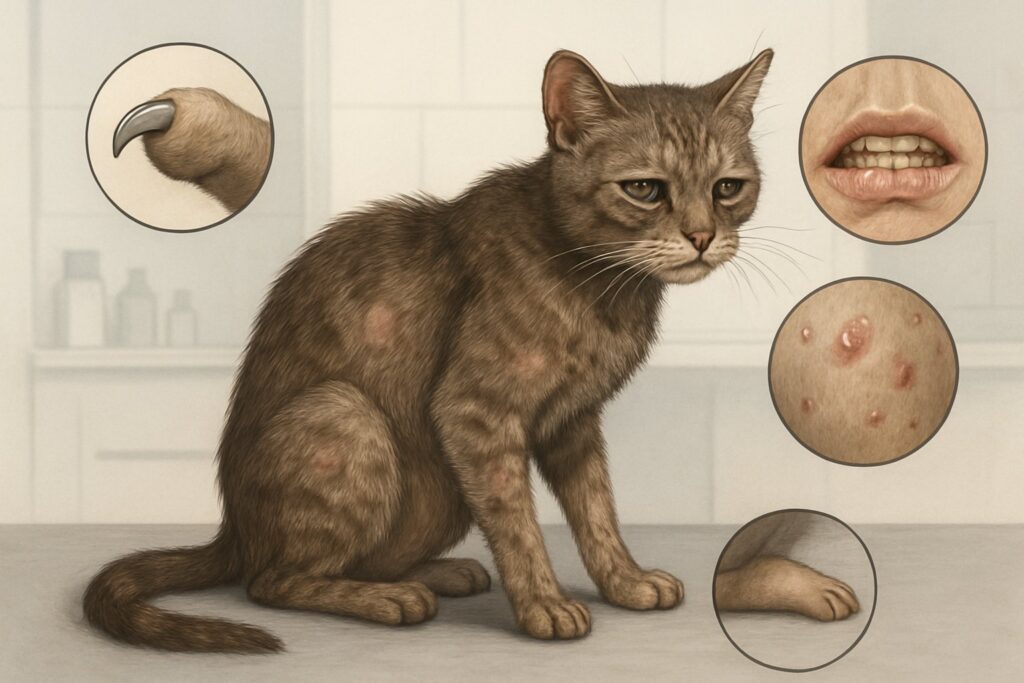
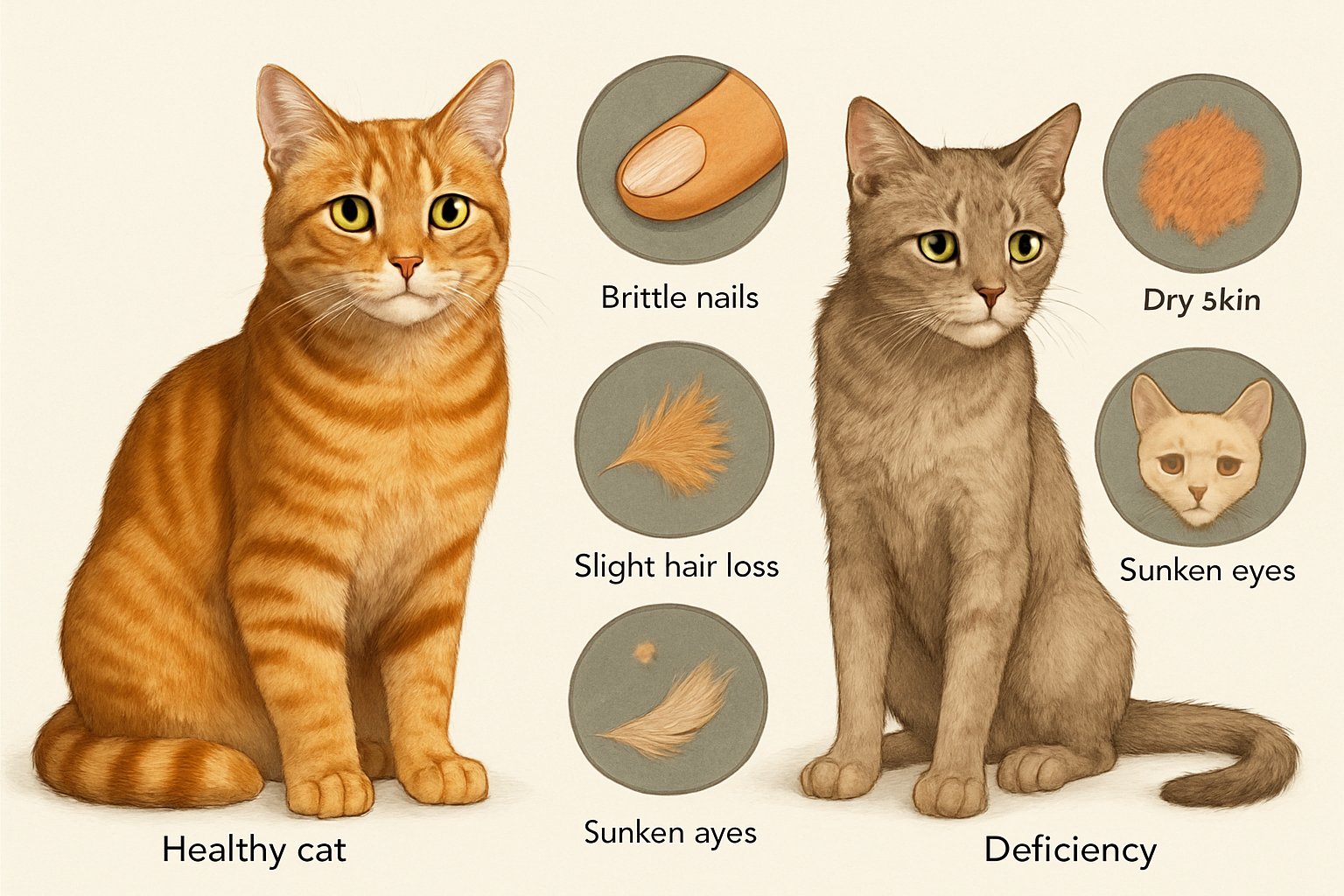
Your cat’s coat really does say a lot about their health. When I meet cats with vitamin deficiencies, I almost always notice their fur first—it looks dull, brittle, or patchy.
Taurine deficiency can cause some scary changes. Your cat might develop retinal degeneration that leads to blindness. By the time you notice, the damage might be done.
Keep an eye out for these:
- Coat changes: Dry, brittle fur with no shine
- Skin problems: Flaky skin, lots of scratching, or slow-healing wounds
- Weight loss: Gradual but obvious drop in weight, even if eating seems normal
- Eye issues: Cloudy eyes or trouble seeing in low light
Thiamine deficiency in cats can cause weird neurological symptoms. Sometimes your cat will walk unsteadily or tilt their head in a way that’s just not right.
And don’t forget, Vitamin A toxicity (too much vitamin A) can cause joint pain and stiffness. I’ve seen cats who can’t even jump up to their favorite spot because their bones hurt.
Behavioral Changes to Watch Out For
You know that look your cat gives when something’s just… off? Trust your gut.
Lethargy is a big red flag. If your playful kitty suddenly wants to sleep all day instead of chasing toys, something’s probably up.
Vitamin B6 deficiency can mess with your cat’s nerves. They might seem confused, disoriented, or just not themselves.
Look for these shifts:
- More sleeping: Way more naps than usual
- Less social: Hiding or avoiding the family
- Aggression or irritability: Acting cranky when they’re usually sweet
- Confusion: Getting lost in familiar places
Cats are experts at hiding illness. By the time you notice these changes, the deficiency could be pretty far along.
Appetite and Energy Red Flags
Here’s the thing—anorexia (total loss of appetite) is a major warning sign that something’s wrong nutritionally.
I’ve watched cat parents freak out when their buddy suddenly refuses treats. Sometimes it’s just pickiness, but often it’s a sign of something deeper.
Energy crashes paired with appetite changes are trouble:
| Normal Cat | Deficient Cat |
|---|---|
| Eager at meal times | Disinterested in food |
| Playful after eating | Sluggish even after meals |
| Maintains routine | Disrupted eating schedule |
Arginine deficiency can cause dramatic appetite loss. Cats need this amino acid to feel right, and without it, they feel miserable.
If your cat skips more than two meals in a row, call your vet. Cats can get serious liver problems if they don’t eat.
You might notice your cat walks up to the food bowl, sniffs, and walks away. Or they nibble a little and quit. These little changes often show up weeks before the weight loss gets obvious.
Telltale Signs Linked to Specific Vitamin Deficiencies
Each vitamin deficiency looks a bit different in cats. Over the years, I’ve learned to spot the patterns.
The trick is knowing which signs match which deficiency, so you can act quickly.
Symptoms of Thiamine Deficiency
Honestly, thiamine deficiency is one of the scariest shortages your cat can face. I’ve seen how fast a lack of this B1 vitamin can turn dangerous.
Dilated pupils are usually the first thing I notice. Your cat’s eyes stay big even in bright light, and it just looks wrong.
The neurological symptoms hit hard and fast. Thiamine deficiency in cats leads to serious learning and behavioral changes you can’t miss.
Watch for:
- Sudden loss of appetite
- Wobbly walking or loss of balance
- Head tilting
- Seizures if things get really bad
Clinical signs of thiamine deficiency can show up within days after a diet change. I always remind cat parents to watch closely when switching foods.
Memory problems come on quickly, too. Your smart cat might forget where the litter box is or act lost in their own house.
Clues Pointing to Vitamin D Deficiency
Vitamin D shortage is sneaky. It builds up slowly, so you might not notice at first.
Bone problems are usually the biggest clue. Your cat might look stiff or hesitate to jump.
Kittens and adults show different signs:
- Soft, bendy bones in young cats
- Late tooth eruption
- Muscle weakness that makes climbing tough
Adult cats often have:
- Joint pain when moving around
- Reluctance to jump on furniture
- Dental problems that seem worse than usual
Most cats make their vitamin D from sunlight through their skin. Indoor cats, especially those without window time, face a higher risk.
Fractures happen more easily in cats lacking vitamin D. Even a small fall can cause a break that shouldn’t happen in healthy bones.
How Taurine Deficiency Manifests
Taurine deficiency is honestly one of the most heartbreaking things I see in cats. This amino acid shortage hits their bodies hard.
Heart problems are the worst. I’ve watched cats develop big, weak hearts that can’t pump blood well.
Eye issues show up fast with a taurine shortage:
- Night blindness—cats bumping into things in the dark
- Retinal degeneration that can become permanent
- Poor vision that keeps getting worse
Taurine deficiency is a major nutritional problem that damages the retina. If you wait too long, the damage can’t be fixed.
Reproductive problems are common, too:
- Poor pregnancy outcomes in females
- Weak kittens that struggle to survive
- Fertility issues in both sexes
The sad thing? Taurine deficiency is completely preventable. Cats can’t make enough taurine themselves—they need meat in their diet.
Immune system weakness makes these cats sick more often. They catch infections easily and take longer to bounce back.
What Puts Your Cat at Risk for Deficiency
Lots of things can put your cat at risk for nutritional deficiencies. Poor food choices, weird feeding routines, or hidden health problems can all play a role.
I’ve seen too many cats develop symptoms that could’ve been prevented if their humans knew the risks.
Diet and Feeding Mistakes
Poor quality commercial foods are a huge problem I see all the time. Many budget cat foods just don’t have the nutrients cats need, or they use ingredients that your cat can’t really absorb.
Homemade diets without veterinary guidance usually miss important vitamins and minerals. I get the urge to cook for your cat—honestly, it feels loving—but cats have such specific nutritional needs that it’s almost impossible to get it right without expert help.
Feeding only one type of food can leave nutrition gaps. If you’re pouring out the same kibble day after day, year after year, your cat might be missing some key nutrients.
Here are the most common feeding mistakes that lead to deficiencies:
- Raw diets without supplements – Missing essential vitamins
- Vegetarian or vegan diets – Cats are obligate carnivores
- Too many treats – Can make up more than 10% of daily calories
- Inconsistent feeding schedules – Affects nutrient absorption
Food storage problems can ruin vitamins before your cat even gets to eat. Heat, light, and air break down nutrients in dry food way faster than most people think.
Underlying Health Conditions
Digestive disorders are sneaky thieves of nutrition in cats. Even with a perfect diet, conditions like inflammatory bowel disease can block proper nutrient absorption.
I’ve seen that cats with certain health conditions face higher risks of vitamin deficiencies, especially as they age or if they have chronic diseases.
Kidney disease changes how your cat processes and holds onto vitamins. A lot of older cats with kidney problems end up with multiple deficiencies, even if they eat well.
Hyperthyroidism speeds up your cat’s metabolism, burning through nutrients much faster than usual. These cats really need specialized nutrition support.
Health conditions that increase deficiency risk:
- Diabetes – Affects vitamin B absorption
- Liver disease – Impairs vitamin storage and conversion
- Parasites – Steal nutrients from your cat’s system
- Dental problems – Make eating painful, reducing food intake
Certain medications can mess with vitamin absorption or make your cat need more nutrients. Always ask your vet about possible interactions when starting new meds.
Next Steps: Helping Your Cat Bounce Back
Getting your cat back on track means teaming up with your vet and making smart choices to prevent future vitamin deficiencies. Here’s what you can do right now.
Seeing a Vet and Getting Answers
If I think my cat has a vitamin deficiency, I don’t wait. I book a vet appointment as soon as possible.
Your vet will order blood tests to check vitamin levels. They might look at B12 (cobalamin), vitamin A, or other nutrients depending on your cat’s symptoms.
Many cats with chronic digestive issues end up being deficient in cobalamin, so testing is really important.
What to expect during your visit:
- Physical exam focused on problem areas
- Blood work to check vitamin levels
- Talk about your cat’s current diet
- Treatment plan with supplements or diet changes
Be honest about what your cat eats. Cats eating table food often develop nutritional deficiencies, so your vet needs the real story.
Your vet might recommend vitamin injections or specific supplements. Don’t try to guess which vitamins your cat needs—too much vitamin A can cause severe bone disease.
Prevention Tips for Worry-Free Cat Parenting
The best way to avoid vitamin deficiencies is to feed your cat right from the start. Prevention really does beat treatment.
Feed high-quality commercial cat food. Vitamin deficiencies are rare in cats who eat commercial diets that meet proper nutrition standards.
Check for foods labeled “complete and balanced” by AAFCO. That way you know your cat’s getting what they need, no guesswork required.
Avoid homemade diets without professional guidance. Poor dietary guidance can lead to nutritional deficiencies, even with the best intentions.
Keep an eye on your cat’s health:
- Notice changes in appetite or energy
- Check their coat quality every month
- Book yearly vet checkups
- Deal with digestive issues quickly
If your cat has long-term health problems, talk with your vet about specialized nutrition. Some illnesses make it harder for cats to absorb vitamins from their food.
Frequently Asked Questions
Cat vitamin deficiency signs can leave pet parents feeling confused and worried. These common questions cover symptoms like eye changes, tummy troubles, and behavioral shifts that might point to nutritional gaps.
You’ve noticed your feline friend squinting a bit more lately, haven’t you? Could it be a sign of a vitamin deficiency?
That squinting could definitely mean a vitamin A deficiency. I’ve seen cats with eye problems when they’re not getting enough of this key nutrient.
Vitamin A keeps your cat’s eyes sharp and healthy. If they’re lacking it, you might see squinting, poor night vision, or even cloudy eyes.
The tricky part? Early eye changes are subtle. Your cat might bump into things in low light or seem scared to jump down from high places.
If I notice these signs, I always suggest a vet visit. Early action can prevent permanent vision problems from long-term vitamin A deficiency.
Let’s talk tummies—has your cat been having more diarrhea lately? Wondering if it’s linked to their diet?
Frequent diarrhea can definitely mean vitamin deficiencies, especially B vitamins. I’ve seen that cats with nutritional deficiencies often show gut symptoms like vomiting and diarrhea.
B vitamins help your cat’s digestive system work smoothly. Without these nutrients, their gut just can’t process food right.
Poor-quality diets or sudden food changes often cause these problems. Plant-based diets are especially tricky since cats need nutrients found mainly in meat.
The fix? Gradually change diets and pick high-quality cat food with the right vitamins. That usually helps calm upset tummies.
Ever heard of a cat craving more than their kibble? What vitamins might your kitty be missing?
Those weird food cravings could mean your cat’s body is searching for missing nutrients. I’ve seen cats eat grass, houseplants, or even non-food stuff when they’re deficient.
Taurine deficiency is a big one for cats. Unlike dogs, cats can’t make their own taurine—they have to get it from food. Without enough, they might start craving strange things.
Folate deficiency can also trigger odd eating behaviors. Research shows that cats on poor diets develop weird appetites and other concerning symptoms.
If your cat suddenly starts eating paper, plastic, or other non-food items, don’t brush it off. These behaviors usually stop when you fix the nutritional gaps.
Know that look your cat gives you when they’re just not feeling right? What vitamins could they be lacking?
That “blah” look almost always says B vitamin deficiency to me. When cats miss out on B vitamins, they lose their spark and get lethargic.
Thiamine (B1) deficiency is especially rough. Cats with thiamine deficiency get weak and develop neurological issues—they just look miserable.
I’ve also seen folate-deficient cats act the same way. They eat less, move less, and just seem “off.”
The upside? Most cats bounce back fast once you fix their vitamin deficiencies. It’s honestly like watching your cat come back to life.
Trying to figure out why your cat’s energy has dropped? Could missing minerals be to blame?
Absolutely! Low energy often points to iron or B vitamin deficiencies that cause anemia. If your cat’s red blood cells can’t carry oxygen right, they get tired fast.
Macrocytic anemia is common with folate deficiency. Cats on poor diets get this type of anemia, plus muscle wasting and lethargy.
I’ve noticed older cats are especially at risk for vitamin B6 deficiency, which can really sap their energy.
Watch for other clues: pale gums, weakness, or less interest in play. If you see these together, it often means nutritional anemia that needs quick attention.
Admit it, we’ve all been puzzled by our cat’s quirky behaviour — but could odd eating habits signal something’s amiss nutritionally?
Those quirky eating habits aren’t just personality quirks. They’re often your cat’s way of waving a little red flag about their nutrition.
I’ve learned to pay attention to these behavioral changes. Sometimes you notice something off before you even realize what’s missing from their bowl.
Eating non-food items (called pica) often means a mineral deficiency. Cats might start chewing on plastic bags, random fabric, or even your houseplants when they’re craving nutrients they can’t get elsewhere.
Sudden appetite loss mixed with odd behaviors can signal multiple deficiencies. Two cats fed plant-based diets showed dysorexia and lethargy that improved once they got the right supplements.
Even changes in food preferences matter. If your once food-crazy cat suddenly gets picky, maybe their current diet isn’t cutting it nutritionally.