
Dog bowls can harbor dangerous bacteria that put both you and your furry friend at risk – I’ll show you exactly how to clean your dog’s bowl properly to prevent contamination and keep your pet healthy. Research shows that pet food bowls rank among the most contaminated household items, with some bowls testing positive for harmful bacteria like E. coli and Salmonella.
I’ve seen too many dog owners rinse their pet’s bowl with plain water and call it clean. That’s like washing your dinner plate with just water after eating raw chicken. Your dog’s bowl touches their mouth multiple times daily, and without proper cleaning, it becomes a breeding ground for germs that can make your entire family sick.
You’re about to learn my proven step-by-step method for sanitizing dog bowls, plus I’ll reveal which bowl materials harbor the most bacteria and how often you really need to deep clean. Let’s dive into why this simple task is one of the most important things you can do for your dog’s health.
Cleaning Your Dog’s Bowl – Key Takeaways
- Clean your dog’s bowl after every meal with hot soapy water and sanitize it weekly to prevent dangerous bacterial growth
- Metal bowls require more frequent cleaning than plastic bowls because they harbor higher levels of bacteria
- Wet food creates more contamination risk than dry food, so extra cleaning vigilance is needed for dogs eating canned or raw diets
Why Cleaning Your Dog’s Bowl Matters
I’ve learned that dirty dog bowls harbor dangerous bacteria that multiply rapidly, creating serious health risks for both dogs and families. Beyond the invisible threats, unwashed bowls attract pests and create odors that most pet owners never connect to their cleaning habits.
Hidden Bacteria and Biofilm: What Lurks in Dirty Bowls
Let me tell you something that shocked me when I first researched this. Your dog’s food bowl ranks as the ninth most contaminated item in your entire house.
That’s right – dirtier than your toilet seat.
Here’s what’s growing in there when you skip regular cleaning:
Bacteria That Multiply Fast:
- Total mesophilic aerobic bacteria (the stuff that makes pets sick)
- Enterobacteriaceae (gut bacteria that shouldn’t be there)
- E. coli strains
- Salmonella species
I discovered that metal bowls show higher bacterial contamination than plastic ones, which surprised me. You’d think metal would be cleaner, right?
The Biofilm Problem
Biofilms are invisible, slimy layers where bacteria stick to your bowl’s surface. They form within hours of feeding.
Once biofilm develops, regular rinsing won’t remove it. The bacteria literally glue themselves to the bowl material.
Wet food creates worse contamination than dry kibble. The moisture gives bacteria everything they need to thrive and multiply rapidly.
Real Risks to Dogs and Families
My research revealed something alarming about cross-contamination in homes with pets. When you handle dirty dog bowls, bacteria transfer to your hands, kitchen surfaces, and utensils.
Direct Health Threats to Dogs:
- Digestive upset and diarrhea
- Food poisoning symptoms
- Weakened immune systems over time
- Increased risk of serious bacterial infections
Family Health Risks
The “One Health” principle shows how pet hygiene directly affects human health. Contaminated pet bowls spread bacteria throughout your kitchen environment.
Studies found that hand washing dog bowls leads to higher bacterial counts than using a dishwasher. Your sponge and sink become contamination sources.
High-Risk Scenarios:
- Children touching pet bowls then their faces
- Preparing human food near unwashed pet dishes
- Using the same sink for pet bowls and dishes
- Storing pet bowls with clean kitchenware
I’ve seen families get sick from Salmonella traced back to pet food handling. It’s more common than most people realize.
Smells, Pests, and Extra Concerns No One Warns About
Beyond bacteria, dirty bowls create problems that sneak up on you. I learned this the hard way when clients complained about issues they never connected to bowl hygiene.
Odor Development
Rancid food oils penetrate bowl surfaces over time. Even after washing, the smell lingers and affects your dog’s appetite.
Dogs have incredible noses – they detect these off-odors long before you do.
Pest Attraction
Unwashed bowls become magnets for:
- Ants and other insects
- Cockroaches (especially with wet food residue)
- Flies that lay eggs in food remnants
- Rodents seeking easy food sources
Material Breakdown Issues
Plastic bowls develop tiny scratches that harbor bacteria permanently. These microscopic grooves become impossible to sanitize properly.
The Feeding Behavior Connection
Here’s something most owners miss – dogs often refuse to eat from smelly, contaminated bowls. What looks like pickiness might actually be your dog protecting themselves from harmful bacteria.
I’ve watched dogs push their bowls around or eat reluctantly when the bowl needs deep cleaning. They’re trying to tell us something important about their bowl’s condition.
How Often to Clean and Sanitize Dog Bowls
Let’s be real — your dog’s bowl needs more attention than you think. Daily washing prevents harmful bacteria buildup, while deeper sanitizing depends on what your pup eats and drinks.
Daily, Weekly, and Situation-Based Cleaning Schedules
I wash my dog’s bowl after every meal. Period.
Daily cleaning is non-negotiable. Bacteria multiply fast in leftover food particles and saliva. Research shows that dog food bowls rank among the most contaminated household surfaces, often dirtier than your toilet seat.
Daily routine:
- Scrape leftover food immediately
- Wash with hot, soapy water
- Dry completely with a clean towel
Weekly deep cleaning:
- Sanitize with a diluted bleach solution (1 tablespoon per gallon of water)
- Rinse thoroughly and air dry
- Replace bowls showing cracks or scratches
Situation-based cleaning happens when:
- Your dog has been sick (clean immediately after each meal)
- Food sits out longer than 30 minutes
- You notice slimy buildup or odor
- Multiple pets share the same bowl
I’ve learned the hard way that skipping even one day creates a breeding ground for harmful bacteria like E. coli and Salmonella.
Wet Food vs. Dry Food: What Changes
Wet food changes everything about your cleaning schedule.
Canned or raw food requires immediate attention. The high moisture content creates perfect conditions for bacteria growth within hours. I clean wet food bowls within 15 minutes of feeding time.
For wet food:
- Wash immediately after each meal
- Never let wet food sit longer than 30 minutes
- Use hot water (over 160°F) for effective cleaning
- Sanitize daily, not weekly
For dry food:
- Daily washing still applies
- Food can sit slightly longer but shouldn’t exceed 4 hours
- Weekly deep sanitizing works for most situations
- Watch for oil residue from kibble fats
Mixed feeding requires wet food protocols. Even a small amount of wet food mixed with kibble accelerates bacterial growth significantly.
The key difference? Wet food bowls need that immediate post-meal attention I mentioned earlier.
Water Bowls Need Attention Too
Water bowls fool many dog owners into thinking they’re “self-cleaning.”
I refresh my dog’s water daily and wash the bowl every other day minimum. Stagnant water develops biofilm — that slimy coating you feel when running your finger along the bowl’s edge.
Water bowl maintenance:
- Change water daily (more often in hot weather)
- Wash bowl every 2-3 days with soap and hot water
- Weekly sanitizing prevents algae and biofilm buildup
- Scrub away that slippery feeling immediately
Signs your water bowl needs immediate attention:
- Slimy texture when touched
- Visible particles floating
- Strange smell or taste
- Green tint (algae growth)
Outdoor water bowls need daily washing. Dirt, leaves, and bacteria accumulate faster outside. I bring outdoor bowls inside each evening for thorough cleaning.
Fresh water in a sanitized bowl keeps your pup hydrated and healthy. Don’t let this simple task slide.
Step-by-Step: How to Clean Your Dog’s Bowl Like a Pro

I’ve learned that proper bowl cleaning involves three key techniques: mastering the hand-washing basics with the right soap and water temperature, understanding when and how to use your dishwasher safely, and knowing the difference between sanitizing and sterilizing for maximum hygiene.
Hand Washing: Soap, Water, and Technique
Let’s be real — I used to just rinse my dog’s bowl with cold water and call it done. Big mistake.
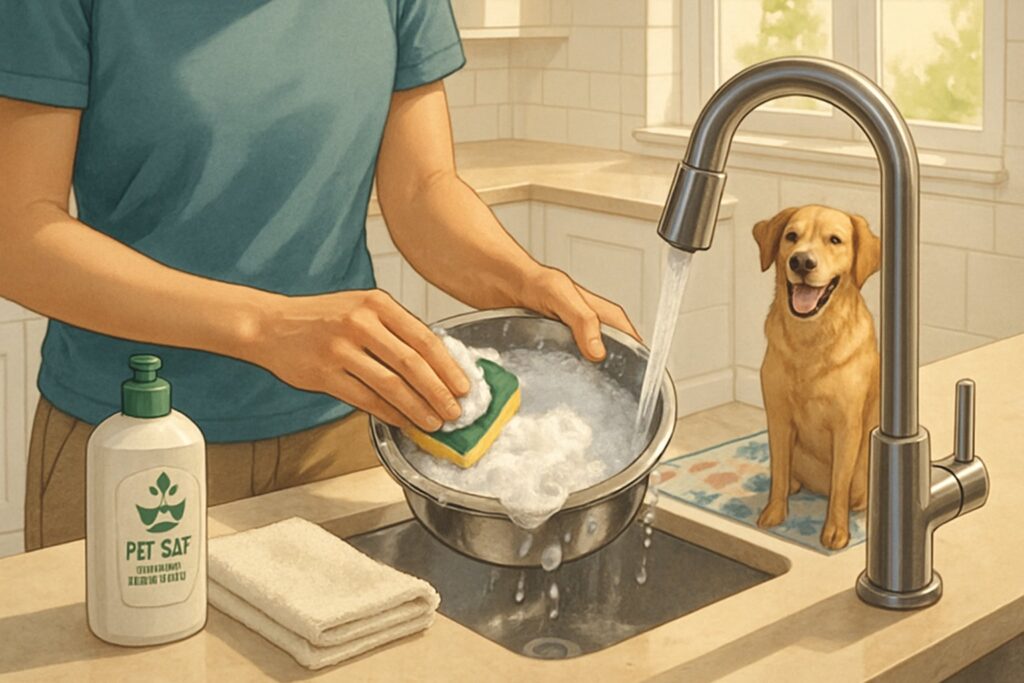
The right way starts with hot water and regular dish soap. I scrape out leftover food first, then fill the bowl with hot soapy water.
My go-to technique:
- Use a dedicated sponge (not the one for my dishes)
- Scrub in circular motions for 30 seconds minimum
- Pay extra attention to the bottom where bacteria love to hide
- Rinse thoroughly with hot water
Temperature matters. I aim for water that’s uncomfortably hot for my hands but not scalding. This heat helps break down grease from wet food and kills surface bacteria.
For stubborn dried food, I let the bowl soak for 10 minutes before scrubbing. The step-by-step cleaning approach I follow ensures I get every bit of residue that could harbor harmful bacteria.
Dishwasher Deep Dives: Do’s and Don’ts
Here’s what I wish someone told me earlier: not all dog bowls belong in the dishwasher.
Safe for dishwasher:
- Stainless steel bowls
- Ceramic bowls (check for cracks first)
- Most plastic bowls labeled “dishwasher safe”
Never put these in:
- Wooden bowls
- Hand-painted ceramics
- Cheap plastic that might warp
I place bowls on the top rack only. The bottom rack gets too hot and can damage materials or warp plastic.
My dishwasher settings: I use the normal cycle with heated dry. No need for heavy-duty unless the bowls are extremely dirty.
Pro tip: I run an empty cycle with white vinegar once monthly to keep my dishwasher clean. This prevents cross-contamination when washing dog bowls alongside my dishes.
The key is checking your bowl material first. When in doubt, I stick to hand washing.
Sanitizing vs. Sterilizing: Next-Level Bowl Hygiene
Most pet owners think sanitizing and sterilizing mean the same thing. They don’t.
Sanitizing reduces bacteria to safe levels. Sterilizing kills everything completely.
For daily cleaning, I sanitize. Once weekly, I sterilize.
My sanitizing method:
- Clean with soap and water first
- Spray with diluted bleach solution (1 tablespoon bleach per gallon of water)
- Let sit for 2 minutes
- Rinse thoroughly
For sterilizing: I use boiling water. After washing, I pour boiling water over the bowl and let it sit for 5 minutes.
White vinegar alternative: Mix equal parts white vinegar and water. This natural sanitizer works great and won’t harm my dog if I miss a spot during rinsing.
I sanitize daily for dogs with sensitive stomachs or health issues. Healthy dogs need this level of cleaning at least twice weekly.
The biggest mistake? Thinking a quick rinse counts as cleaning. Bacteria multiply fast in food residue, and my dog’s health depends on proper bowl hygiene.
Choosing the Right Bowl Material Makes All the Difference
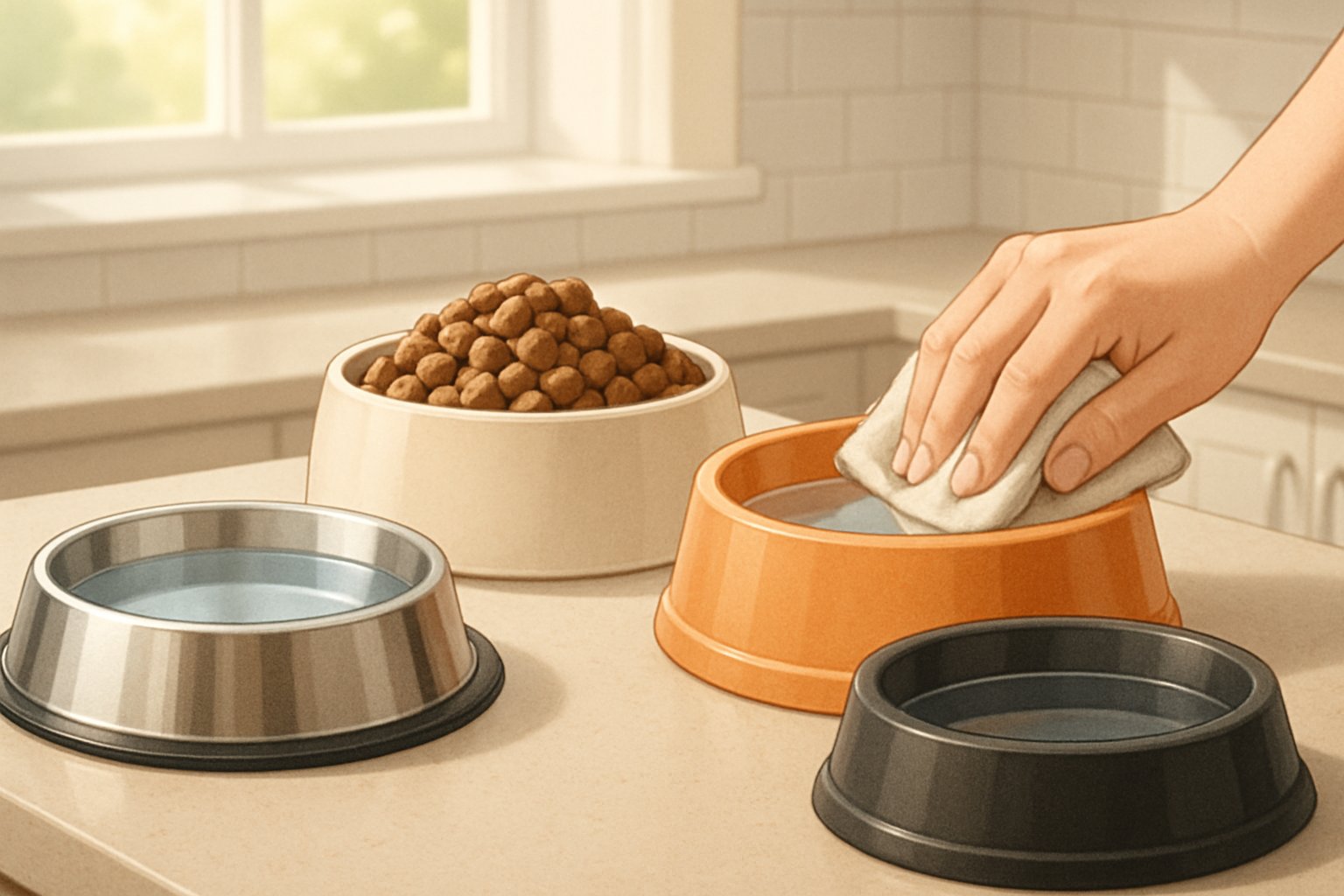
Your dog’s bowl material directly affects bacterial growth and cleaning ease. Metal bowls harbor more bacteria but last longer, while plastic scratches easily and traps germs.
Why Stainless Steel Dog Bowls Win (Almost) Every Time
I’ll be honest—stainless steel dog bowls are my go-to recommendation for most dogs. They’re tough as nails and won’t crack if your pup gets excited during dinner time.
But here’s what surprised me: research shows that metal bowls actually harbor higher bacteria counts than plastic ones. The study found significantly more total mesophilic aerobic bacteria in metal versus plastic bowls.
Don’t let that scare you away though. Stainless steel dog bowls offer major advantages:
- Scratch-resistant surface prevents bacteria hiding spots
- Dishwasher safe for thorough cleaning
- Won’t absorb odors like plastic materials
- Nearly indestructible for aggressive chewers
The key is cleaning them properly. I run mine through the dishwasher after each meal, which kills more germs than hand washing.
Pro tip: Look for bowls with a brushed finish rather than mirror polish. They hide water spots better and feel less slippery under your dog’s nose.
The Case for—and Against—Ceramic Dog Bowls
Ceramic dog bowls look gorgeous in my kitchen, and I love how heavy they are—no more sliding across the floor during mealtime!
These bowls have some real perks. The smooth, non-porous surface cleans easily and doesn’t hold onto smells. Plus, ceramic stays cooler than metal, which some dogs prefer for water bowls.
But ceramic has a dark side. Ceramic dog bowls can harbor lead in cheaper versions, especially decorative ones. I always check that mine are food-safe and lead-free.
Here’s my biggest concern: they shatter. I learned this the hard way when my German Shepherd knocked his bowl off the counter. One crack and you’re dealing with sharp pieces near your dog’s food.
When ceramic works best:
- Calm, gentle eaters
- Indoor-only feeding areas
- Dogs who push lightweight bowls around
Skip ceramic if you have a puppy, large breed, or accident-prone dog. The risk isn’t worth it.
Trouble with Plastic and Other Alternatives
Let me save you some frustration—plastic bowls seem convenient but cause headaches. I’ve tried them multiple times and always end up switching back.
Plastic scratches easily, and those tiny grooves become bacteria hotels. Even worse, some dogs develop chin acne from plastic bowls. The porous surface absorbs oils and bacteria that irritate sensitive skin.
Major plastic problems:
- Scratches harbor germs that survive normal washing
- Absorbs odors permanently over time
- Cracks and chips create more hiding spots for bacteria
- Lightweight = messy mealtimes for enthusiastic eaters
I’ve seen silicone bowls marketed as better alternatives. While they’re flexible and dishwasher-safe, they still scratch and can develop a filmy residue that’s tough to remove.
Bottom line: If you must use plastic, replace it every few months and inspect for scratches regularly. Better yet, invest in quality stainless steel and skip the hassle entirely.
Setting a Cleaning Routine You’ll Actually Stick To

The key to clean dog bowls isn’t perfection—it’s building simple habits that work with your life. I’ve learned that busy dog parents need realistic routines, and there are clear warning signs when your current approach isn’t cutting it.
Busy Dog Parents: Simple Habits for Lasting Health
Let’s be real—you’re juggling work, family, and that adorable furry friend who somehow tracks mud through the house daily. I get it.
The after-meal wipe is my go-to trick. Right after your dog finishes eating, give that bowl a quick rinse or wipe down. Takes 30 seconds, max.
Research shows that cleaning dog bowls after each meal is what 35.7% of dog owners do. But here’s what I’ve discovered works better for real life:
Monday, Wednesday, Friday deep cleans. Mark your calendar. These are your non-negotiable bowl days.
Keep supplies handy. I stash dog-safe dish soap right next to the regular stuff. No hunting around means no excuses.
Dishwasher hack: If you’ve got one, use it. Studies found that dishwashers reduce harmful bacteria better than hand washing when it comes to dog bowls.
Stack your dog’s bowls right in with your dinner dishes. Easy.
What to Watch For: Signs Your Bowl Needs More TLC
That funky smell? Yeah, that’s your first red flag.
I’ve noticed my dog acting weird around his food bowl when it needs attention. He’ll sniff, back away, then reluctantly eat. Dogs have incredible noses—they smell what we miss.
Visual cues I never ignore:
- Slimy film on the surface
- Food stuck in scratches or crevices
- Water that looks cloudy
- Any discoloration
Metal bowls need extra attention. Research indicates that metal bowls harbor more bacteria than plastic ones, especially with wet food.
If your dog suddenly becomes a picky eater, check that bowl first. I learned this the hard way when my pup started leaving half his dinner.
The sniff test works. If it smells off to you, imagine how it smells to your dog’s super-sensitive nose.
Here’s my reality check: when I can see my reflection in the bowl’s surface, I know it’s properly clean. Anything less, and it’s back to the sink.
Frequently Asked Questions
Pet owners often wonder about cleaning schedules, mystery gunk buildup, and whether their furry friend’s finicky eating habits might be linked to bowl hygiene.
Not sure when to swap out your furry friend’s dinner dish for a clean one? Let’s find out together how often that should be!
I clean my dog’s bowl after every single meal. Trust me, I learned this the hard way after watching bacteria grow in standing water.
Studies show that most dog owners clean food bowls after each meal, and there’s good reason for this routine. Food particles left sitting create the perfect breeding ground for harmful bacteria.
Water bowls need daily washing too. Even if the water looks clean, biofilm builds up on the surface within 24 hours.
If you’re feeding wet food, never let that bowl sit dirty for more than an hour. Wet food spoils fast and can make your pup seriously sick.
Ran into some mystery gunk at the bottom of your pup’s bowl? Wondering if it’s harmful or just gross?
That slimy film coating your dog’s water bowl isn’t just gross – it’s called biofilm, and it can harbor dangerous bacteria like salmonella and E. coli.
I’ve seen this pink or brown residue develop in just two days of not washing properly. The bacteria stick together and form a protective layer that’s tough to remove with just a quick rinse.
Food bowls get their own special gunk. Dried food particles mix with saliva and create crusty buildup around the edges.
Some dogs are more sensitive to this bacteria than others. Puppies, senior dogs, and pups with weak immune systems face the highest risk of getting sick.
Stumped on the best way to get your doggo’s bowl shiny and spotless? Let’s look at some effective methods.
Hot soapy water works best for daily cleaning. I use dish soap and scrub with a dedicated sponge that I never use on human dishes.
For weekly deep cleaning, I make a paste with baking soda and water. This removes stubborn odors and stains that regular washing misses.
White vinegar cuts through biofilm like magic. Mix equal parts water and vinegar, let it sit for 10 minutes, then scrub and rinse thoroughly.
Never use bleach on your dog’s bowls. The residue can irritate their mouth and stomach, even after rinsing.
Replace your cleaning sponge monthly to avoid spreading bacteria back onto clean bowls.
You’ve heard whispers about dishwasher-safe dog bowls. What’s the scoop? Should you place your trust in the machine, or not?
Dishwashers work great for stainless steel and ceramic dog bowls. The high heat kills bacteria better than hand washing ever could.
I run my dog’s bowls on the top rack with regular detergent. The sanitizing cycle reaches temperatures that eliminate even stubborn biofilm.
Skip the dishwasher for plastic bowls. The heat can warp them and create tiny scratches where bacteria love to hide.
Always check the manufacturer’s label before tossing bowls in the dishwasher. Some decorative bowls have coatings that don’t play well with dishwasher detergent.
Let bowls air dry completely before refilling. Moisture left on surfaces encourages bacterial growth.
Ever caught your dog turning its nose up at its food? Could the cleanliness of their bowl be the culprit?
Dogs have incredible noses, and they can smell rancid oils and bacteria that we completely miss. I’ve watched my picky eater refuse food from a bowl that looked clean to me.
Soap residue is another common culprit. If you don’t rinse thoroughly, your dog might taste detergent with every bite.
Plastic bowls absorb odors over time. Even after washing, they can smell like old food to your sensitive pup.
Some dogs develop an aversion to bowls that have made them sick before. If your dog got food poisoning from a dirty bowl, they might remember and avoid it.
Try switching to a fresh, clean bowl if your dog suddenly stops eating. You might be surprised how quickly their appetite returns.
Thinking about the material of your best friend’s bowl? Let’s chat about which types make cleanup a breeze and keep germs at bay.
Stainless steel bowls are the most popular choice among dog owners, and I understand why. They don’t absorb odors, resist bacteria, and last forever.
Ceramic bowls look beautiful but can harbor bacteria in chips and cracks. I inspect mine regularly and replace them at the first sign of damage.
Plastic bowls are the hardest to keep clean. They scratch easily, and those tiny grooves become bacterial hideouts that survive even thorough washing.
Glass bowls work well but break easily. I only recommend them for calm dogs who don’t push their bowls around while eating.
Silicone bowls are dishwasher-safe and nearly indestructible, but they can absorb strong food odors over time.