

Training your dog gets so much easier when you’ve got the right treats as rewards. The right dog treats can really help reinforce good behavior and teach new commands faster than you’d expect.
Small, tasty rewards keep your pup focused and motivated during those sometimes-chaotic training sessions. It’s wild how a little treat can make all the difference.
Table of Contents
When you’re shopping for training treats, size matters more than you might think. Training usually means tons of repetition, so your dog ends up eating a bunch of treats in one session.
Small treats let you reward often without overfeeding or filling up your dog too quickly. You also want something irresistible but quick to eat—no one wants to wait five minutes for their dog to finish chewing.
The best training treats are soft, easy to break apart, and small enough for your dog to swallow fast and stay focused. Trust me, you’ll notice the difference.
Ingredients deserve your attention too. If your dog has a sensitive stomach, check for common allergens on the label.
Low-calorie options help prevent weight gain during long training periods. Treats with simple ingredients and strong smells tend to work best because your dog can focus on the reward instead of getting distracted.
We spent weeks researching and testing different dog treats for training to find the ones that deliver results without compromising your pet’s health.
Best Dog Treats for Training
Here’s our full list of the best dog treats for training. We’ve tested small, bite-sized options that work as the perfect reward and keep your pup motivated to learn.
Buddy Biscuits Trainers
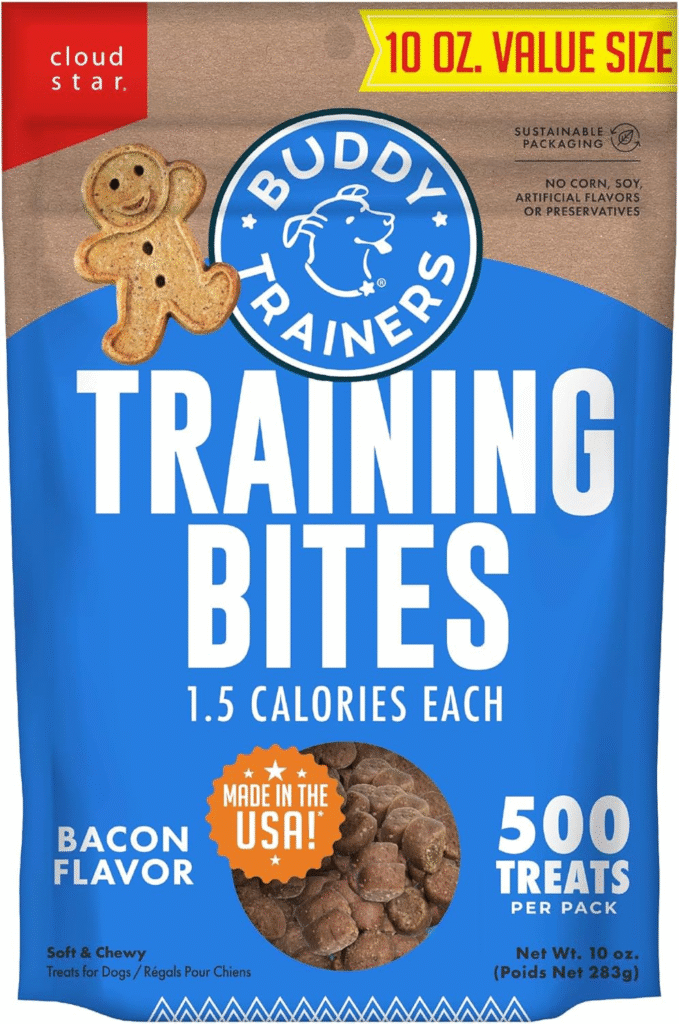
These bacon-flavored soft training treats work well for reward-based training sessions because they’re tiny, low in calories, and dogs actually get excited when they see the bag.
Pros
Cons
We’ve been using these for our training sessions and the size is perfect for quick rewards. Our pup doesn’t have to stop and chew for a long time, which keeps the training momentum going.
The treats are small enough that we can give 10 or 15 during a 20-minute session without feeling guilty about overfeeding. The ingredient list is clean without corn or soy, which we appreciate.
The treats have a pork liver base that most dogs find tasty. They’re soft and chewy, so older dogs or puppies with smaller teeth can handle them without problems.
Breaking them in half is super easy if you’re working with a tiny breed or want to stretch the bag even further. We noticed they don’t crumble into dust like some other soft treats, so our pockets stay relatively clean.
The resealable bag keeps them fresh between training sessions. Not much to complain about here, unless you really hate that bacon smell.
WAG Chicken Training Treats
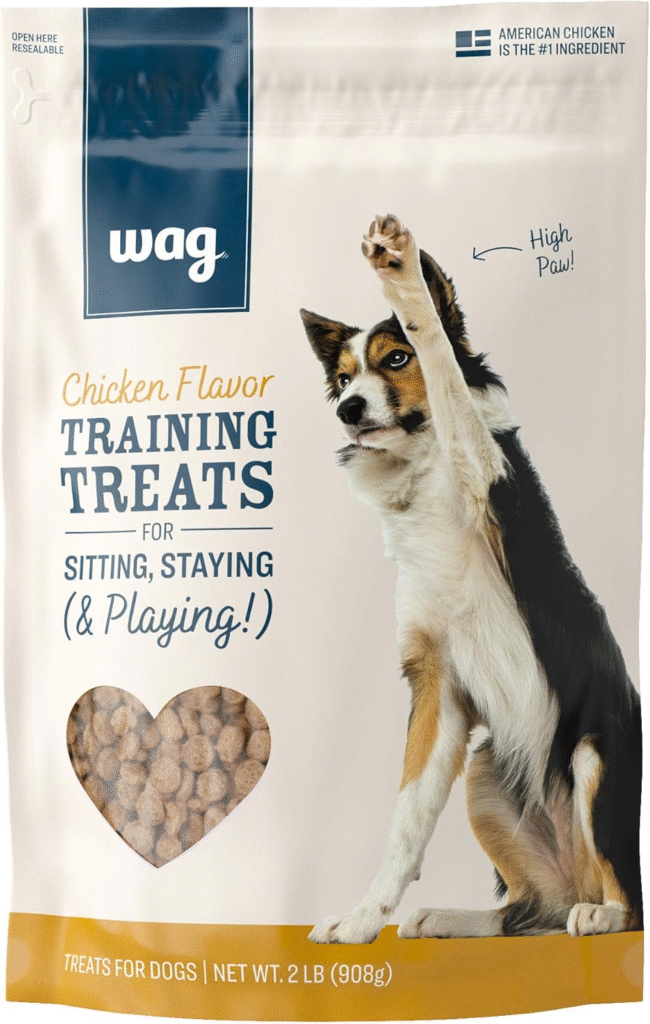
These chicken-flavored training treats from WAG work great for quick rewards during training sessions, especially if you need a lot of treats without breaking the bank.
Pros
Cons
We found these training treats hit the sweet spot between quality and value. The chicken smell is noticeable right when you open the bag, which gets our dogs excited before we even start training.
During our recent puppy training sessions, we could easily grab a handful and keep them in our pocket without making a mess. The size works well for most training situations.
We used them for basic commands like sit and stay, and the small pellets meant we could reward our dogs multiple times without worrying about giving them too many calories. They’re soft enough that dogs can eat them quickly and get back to focusing on training.
The resealable pouch keeps the treats fresh between sessions. We’ve had our bag for a few weeks now, and they still smell just as strong as day one.
No corn, soy, or wheat means these work for dogs with some common food sensitivities, though the chicken base won’t work for pups allergic to poultry. Our dogs genuinely got excited when they saw us reach for the bag.
The treats broke apart easily when we needed smaller pieces for our tiniest learner. At this price point for two pounds, we didn’t feel bad about using them generously during training.
Vital Essentials Beef Liver Training Treats
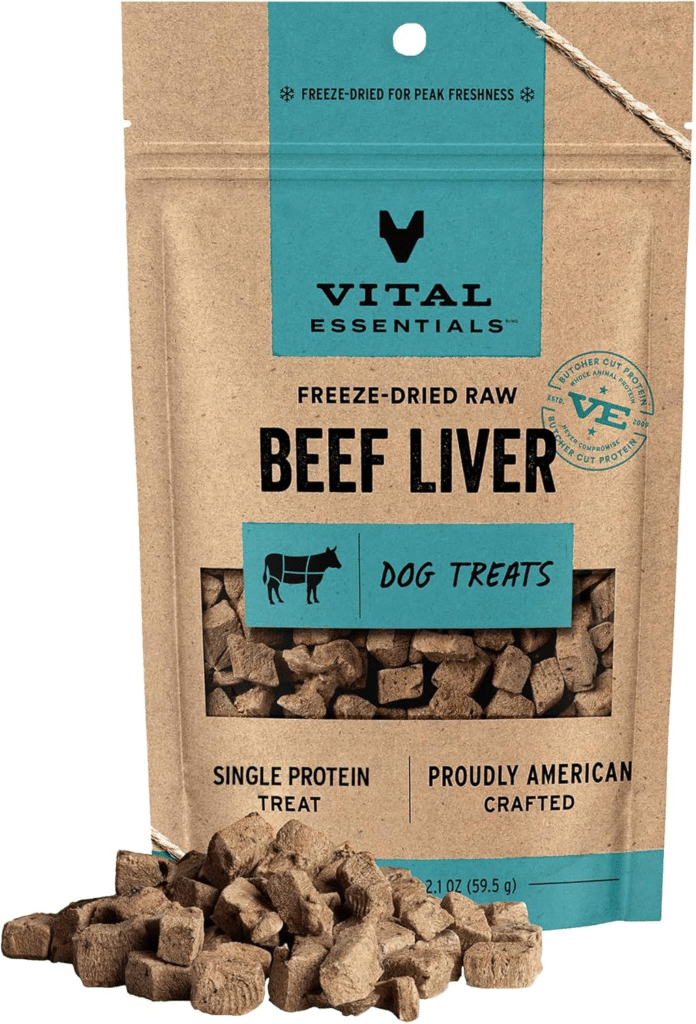
These freeze-dried beef liver treats work great for training because they’re small, easy to break apart, and dogs go absolutely wild for them.
Pros
Cons
We’ve been using the Vital Essentials Beef Liver treats for the past few weeks during training sessions. The freeze-dried pieces are light and airy, which makes them easy to carry around without weighing down our treat pouch.
The smell is intense. Like, really intense. Our dog can smell these from across the yard, which is actually perfect for getting his attention during recall training.
We’ve noticed he responds faster to commands when he knows these treats are the reward instead of his regular kibble. Breaking the pieces into smaller rewards is easy since they crumble naturally.
This helps when we’re working on basic commands and need to give lots of small treats without filling him up. The downside is that all those crumbles end up as dust at the bottom of the bag.
We appreciate that it’s just beef liver and nothing else. No weird ingredients or fillers that we can’t pronounce.
The 2.1 ounce bag doesn’t last long if you’re doing daily training. We ran through our first bag in about a week with two 15-minute sessions each day.
Blue Buffalo Bits Beef Training Treats
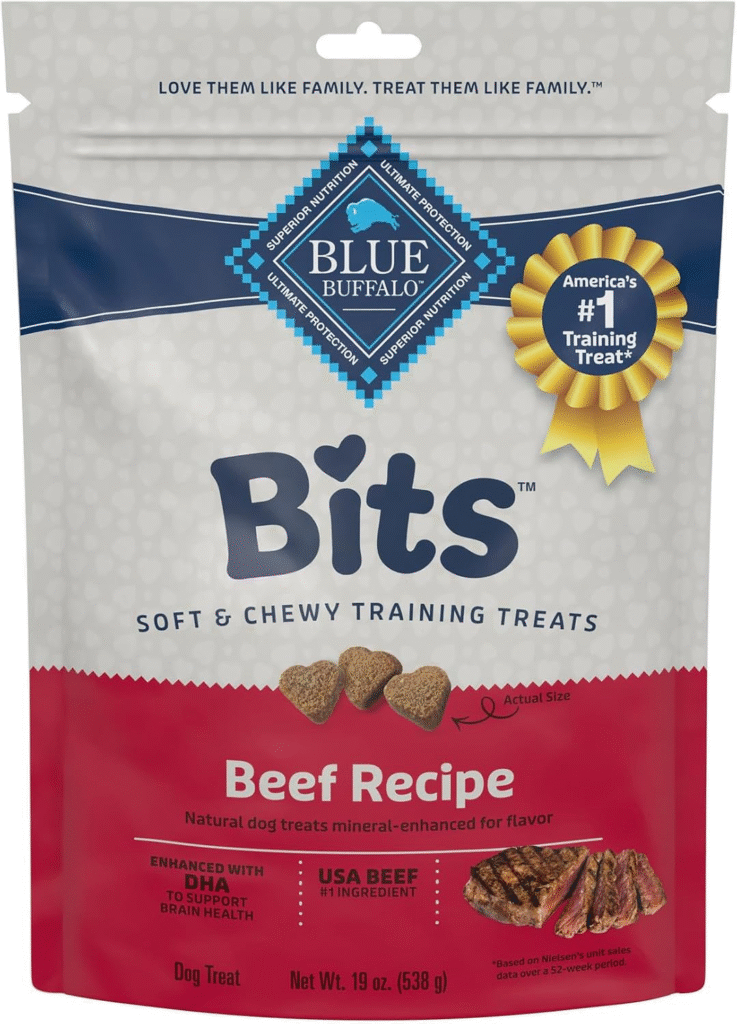
These soft, beef-flavored training treats work well for rewarding good behavior during training sessions with dogs of all sizes.
Pros
Cons
We’ve used these training treats with multiple dogs during basic obedience work. The soft texture breaks apart easily in your pocket, which can get messy during long training sessions.
But that same softness makes them quick to chew, so your dog stays focused on learning instead of spending time crunching through a hard biscuit. The beef smell is strong enough that we could get our dog’s attention from across the yard.
We noticed the small size lets us give more rewards during a single training session without worrying about adding too many calories to our dog’s daily intake. Each piece is about the size of a fingernail, so they disappear in one bite for medium and large dogs.
The ingredient list impressed us since it skips the chicken by-products and artificial colors we try to avoid. We appreciated that these work for puppies through senior dogs.
The DHA addition might support brain development in younger pups, though we can’t measure that directly during training. One thing caught us off guard—our dog’s stomach didn’t adjust well to these treats even after a full week of use.
We had to switch back to a different brand to stop the digestive issues. Other dogs we know had zero problems, so your results might vary.
The 19-ounce bag seems generous at first. But when you’re doing multiple short training sessions each day with a small treat-motivated dog, you’ll go through it faster than expected.
We found ourselves rationing them toward the end of the bag, which made us wish the value matched the quality better. Still, for the right dog, they’re a hit.
Buddy Biscuits Training Bites
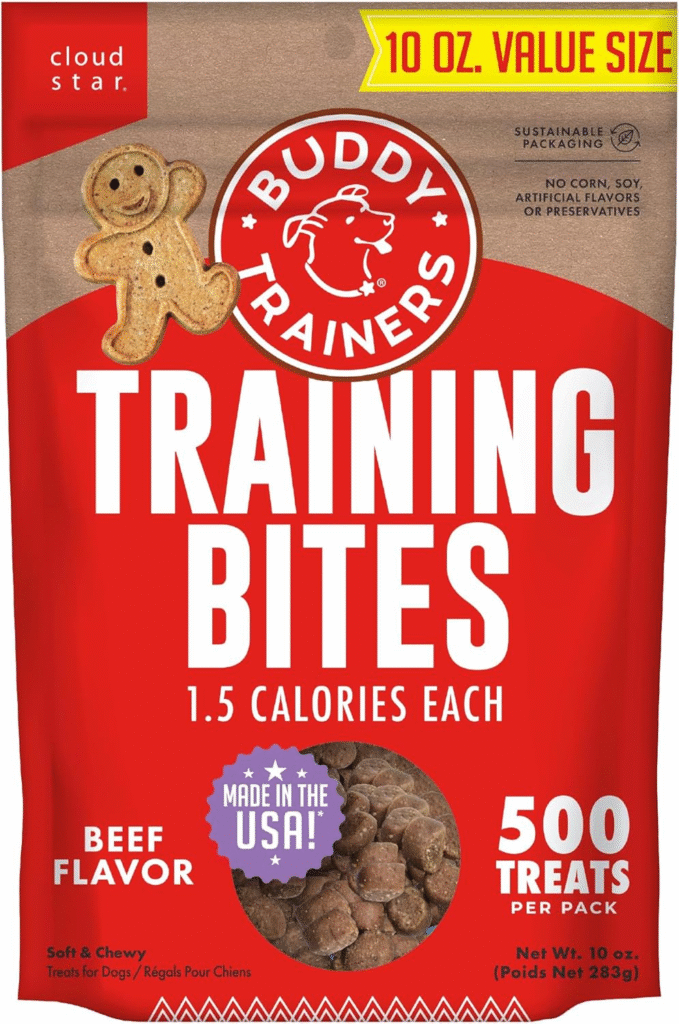
These treats keep training sessions moving and don’t pile on the calories. They’re a favorite in our house for that reason alone.
Pros
Cons
We’ve used these training bites with our dogs during basic obedience work. They kept our pups motivated and interested.
The small size works well for rapid-fire reward training. Our dogs really liked the pork liver flavor and stayed focused, which is always a win.
The calorie count stands out if you’re doing longer training sessions. You can hand out 20 treats and only add 30 calories—honestly, that’s a relief when you’re working on new commands and repeating them a lot.
The texture is soft enough for older dogs with dental issues. We could break them in half easily for even smaller rewards, which is great for tiny breeds.
They do leave some residue on your fingers, but a quick wipe solves that. Not a dealbreaker, just something to know.
The bag lasts us about two weeks with daily training. With 500+ treats, it’s solid value compared to other training treats we’ve tried.
The strong scent that bugs us is actually what gets our dogs excited when they see the bag. Funny how that works.
Buying Guide
Choosing the right dog treats for training really can make a difference in how quickly your pup learns. We want to help you find treats that work as a reward without overfeeding or blowing your budget.
Size Matters for Training Success
Small treats work best for training sessions. Your dog needs to eat the reward fast and get back to learning.
Large treats slow things down and add unnecessary calories. Look for treats about the size of a pea or smaller.
If the treats you buy are too big, break them into smaller pieces before your training session starts. It saves time and mess later.
Key Features to Consider
When we’re shopping for training treats, a few features always stand out:
| Feature | What to Look For |
|---|---|
| Size | Pea-sized or smaller for quick consumption |
| Calorie Count | Low-calorie options to avoid overfeeding |
| Ingredients | Simple, recognizable ingredients your dog can digest |
| Texture | Soft treats usually work faster than crunchy ones |
| Smell | Strong aroma keeps your dog motivated |
Ingredients and Quality
We always check the ingredient list first. Fewer ingredients is usually better.
Avoid treats with artificial colors, flavors, or preservatives. Real meat should show up first on the list, giving the treat a natural smell that dogs love during training.
Value and Practicality
Think about how many treats come in each package. Training sessions use more treats than you’d think.
We look for packages that offer good value without sacrificing quality. Resealable bags help keep treats fresh after opening, so they don’t get stale between sessions.
Frequently Asked Questions
Training treats aren’t just snacks—they’re tools for building trust and teaching new skills. Here are some of the most common questions we get about finding the right reward for your dog’s training needs.
What are the top-rated options for keeping training time both yummy and productive for your pooch?
Small, soft treats work best for most training sessions. Your dog can eat them quickly and get back to learning.
Freeze-dried liver, chicken, or salmon treats consistently rank as favorites. Dogs go wild for that intense smell and flavor.
Look for treats that are bite-sized or easy to break into smaller pieces. You want something your dog can gobble up fast, not a snack that drags out the session.
High-value options trainers love include small pieces of cooked chicken, string cheese cubes, and commercial training treats with real meat as the first ingredient. These keep your dog focused without filling them up too fast.
The best training treats should be pea-sized for small dogs and about dime-sized for larger breeds. We like to have a mix of medium-value and high-value treats—save the really good stuff for tough tricks or distracting environments.
Ever wondered how to whip up a batch of healthy treats for your four-legged buddy at home?
Homemade dog treats for training are honestly easier to make than you’d think. We love being able to control what goes into our pup’s rewards.
Start with a simple recipe using sweet potato or pumpkin as the base. Mix two cups of whole wheat flour with one cup of mashed sweet potato and a beaten egg. Roll the dough thin, cut it into tiny pieces, and bake at 350°F for about 20 minutes until they’re firm.
For a protein-packed option, slice chicken breast into small cubes and bake at 200°F for three hours until they’re dried out. These homemade jerky treats keep well in the fridge for up to a week.
You can also freeze little dollops of plain Greek yogurt mixed with mashed banana on a baking sheet. Once frozen, break them into pea-sized pieces for quick indoor training rewards.
Curious about the advantages of using natural ingredients in your furry friend’s training snacks?
Natural ingredients mean fewer fillers, artificial colors, and weird additives. We’ve noticed dogs digest cleaner treats better and often have shinier coats and more consistent energy.
Natural treats usually have real ingredients like meat, veggies, and fruits instead of corn syrup or chemical preservatives. This matters because you’re giving a lot of treats during training.
Dogs with sensitive stomachs handle natural ingredients way better. If your pup gets an upset tummy from certain treats, switching to limited-ingredient natural options often helps.
Natural doesn’t always mean pricey, either. Single-ingredient treats like dehydrated sweet potato chips or freeze-dried meat give you clean nutrition without breaking the bank. Your dog gets pure flavor, and that’s pretty motivating.
How large a treat should you offer to your big dog during training sessions without overdoing it?
Big dogs still need small treats during training, even if it feels odd. We recommend treats about the size of a dime or nickel for large breeds—just enough to taste and enjoy without slowing things down.
Training sessions involve lots of repetition. If you hand out big rewards every time, your dog fills up fast and loses interest in working for more treats.
Think about it this way: a 70-pound dog needs around 1,400 calories per day. If training treats make up more than 10% of that (140 calories), you’ll need to cut back on regular meals to avoid weight gain.
Cut larger treats into smaller pieces before you start training. Your big dog cares more about how often they get rewarded than the size—twenty small treats feel better than five big ones.
For really big dogs learning basic commands, even smaller pieces work fine. Save the slightly larger treats for tough lessons or extra motivation.
Any tips on finding the nearest spot for grabbing those high-value treats that make your dog’s tail wag in excitement?
Most local pet stores carry at least a few high-value training treat options, usually in the refrigerated section. Check near the front where they keep fresh stuff like raw food and special snacks.
Your regular grocery store can work too. Head to the meat section for plain cooked chicken strips, or grab string cheese from the dairy aisle. Both make excellent high-value rewards you can portion at home.
Online shopping gives you the widest selection if local stores don’t have what you need. Pet supply websites usually offer freeze-dried meat treats, fish-based options, and specialty training treats you might not find nearby.
Farm supply stores sometimes have bulk options for training treats at better prices. We’ve found good deals on big bags of small biscuits and jerky-style treats at those places.
Don’t overlook your local butcher. Many will sell you small amounts of liver, chicken hearts, or other organ meats you can cook and cut up for premium training rewards—most dogs absolutely love them.
Considering using treats to train your dog? Ever ponder the pros and cons?
Using treats for training works incredibly well because it taps into what naturally motivates dogs—food.
We see faster learning and happier dogs when positive reinforcement with treats is part of the training plan.
The biggest advantage is that treats create a clear connection between the behavior and the reward.
Your dog learns exactly what action earned them that tasty morsel, which speeds up learning for everything from basic commands to complex tricks.
Treats also strengthen your bond with your dog.
You become the source of good things, which builds trust and makes your pup more eager to work with you during training sessions.
The main concern? Over-reliance on treats.
Some dogs act like they won’t listen unless food is in your hand.
We handle this by gradually reducing treat frequency as commands become reliable, mixing in praise and play as rewards too.
Weight management matters, too.
All those small training treats add up calorie-wise, so it makes sense to adjust your dog’s regular meals slightly downward on heavy training days.
Some dogs have food allergies or sensitivities that limit treat options.
In those cases, we work with what your dog can safely eat, even if that means using small pieces of their regular kibble as a reward during less distracting training situations.


Leave a Reply
You must be logged in to post a comment.