

Your dog’s getting older, and you’re probably wondering if it’s time to change up their food. Senior dog food is specially made to support aging dogs with adjusted protein levels, fewer calories for slower metabolisms, and added nutrients like omega-3 fatty acids and antioxidants to help with joint health, inflammation, and overall vitality.

Table of Contents
I get it. Watching your pup slow down on walks or struggle to jump on the couch hits hard.
You want to do everything you can to keep them comfortable and healthy for as long as possible. The good news? What you feed them plays a huge role in how well they age.
In this guide, I’ll walk you through why senior dog food matters, when to make the switch, and how to pick the best option for your aging best friend.
You’re about to learn how nutrition plays a key role in helping senior dogs age well and what specific benefits these formulas offer that regular adult food just can’t match.
Senior Dog Food Benefits – Key Takeaways
- Senior dog food contains adjusted nutrients to support aging dogs’ changing metabolism and health needs
- Most dogs should transition to senior food between ages 7 and 10 depending on their size and breed
- The right senior diet can improve joint mobility, reduce inflammation, and help your dog maintain a healthy weight as they age
Why Senior Dog Food Is a Game Changer
Senior dog food delivers targeted nutrition that directly addresses the physical changes happening in your aging dog’s body right now. I’ve seen how the right senior dog food formula can transform an older dog’s energy levels, joint comfort, and digestive health in just weeks.
Tailored Nutrition for Aging Dogs
The nutritional needs of older dogs shift dramatically as they age. I’m talking about real changes in metabolism, immune function, and how their bodies process nutrients.
Most senior dog food formulas contain 20-30% fewer calories than adult formulas. Your older dog simply doesn’t burn energy like they used to.
Their metabolism slows down, and they’re less active than their younger years.
Here’s what changes in senior dog diets:
- Lower protein (but higher quality) to support aging kidneys
- Added fiber for digestive regularity
- Reduced fat to prevent weight gain
- Boosted vitamins and minerals to support immune health
Senior dog food also packs in antioxidants that fight cellular damage. As pets get older, they experience diminished immune function and increased susceptibility to chronic diseases.
The right formula helps combat this decline before it becomes a serious problem.
How Senior Food Supports Mobility and Joints
I can’t overstate how much joint support matters in dog food for senior dogs. Your aging pup’s joints take a beating over the years, and standard adult food doesn’t address this wear and tear.
Senior formulas typically include glucosamine and chondroitin. These compounds help maintain cartilage health and cushion joints naturally.
I’ve watched dogs who struggled with stairs suddenly regain confidence in their movement.
Omega-3 fatty acids are another game changer. They reduce inflammation throughout the body, which means less joint pain and stiffness.
Your dog moves easier, plays longer, and shows more interest in activities they’d been avoiding.
Key mobility nutrients in senior formulas:
- Glucosamine (500-1000mg per serving)
- Chondroitin sulfate
- Omega-3 fatty acids (EPA and DHA)
- Antioxidants like vitamin E
The anti-inflammatory properties work at the cellular level. Research shows specific ingredients can reduce inflammation markers by up to 23% in dogs.
Digestive Perks You’ll Notice Fast
Your senior dog’s digestive system isn’t what it used to be. I’m talking about slower gut motility, reduced enzyme production, and a more sensitive stomach overall.
Senior dog food formulas use highly digestible proteins. Think chicken, fish, or lamb that’s easier for aging digestive systems to break down and absorb.
Your dog gets more nutrition from less food. Added prebiotics and probiotics support gut health directly.
These beneficial bacteria help with nutrient absorption and keep things moving smoothly through the digestive tract.
You’ll notice firmer stools, less gas, and fewer upset stomach episodes. The increased fiber content (usually 3-5% in senior formulas) promotes regular bowel movements without causing diarrhea.
Digestive benefits you can expect:
- Better nutrient absorption
- More consistent bathroom habits
- Reduced flatulence and bloating
- Less strain during elimination
The smaller kibble size in many senior formulas also helps dogs with dental issues or jaw pain eat more comfortably.
Deciding When to Switch to Senior Dog Food
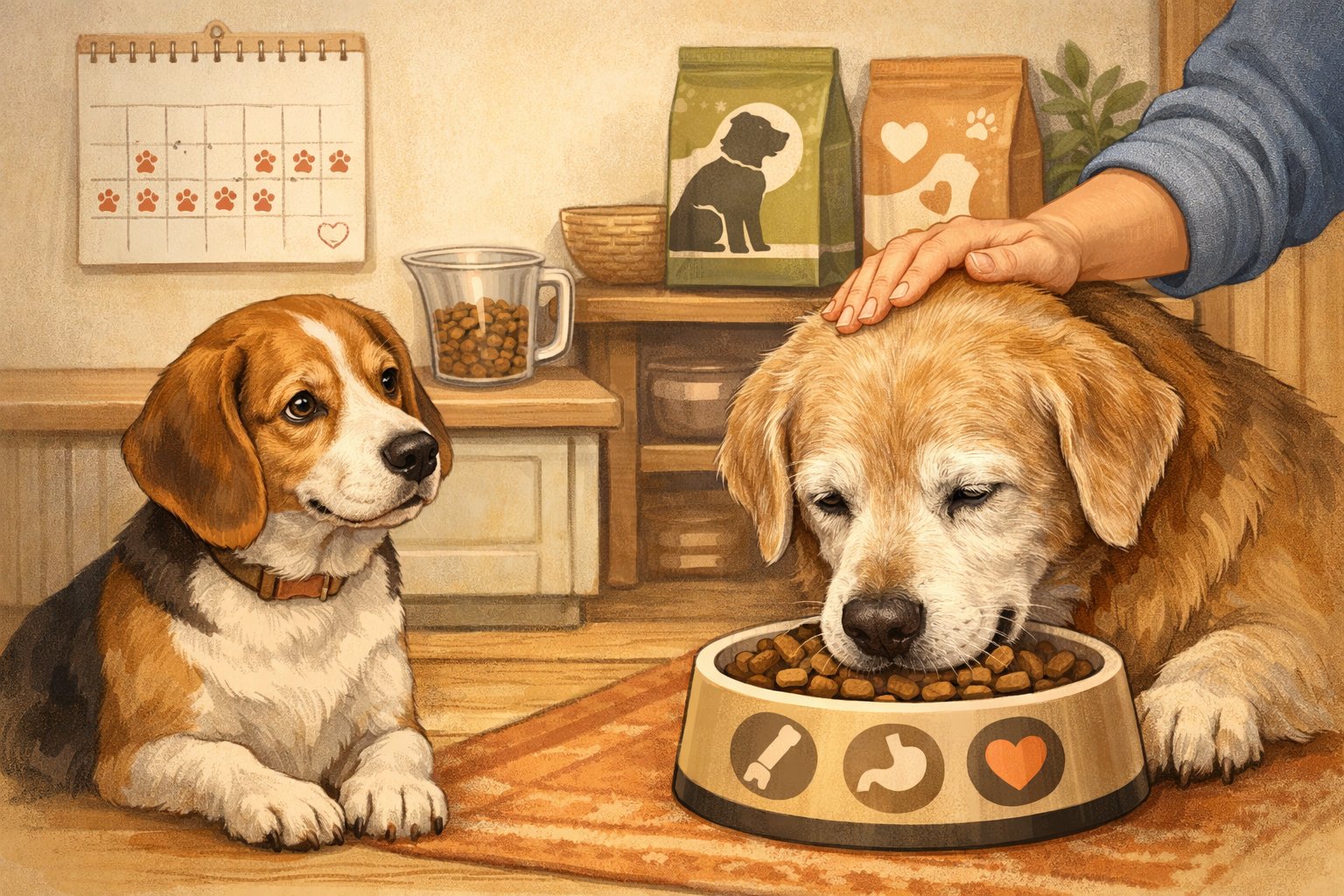
Knowing when to switch to senior dog food depends on your dog’s breed size, physical changes, and your vet’s guidance. Most dogs benefit from transitioning to senior dog food between ages 5 and 7, but smaller breeds age differently than larger ones.
Typical Age Milestones by Breed Size
I’ve learned that the right time to switch to senior dog food varies significantly based on how big your dog is. Giant breeds like Great Danes age faster than tiny Chihuahuas.
Here’s what I recommend based on breed size:
- Giant breeds (over 90 pounds): Switch around age 5-6
- Large breeds (50-90 pounds): Transition around age 6-7
- Medium breeds (20-50 pounds): Switch around age 7-8
- Small breeds (under 20 pounds): Wait until age 8-10
Giant breeds have shorter lifespans and enter their senior years earlier. My friend’s Mastiff started showing signs of aging at just 5 years old.
Meanwhile, small dogs like Yorkies and Pomeranians often stay spry well into their double digits. The key is watching your individual dog rather than following rigid age rules.
Some dogs need senior food earlier than others, even within the same breed.
Signs Your Dog’s Ready for a Diet Change
Your dog will tell you when it’s time to transition to senior dog food if you know what to look for. I always watch for these physical and behavioral changes.
Common signs include:
- Decreased activity levels or reluctance to exercise
- Weight gain despite eating the same amount
- Stiff joints or difficulty getting up
- Digestive issues like gas or constipation
- Dull coat or dry skin
- Reduced appetite or pickiness about food
Let me be real—if your dog starts turning down their regular food or struggles with stairs they used to bound up easily, their nutritional needs are changing.
Senior dog nutrition addresses these age-related changes through adjusted calorie content and nutrient ratios.
I’ve noticed that dogs with lower energy often need fewer calories to prevent weight gain. That’s where senior formulas help—they typically have reduced energy density to match your aging dog’s slower metabolism.
Working with Your Veterinarian
I can’t stress this enough: talk to your vet before transitioning to senior dog food. Your vet knows your dog’s health history and can spot issues you might miss.
Schedule a senior wellness exam around the time you’re considering the switch. Your vet will check your dog’s weight, joint health, organ function, and dental condition.
These factors all influence when and how to change your dog’s diet.
What your vet will evaluate:
- Blood work to check kidney and liver function
- Body condition score and weight trends
- Joint mobility and arthritis signs
- Dental health affecting chewing ability
Some dogs need prescription senior diets for specific health conditions like kidney disease or obesity. Others do fine with over-the-counter options.
Your vet can recommend the best food based on your dog’s individual needs rather than just their age. I always ask my vet about transitioning gradually over 7-10 days to avoid digestive upset.
Mix increasing amounts of the new senior food with decreasing amounts of the old food each day.
How Senior Dog Food Meets Unique Health Needs
Senior dog food is built for the changing nutritional needs of older pups. Brands adjust protein, fat, and fiber to help aging bodies keep moving and feeling good.
These formulas usually add more joint support ingredients. You’ll also find modified calorie content for weight management and nutrients that support brain health.
Weight Management for Less-Active Dogs
Most senior dogs slow down, at least in my experience. They nap more and chase squirrels less as the years go by.
With this shift, older dogs usually need fewer calories to avoid packing on extra pounds. Senior formulas often lower energy density so your dog feels satisfied without overeating.
You’ll notice higher fiber in many of these foods. It fills your dog’s belly, so they don’t beg for more even though they’re eating fewer calories.
But not every older dog fits the mold. Some struggle to keep weight on, especially if they have chronic health problems.
If your senior pup is dropping pounds or skipping meals, you might need a calorie-boosted senior food instead.
Key weight management features in senior dog food:
- Lower fat content than standard adult formulas
- More fiber to promote fullness
- Reduced calories per cup
- Quality protein to help keep muscle during weight loss
Support for Joint, Skin & Coat Health
Joint problems are tough on older dogs. I always look for foods with glucosamine and chondroitin for cartilage and joint support.
Omega-3 fatty acids do double duty in these diets. They help soothe achy joints and keep skin and coats looking healthy. Most senior formulas bump up these essential fats for just that reason.
Older dogs need more than just joint support, though. Senior blends often add antioxidants like vitamin E and selenium to protect aging cells.
Look for these joint and skin support ingredients:
- Glucosamine and chondroitin for cartilage
- EPA and DHA (omega-3s from fish oil)
- Vitamin E for skin health
- Zinc for coat quality
Some senior dog foods even use novel proteins that are easier on sensitive stomachs. That comes in handy as digestion gets finicky with age.
Boosting Cognitive and Immune Function
Ever notice your older dog looking a bit confused sometimes? Cognitive decline creeps up, but the right nutrients can help keep their mind sharp.
Senior dog foods often add medium-chain triglycerides (MCTs) and antioxidants. MCTs give aging brain cells an extra energy source, which is pretty cool if you ask me.
The immune system doesn’t get any stronger with age. Good senior diets raise levels of antioxidants like vitamins C and E to help protect cells and support immune response.
Some brands toss in probiotics, too. Those friendly bacteria help with digestion and boost immune health from the gut out.
Brain and immune-boosting nutrients:
- Antioxidants (vitamins C, E, beta-carotene)
- Medium-chain triglycerides for brain energy
- Probiotics for gut and immune support
- B-vitamins for nerve and brain function
Dental Care and Appetite Tips
Dental issues are no joke for older dogs. I’ve seen pups turn down kibble because their gums or teeth hurt too much.
If your dog can’t handle crunchy food, canned senior food is a softer, gentler option. Plus, wet food adds moisture, which helps with hydration.
Appetite can drop with age, too. Senior formulas usually pack more nutrition into smaller portions, so even picky eaters get what they need. Natural flavors and tempting smells can make meals more appealing.
Try warming up wet food a bit. The aroma gets stronger and can tempt even stubborn eaters. Or, pour some warm water over dry kibble to soften it and boost the smell.
Appetite and dental solutions:
- Mix wet and dry food for different textures
- Warm food to release more aroma
- Pick smaller kibble sizes for easier chewing
- Feed several small meals instead of two big ones
Don’t skip regular dental checkups. Even the fanciest senior food can’t replace a vet’s care for your dog’s teeth and gums.
Finding the Best Senior Dog Food for Your Pup
When I started looking for the best senior dog food for my own pup, I was surprised by how many options there were. Turns out, there’s no single “best” formula—your dog’s health, habits, and taste buds all matter.
Comparing Senior Dog Food Formulas
Choosing a senior dog food takes more than just grabbing the bag that says “senior” on the front.
So what sets senior dog food apart? Most have fewer calories for less active dogs. You’ll often find added joint support like glucosamine and chondroitin, and usually more fiber for digestion.
Here’s what I check when weighing my options:
- Protein content: Good quality protein helps maintain muscle
- Fat levels: Enough fat for energy, but not so much it adds pounds
- Supplements: Joint support, antioxidants, and omega fatty acids
- Digestibility: Ingredients that are easy on an older dog’s system
Some seniors do fine on adult formulas, while others need something more specialized. My vet always says to focus on blood work and body condition, not just age.
Dry, Wet, and Specialty Diets: What’s Right for You?
I used to believe dry food was the only way to go, but senior diets come in all sorts of forms for a reason.
Dry kibble works if your dog still has decent teeth. It’s easy to store, doesn’t spoil fast, and can help with tartar.
Wet food became my pick when my dog’s teeth got sensitive. The soft texture is gentle, and the extra moisture is good for dogs who don’t drink enough.
Specialty diets are for specific health issues. If your pup deals with kidney trouble, arthritis, or weight struggles, these formulas might really help.
Sometimes I mix wet and dry for variety. My dog gets the crunch of kibble and the taste boost from wet food.
Making the Transition Smooth & Stress-Free
I’ve rushed food changes before and regretted it. It can get messy, fast.
The 7-day transition method is my go-to now:
Days 1-2: Mix 25% new food with 75% old food.
Days 3-4: Go half-and-half.
Days 5-6: Use 75% new, 25% old.
Day 7: All new food.
Watch your dog for signs of trouble. If you see loose stools, vomiting, or skipped meals, slow down and stretch the transition to 10-14 days.
Pro tip: I feed my senior dog at the same times in the same quiet spot every day. Routine helps lower stress. If your dog seems nervous about the new food, try warming it up a little to boost the smell.
Keep their water bowl full and fresh during this time. Hydration makes it easier for their belly to handle the new ingredients.
Frequently Asked Questions
Senior dog food isn’t just about trimming calories. It’s about dialing in protein, adding joint helpers, and packing in antioxidants that help older pups stay sharp and comfortable.
Wondering what makes food tailored for older dogs different than the regular kibble?
Honestly, senior dog food is more than adult food in a new bag. The biggest difference? Protein quality and amount.
Older pups actually need more high-quality protein to fight muscle loss, not less. Research shows cutting protein for seniors can actually speed up muscle loss, which is the last thing you want for your dog.
Senior blends usually have fewer calories per cup. Dogs slow down as they age, so they don’t need as much energy to stay healthy.
But here’s the real deal—senior formulas load up on joint support like omega-3s and often add extra fiber for digestion. They’re made for what older bodies need, not just to fill the bowl.
How does the right nutrition help manage a senior dog’s joint health?
Think of omega-3 fatty acids as your dog’s secret weapon against stiff joints. These fats, especially EPA and DHA from fish like salmon, bring some serious anti-inflammatory power to the table.
Omega-3s from oily fish can help reduce inflammation and support joint health in dogs with arthritis. That’s huge when you’re watching your older pup struggle to climb stairs or jump on the couch.
Most commercial kibbles are packed with vegetable oils that throw off the balance of omega-6 to omega-3 fatty acids. This imbalance can actually make inflammation worse instead of better.
I always look for senior foods that list fish or fish oil high in the ingredient list. The difference in mobility can show up within weeks—sometimes sooner than you’d expect.
Have you noticed your golden-aged sidekick slowing down during walks?
It’s not just about sore joints—your senior dog’s whole body is working differently now. Their metabolism drops, so they naturally have less energy to burn.
Slowing down can also mean their current diet isn’t cutting it anymore. Lower muscle mass means less stamina, and that muscle loss speeds up if they aren’t getting enough protein.
Studies indicate that once-daily feeding patterns may be associated with better health outcomes in older dogs. The timing and quality of meals matter more than you might think.
I’ve found that switching to leaner protein sources like turkey or kangaroo helps maintain muscle and keeps weight in check. More muscle means more energy for those daily walks you both love.
What ingredients should you look for to support your aging dog’s cognitive function?
Your dog’s brain needs protection from oxidative damage that speeds up as they age. Antioxidants from colorful fruits and vegetables are your best defense here.
Research demonstrates that diets rich in antioxidants can decrease cognitive decline and improve age-related behavioral changes in senior dogs. We’re talking about real, measurable differences in memory and learning.
Look for ingredients like blueberries, strawberries, leafy greens, and broccoli. These aren’t just filler—they’ve got phytonutrients that help protect brain cells from dying off.
Omega-3 fatty acids, especially DHA, also play a big role in brain health. I always check that senior formulas include both antioxidant-rich plants and quality fish sources.
Curious about the role of antioxidants in your senior fur baby’s diet?
Antioxidants do way more than just support brain function—they’re like bodyguards for your dog’s entire system. Free radicals cause cell damage throughout the body, and this damage speeds up disease development.
Phytonutrients from plants can reduce risk factors for obesity, diabetes, cardiovascular disease, and certain cancers in senior dogs. They also boost immunity and help repair DNA damage, which is honestly pretty amazing.
The brain is especially vulnerable because it’s packed with fat that oxidizes easily. That’s probably why you might notice your senior dog getting disoriented, anxious, or having sleep problems.
I make sure my older dog gets a rainbow of plant-based ingredients. Carrots, beetroot, mushrooms, fresh herbs—each color brings in different protective compounds, working together in ways we don’t always understand but definitely appreciate.
Let’s be real, how often should you switch up a senior dog’s diet plan to keep them in top shape?
If you’ve landed on a good senior formula that your dog likes and digests well, you don’t need to keep rotating foods. Honestly, changing things up too often just messes with their stomach.
What’s more important? Adjusting how much you feed as your dog’s weight or activity level shifts. Seniors pack on pounds fast when their metabolism slows, so I pay closer attention to their body shape than to the calendar.
If you notice new stiffness, brain fog, tummy troubles, or your dog just seems less energetic, it’s probably time to rethink their diet. These little changes usually mean their nutrition needs a tweak.
As the gut microbiome becomes less diverse with age, tossing in some probiotics or trying a fresh, whole-food diet can really help. I’d check with your vet before making any big changes, but smaller stuff—like adding fish oil or probiotics—can happen whenever you feel it’s needed.


Leave a Reply
You must be logged in to post a comment.