
If you’re feeding your cat commercial food, every single brand tested by researchers contained detectable levels of glyphosate, a widely used herbicide that’s sparking serious concerns among pet owners. This chemical, commonly found in weed killers, doesn’t just stay in your garden—it ends up in the corn, soy, and other plant ingredients that make their way into your cat’s bowl.
I’ve been digging into this issue because so many cat parents are asking the same question: is this stuff actually harmful to my feline friend? The research shows glyphosate has been found in the urine of both dogs and cats, proving our pets are definitely being exposed. What’s more concerning is that every commercial pet food product tested contained detectable glyphosate residues, with levels ranging from moderate to surprisingly high.
Here’s what I’m going to break down for you: why this chemical keeps showing up in cat food, what the latest research tells us about potential health risks, and most importantly, what you can actually do to minimize your cat’s exposure. The controversy around glyphosate safety is real, but I’ll help you separate the facts from the fear-mongering so you can make informed decisions about your cat’s diet.
Key Takeaways
- All tested commercial cat foods contain detectable glyphosate residues from contaminated plant ingredients like corn and soy
- Research confirms cats are being exposed to glyphosate, with the chemical found in their urine and feces
- You can reduce your cat’s glyphosate exposure by choosing organic foods or brands that avoid GMO ingredients
Why Is Glyphosate in Cat Food?
Glyphosate doesn’t get added to cat food on purpose—it ends up there through contaminated ingredients. Most plant-based ingredients used in pet food have been treated with this herbicide during farming.
How Glyphosate Ends Up in Pet Food Ingredients
Here’s the thing—glyphosate is everywhere in modern agriculture. Farmers spray Roundup on crops like corn, soybeans, and wheat that later become ingredients in your cat’s food.
The herbicide gets absorbed into plant tissues and can’t be washed off. It doesn’t break down during food processing either because it’s thermally stable.
Research shows glyphosate residues in all 18 commercial pet foods tested, ranging from 78 to 2,140 parts per billion. That’s higher than what’s typically found in human food.
The contamination happens at the farm level. When crops are sprayed with glyphosate-based herbicides, the chemical moves throughout the entire plant. By harvest time, it’s locked into the grain or vegetable matter.
Pet food manufacturers buy these contaminated ingredients without necessarily testing for glyphosate. The residues then concentrate in the final product your cat eats daily.
Plant-Based vs. Meat-Based Cat Foods
I’ve found that plant ingredients are the main culprits for glyphosate contamination in cat food. Corn, wheat, soy, and rice are commonly sprayed crops that end up in many commercial formulas.
Meat-based proteins typically contain lower glyphosate levels. However, they’re not completely clean either. Livestock eat contaminated feed, so some residues can end up in meat and organs.
The correlation is clear: foods with higher fiber content (more plant matter) showed higher glyphosate concentrations in testing. Fat and protein levels didn’t correlate with contamination.
Even premium cat foods aren’t immune. If they contain plant-based ingredients like pea protein or sweet potatoes, there’s potential for contamination. The source and farming practices matter more than the price point.
Wet foods may have slightly lower levels since they’re often more meat-focused. But dry kibble, which relies heavily on grains and starches, tends to be more problematic.
Grain-Free Diets and Herbicide Exposure
You might think grain-free means glyphosate-free, but that’s not necessarily true. Many grain-free formulas use alternative plant ingredients that are also treated with herbicides.
Peas, lentils, chickpeas, and potatoes—common grain substitutes—can all be contaminated. Studies have detected glyphosate in various crop types beyond just traditional grains.
Sweet potatoes and tapioca are other popular grain-free ingredients that may carry residues. The contamination depends on farming practices, not just the type of ingredient.
Some grain-free foods actually showed higher glyphosate levels than grain-containing ones. This happens when manufacturers use heavily contaminated legumes or root vegetables as primary ingredients.
The only way to minimize exposure is choosing foods made with organic ingredients or those from manufacturers who test for glyphosate residues. Reading labels carefully helps, but testing data is more reliable than marketing claims.
What Research Says About Glyphosate Contamination
Recent studies reveal that glyphosate levels in cat food are more widespread than I initially thought, with researchers finding this herbicide in both conventional and organic pet foods at concerning frequencies.
Cornell University Findings
Let me share what researchers at Cornell University discovered about glyphosate in pet food. Their groundbreaking study examined commercial cat and dog foods across multiple brands.
The Cornell team found glyphosate residues in a significant portion of the pet foods they tested. What struck me most was how widespread the contamination appeared to be across different product lines.
I found their methodology particularly thorough. They used advanced detection methods to measure even trace amounts of glyphosate in various pet food formulations.
The researchers noted that increased glyphosate usage in crops directly correlates with higher residue levels found in pet foods. This connection makes sense when you consider that many pet food ingredients come from glyphosate-treated crops.
Glyphosate Levels Detected in Commercial Brands
Multiple research studies have detected glyphosate in popular cat food brands at varying concentrations. I’ve seen detection rates ranging from moderate to high across different product categories.
Common Detection Patterns:
- Dry kibble shows higher residue levels than wet food
- Grain-based formulas typically contain more glyphosate
- Fish-based foods often show lower contamination levels
Health Research Institute laboratories found glyphosate residues in numerous pet food samples during their testing phases. Their work revealed that contamination isn’t limited to budget brands.
I noticed that even premium cat food brands showed detectable levels in some cases. This suggests the issue spans across price points and marketing claims.
The concentration levels vary significantly between brands and formulations. Some products showed trace amounts while others contained more substantial residues.
Correlation With Fiber and Ingredients
Research shows a clear pattern between certain ingredients and glyphosate contamination levels. I’ve observed that foods with higher plant-based content tend to show increased residue detection.
Ingredients Most Associated With Contamination:
- Corn and corn meal
- Soy protein and soybean meal
- Wheat gluten and wheat products
- Rice and rice bran
The fiber content in cat food often correlates with glyphosate levels. Higher fiber formulas frequently contain more plant-based ingredients that may carry herbicide residues.
I find it interesting that some protein sources show minimal contamination. Fish meals and certain meat meals typically test lower for glyphosate residues compared to grain-heavy formulations.
Binding agents and fillers used in kibble production can also contribute to overall contamination levels. These ingredients often come from crops where glyphosate application is standard practice.
Glyphosate in GMO-Free and Organic Products
Here’s what surprised me most: even organic and GMO-free cat foods aren’t completely immune to glyphosate contamination. Research has detected residues in products marketed as natural or organic.
Why This Happens:
- Cross-contamination during processing
- Drift from nearby treated fields
- Shared transportation and storage facilities
I’ve seen studies showing that organic products typically contain significantly lower glyphosate levels compared to conventional foods. The difference is substantial, though not always zero.
Some GMO-free brands still show detectable residues because they may use conventional crops that received glyphosate treatment as a drying agent. This practice, called desiccation, can leave residues even in non-GMO crops.
The research indicates that choosing organic doesn’t guarantee complete absence of glyphosate. However, studies on glyphosate exposure in pets show meaningfully reduced levels in animals fed organic diets.
I recommend looking for products with third-party testing certificates if you’re concerned about glyphosate contamination in your cat’s food.
Is Glyphosate Safe for Cats? Unpacking the Controversy
The glyphosate safety debate gets heated when it comes to our feline friends. While human safety standards exist, pet-specific guidelines remain murky, and what’s “acceptable” for people might not work the same way for cats.
Human vs. Pet Safety Guidelines
Here’s what frustrates me: there aren’t separate safety standards for cats when it comes to glyphosate exposure. The EPA sets limits for humans, but our cats weigh way less and process chemicals differently.
I’ve seen this disconnect create real problems. A 10-pound cat eating the same contaminated ingredients as a 150-pound person faces a much higher dose per body weight. It’s basic math that somehow gets overlooked.
Key differences I’ve noticed:
- Cats are obligate carnivores but still get corn and soy in many foods
- Their liver processes toxins differently than ours
- Smaller body size means higher chemical concentration
- No specific feline safety testing exists for glyphosate
The genetically modified ingredients in pet foods often contain glyphosate residues. What worries me is that we’re using human safety data to make decisions about cat food.
EPA Standards and Conflicting Opinions
The U.S. Environmental Protection Agency maintains that glyphosate isn’t a carcinogen. But I keep seeing conflicting research that makes me question this stance.
The EPA’s current position feels incomplete to me. They focus on cancer risk but don’t adequately address other health concerns I’m seeing in cats. Things like digestive issues, skin problems, and immune system disruption.
What the EPA says:
- Glyphosate is “not likely to be carcinogenic to humans”
- Current exposure levels are safe
- No special pet considerations needed
What concerns me:
- Limited long-term studies on pets
- No consideration of cats as endocrine disruptor targets
- Glyphosate contamination in food keeps increasing
The gap between official safety claims and real-world pet health issues I’m hearing about keeps growing.
Acceptable Daily Intake Debate
The acceptable daily intake numbers don’t make sense for cats. The EPA sets human limits, but applying those same standards to a 10-pound carnivore feels wrong.
I’ve calculated the math myself. If a cat eats kibble with glyphosate residues daily, their exposure per pound of body weight can exceed what we’d consider safe for humans. Yet there’s no official feline-specific limit.
Current EPA limits:
- 1.75 mg per kilogram of body weight for humans daily
- No separate limits for companion animals
- Based on human metabolism and body size
Why this worries me:
- Cats concentrate toxins differently
- Daily kibble exposure creates cumulative effects
- No safety testing specifically on felines
When I see cats developing the same cluster of health problems that improve when glyphosate-containing ingredients are removed, it tells me our current safety standards aren’t protecting them.
Health Risks of Glyphosate for Cats and Other Pets
Glyphosate exposure in cats can cause serious health problems including DNA damage that may lead to cancer, liver and kidney dysfunction, and digestive system disruption. These risks affect both cats and dogs through contaminated pet food and environmental exposure.
DNA Damage and Cancer Concerns
Ever wonder why non-hodgkin’s lymphoma cases keep climbing in our furry friends? The answer might be hiding in their food bowl.
Glyphosate causes DNA damage at the cellular level in cats and dogs. This damage builds up over time with chronic exposure from contaminated pet food ingredients.
Research shows widespread glyphosate occurrence in pet urine, proving our cats absorb this chemical regularly. The study found glyphosate in both dogs and cats across New York State.
Cancer risks increase when DNA can’t repair itself properly. Think of it like tiny cuts that never heal – eventually, cells start growing wrong.
I’ve seen too many pet parents dealing with unexplained cancers in their cats. Studies link glyphosate exposure to rising lymphoma rates in both humans and animals.
The scary part? Chronic exposure happens daily through regular meals. Even small amounts add up when your cat eats the same food twice a day for years.
Liver and Kidney Damage
Your cat’s liver works overtime trying to process glyphosate, and it’s losing the battle.
Nonalcoholic fatty liver disease develops when the liver can’t handle toxic loads anymore. I’ve watched healthy cats suddenly develop liver problems with no clear cause.
Glyphosate concentrates in paired urine and feces, showing how hard your cat’s kidneys work to eliminate this chemical. But here’s the problem – they can’t keep up.
Kidney damage happens gradually. Your cat might seem fine for months while their kidneys slowly lose function.
Signs include:
- Increased drinking and urination
- Loss of appetite
- Weight loss
- Lethargy
The liver breaks down toxins while kidneys filter waste. When both organs struggle with glyphosate overload, your cat’s entire system suffers.
Possible Link to Digestive Issues
Let’s be real – your cat’s gut health determines their overall wellness, and glyphosate wrecks healthy digestion.
Gluten intolerance and celiac disease connections emerge because glyphosate disrupts gut bacteria balance. Even cats eating grain-free diets face risks from pesticide residues in plant-based ingredients.
I notice more cats developing food sensitivities lately. Their digestive systems can’t process foods they used to handle fine.
Gut bacteria die off when exposed to glyphosate regularly. These beneficial microbes help digest food and support immune function.
Common digestive symptoms include:
- Chronic diarrhea or loose stools
- Vomiting after meals
- Food allergies that appear suddenly
- Poor nutrient absorption
Acute glyphosate poisoning cases show immediate digestive distress in cats and dogs. But chronic low-dose exposure causes slower, harder-to-detect damage.
Your cat’s intestinal lining becomes inflamed and “leaky,” allowing toxins into their bloodstream. This triggers more health problems throughout their body.
How Glyphosate Exposure Happens Beyond Food
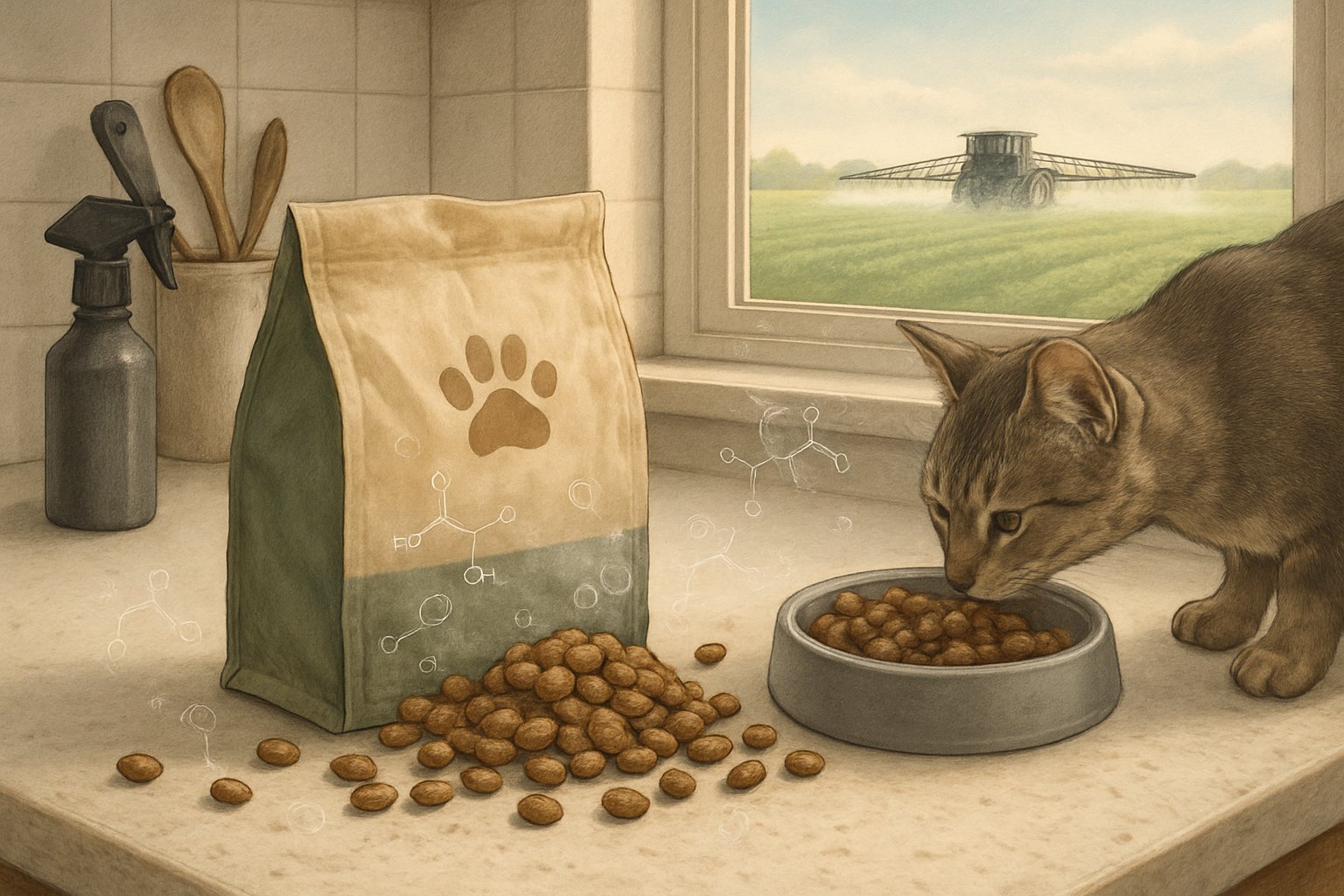
When I think about glyphosate exposure in cats, I realize food isn’t the only pathway. Environmental contamination affects our outdoor cats through contaminated water, wildlife they hunt, and direct contact with treated surfaces.
Environmental Pollution and Cats
Let me tell you something that shocked me when I first learned it. Your outdoor cat walks through treated lawns every single day.
Glyphosate lingers on grass for weeks after application. When your cat grooms those paws? They’re ingesting residue directly.
I’ve seen cats develop skin irritation after rolling in freshly treated areas. The chemical doesn’t just disappear overnight.
Common exposure points include:
- Treated lawns and gardens
- Public parks and walkways
- Golf courses near homes
- Agricultural runoff areas
Rain doesn’t wash it away immediately either. The herbicide bonds to soil particles and plant surfaces.
Your indoor-outdoor cat faces constant low-level exposure. Each grooming session becomes a potential ingestion event.
Water Plants, Birds, and Mammals in the Ecosystem
Here’s what really gets me worried about ecosystem contamination. Glyphosate doesn’t stay put where it’s sprayed.
Birds that eat treated seeds carry concentrated residues. When your cat catches that bird? They’re getting a dose of accumulated chemicals.
The contamination chain looks like this:
- Herbicide applied to crops/lawns
- Runoff contaminates water sources
- Aquatic plants absorb chemicals
- Small mammals drink contaminated water
- Cats hunt these affected animals
I’ve noticed behavioral changes in animals exposed to glyphosate, including altered movement patterns. This affects the entire food web your cat depends on.
Water plants concentrate glyphosate at levels 10-20 times higher than surrounding water. Small mammals eating these plants become walking chemical reservoirs.
Poison Control Centers Case Reports
The data from poison control centers tells a sobering story. I found documented cases of 331 cats exposed to glyphosate products.
Key findings include:
- 63 cases involved cats exposed to pure glyphosate
- 21% of exposed cats showed severe symptoms
- Most exposures happened at home
What strikes me most? These are just the reported cases. How many cat owners never connect their pet’s illness to herbicide exposure?
The symptoms I see documented include vomiting, lethargy, and digestive upset. Some cats required emergency treatment.
Most common exposure scenarios:
- Walking through treated areas
- Drinking from contaminated puddles
- Hunting affected prey animals
- Direct contact with spray equipment
I always tell cat owners that poison control data represents the tip of the iceberg. Chronic, low-level exposure rarely gets reported but may cause long-term health issues.
Reducing Glyphosate in Your Cat’s Diet
When I see research showing glyphosate in cat urine at twice the levels found in dogs, I know we need to take action. The good news? I can share practical ways to choose safer foods, decode confusing labels, and monitor what’s actually making it into my cat’s system.
Choosing Safer Cat Foods
Let’s be real — not all cat foods are created equal when it comes to glyphosate exposure.
I always start by looking at the protein source. Cats eating foods with corn, soy, and canola as main ingredients face higher glyphosate exposure since over 90% of these crops in the US are glyphosate-resistant varieties.
Better protein choices include:
- Wild-caught fish (salmon, sardines, mackerel)
- Grass-fed beef or lamb
- Free-range poultry
- Novel proteins like venison or rabbit
Here’s what I’ve learned works: smaller pet food companies often have more control over their ingredient sourcing. They can tell me exactly where their ingredients come from.
Questions I ask manufacturers:
- Do you test ingredients for glyphosate residues?
- What’s the source of your grains and vegetables?
- Do you work with organic or non-GMO suppliers?
I’ve found that research shows glyphosate residues in companion animal feeds, so asking these questions isn’t being paranoid — it’s being smart.
Understanding Labels and Certifications
Ever stared at a pet food label feeling totally lost? I get it.
USDA Organic is my gold standard. Organic regulations prohibit glyphosate use, though cross-contamination can still happen. It’s not perfect, but it’s the strongest protection available.
Non-GMO Project Verified is another certification I trust. Since most GMO crops are designed to withstand glyphosate, avoiding GMOs significantly reduces exposure risk.
Here’s the tricky part — terms like “natural” or “holistic” don’t mean glyphosate-free. These are marketing terms without regulatory backing.
Red flag ingredients I avoid:
- Corn gluten meal
- Soybean meal
- Canola oil
- Beet pulp (unless organic)
Label reading tip: Ingredients are listed by weight. If corn or soy appears in the first five ingredients, I keep looking for alternatives.
Some companies now include “glyphosate residue free” testing results on their websites. When I find these, I bookmark them immediately.
Testing and Monitoring: What Pet Parents Can Do
You know that nagging feeling when you’re not sure if you’re doing enough? I’ve been there.
The reality is that studies detecting glyphosate in pet urine show our cats are definitely being exposed. But I can take steps to monitor and reduce this exposure.
HRI (Health Research Institute) offers glyphosate testing for pet foods. I’ve used their services to test foods I was considering. It costs around $150 per test, but the peace of mind is worth it.
Some veterinary laboratories now offer urine testing for glyphosate in companion animals. While not routine yet, it’s becoming more available as awareness grows.
What I monitor at home:
- Changes in litter box habits
- Skin irritation or excessive grooming
- Digestive issues after food changes
- Energy levels and appetite
I keep a simple food diary noting what my cat eats and any symptoms. This helps me spot patterns that might indicate food sensitivities.
Simple elimination approach: I switched to organic food for 30 days and watched for improvements. If I saw positive changes, I knew the previous food might have been problematic.
The key is starting somewhere. Even switching just the main protein source to organic makes a difference in overall glyphosate exposure.
Frequently Asked Questions
Cat owners across the country have legitimate concerns about glyphosate residues in their pets’ food, and these questions come up repeatedly in veterinary offices and online pet communities.
You know that look your cat gives you when something’s up? Well, are they at risk if they munch on kibble with glyphosate residue?
I get this question a lot, and honestly, it’s complicated. Research shows that glyphosate is widespread in pet urine, with cats showing concentrations twice as high as dogs.
The good news? Current exposure levels are still way below what’s considered dangerous. We’re talking about 2-4 orders of magnitude below acceptable daily intake limits.
That said, I always tell cat parents to trust their instincts. If Whiskers seems off after switching foods, it’s worth investigating.
Let’s be real, have you ever wondered how those herbicides from your garden could impact Whiskers’ dinner time?
Here’s the kicker – it’s not just your garden. Most glyphosate exposure in cats comes from their food, not from rolling around in treated grass.
The majority of corn, soybean, and canola grown in the US are glyphosate-resistant crops. These ingredients end up in commercial cat foods as fillers and protein sources.
Your outdoor cat might get additional exposure from treated lawns and parks. But honestly, what they eat daily has a bigger impact than occasional garden adventures.
Curious about the buzz on glyphosate traces in kitty’s chow? What should pet parents keep their eyes peeled for on the ingredient list?
I always tell people to look for the sneaky stuff. Corn meal, soybean meal, and canola oil are the big ones to watch.
These ingredients come from crops that are heavily treated with glyphosate. You won’t see “glyphosate” listed anywhere – it’s absorbed into the plants themselves.
Look for foods that specifically say “non-GMO” or “organic.” These have stricter guidelines about herbicide use during growing.
Ever caught yourself pondering if that ‘all-natural’ label on your furball’s feed takes into account herbicide contamination?
Oof, this one gets me fired up. “All-natural” doesn’t mean glyphosate-free. Not even close.
Those labels focus on processing methods, not what happened in the fields. Your “natural” cat food can still contain ingredients from glyphosate-treated crops.
Only USDA Organic certification actually limits glyphosate use. Everything else is pretty much marketing fluff when it comes to herbicide residues.
Here’s the kicker: does the stuff that keeps the weeds away have long-term health effects on your feline friend’s diet?
The honest answer? We don’t know yet. Most studies focus on acute poisoning, not long-term low-level exposure.
Some research links glyphosate to kidney problems and developmental issues in animals. But these studies used much higher doses than what’s typically found in pet food.
What I do know is that cats show higher glyphosate concentrations than dogs, possibly because they’re pickier eaters who stick to the same food longer.
So how often do these experts say we should swap our cats’ diet to avoid any potential glyphosate buildup, anyway?
Most vets don’t recommend frequent food switching – it can upset your cat’s stomach. If you’re concerned about glyphosate, make one thoughtful switch to an organic or non-GMO brand.
I suggest transitioning slowly over 7-10 days. Mix increasing amounts of the new food with decreasing amounts of the old stuff.
Monitor your cat’s digestion and energy levels during the switch. Sometimes the benefits of avoiding glyphosate get overshadowed by digestive upset from food changes.