
You just opened a fresh bag of kibble, and now you’re wondering where to put it. Should it stay in the bag, go into a container, or sit in the pantry?
Proper pet food storage keeps your dog’s or cat’s meals fresh, safe, and full of nutrients while protecting them from harmful bacteria and spoilage.
I’ve seen too many pet parents unknowingly feed stale or contaminated food because they didn’t know the right way to store it. Essential nutrients in pet food can decline over time when storage isn’t done correctly.
Improper handling can lead to Salmonella contamination that puts both pets and owners at risk. In this guide, I’m breaking down everything you need to know about storing dry food, wet food, and treats.
You’ll learn which containers actually work, how long different foods stay fresh, and a few safety tips that really make a difference for your pet’s health.
Pet Food Storage Tips – Key Takeaways
- Store dry pet food in airtight containers in a cool, dry place to maintain freshness and prevent contamination
- Refrigerate opened wet food immediately and use it within a few days to avoid bacterial growth
- Always check expiration dates and watch for signs of spoilage like unusual smells or discoloration before feeding
Why Proper Pet Food Storage Matters
Pet food storage affects more than just how long a bag sits in your pantry. The way you store your dog or cat’s food directly impacts its nutritional value and safety.
It also determines how well you protect your pet from harmful bacteria or toxins.
Spoilage, Nutritional Loss, and Risks
Does dog food expire? Absolutely, and improper storage speeds up that process.
When I leave dog food exposed to air, light, or moisture, the fats in the kibble start to break down. This process is called oxidation, and it doesn’t just make food smell stale.
Research shows that essential nutrients decline during extended storage, with EPA and DHA levels dropping significantly over time. Moisture is another major problem.
If humidity gets into your pet’s food, it creates the perfect environment for mold growth and bacteria like Salmonella. Biological contamination accounted for 35% of pet food recalls between 2003 and 2022.
Storage mites are a hidden risk many pet owners don’t know about. These tiny pests thrive in improperly stored dry food and can trigger allergic reactions in sensitive pets.
How Storage Extends Freshness
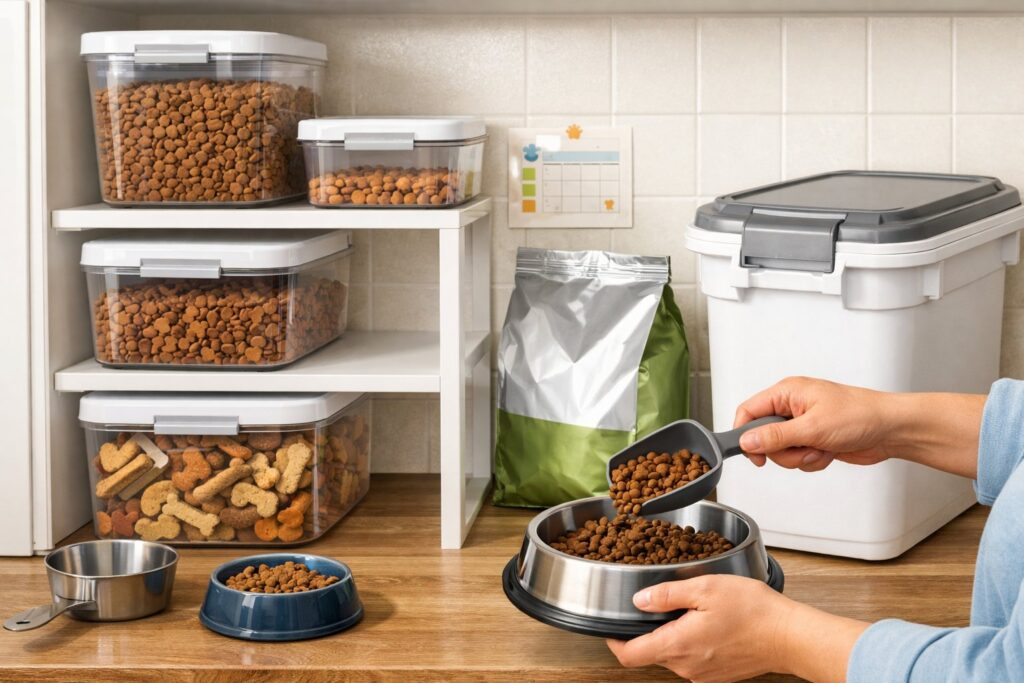
Proper dog food storage keeps kibble fresh by protecting it from air, light, and heat. I always recommend keeping dry food in its original bag.
Pet food bags have special linings that block oxygen and maintain freshness. If you use a storage container, place the entire bag inside rather than pouring kibble directly in.
Key storage practices that work:
- Keep food in a cool, dry place below 70°F
- Seal bags tightly after each use with a clip or tie
- Store away from direct sunlight
- Use an airtight container for extra protection
How long does dog food last once opened? Most dry food stays fresh for 4-6 weeks after opening when stored correctly.
Wet food lasts 3-5 days in the refrigerator after you open the can.
Impact on Pet Health and Happiness
Fresh food means a healthier, happier pet. When I store food properly, my dog gets the full nutritional benefit the manufacturer intended.
Rancid fats from spoiled food can cause digestive upset, including vomiting and diarrhea. Eating oxidized kibble over time may lead to vitamin deficiencies since those nutrients have degraded.
Contaminated food poses even bigger risks. Salmonella recalls represented 23% of all pet food recalls over a 20-year period, with 94% classified as serious Class I recalls.
Pets eating contaminated food can develop severe illness, and humans handling that food can get sick too. I’ve noticed my own pets refuse to eat stale kibble.
They can smell and taste the difference, which means wasted food and wasted money. Proper pet food storage protects my investment while keeping my pets safe and satisfied at mealtime.
Smart Storage for Dry Dog Food
I’ve seen too many pet parents unknowingly shorten their dog’s kibble shelf life by making simple storage mistakes. Proper containers and location choices can protect your pup’s food from going rancid or getting contaminated.
Choosing the Right Storage Containers
When I’m looking for the perfect dog food storage container, I prioritize airtight seals above everything else. Lipid oxidation poses a major spoilage risk for dry pet foods because of their high fat content, and oxygen exposure speeds up this process like crazy.
Here’s what I look for in a quality pet food storage container:
- Food-grade plastic or metal (never use containers that previously held chemicals)
- Airtight locking lids with rubber gaskets
- BPA-free materials for safety
- Easy-to-clean smooth interiors that won’t trap oils
- Size that matches your buying habits (don’t store a 5-pound bag in a 50-pound container)
I avoid cheap bins with flimsy lids. Even a small gap lets moisture and pests in, which can lead to mold growth or bug infestations.
Metal containers work great if you’re dealing with rodents, but make sure they’re lined or coated to prevent rust. One thing that shocked me?
Research on dry pet food storage shows that even sealed commercial products can develop issues when stored improperly at home.
Keep Food in Original Packaging or Not?
This one surprises most people I talk to. I actually keep the kibble in its original bag and then place the entire bag inside my storage container.
The original packaging has a special fat barrier layer that manufacturers specifically designed to prevent oxidation. When you pour kibble directly into a container, those protective oils from the food coating transfer to the container walls.
Over time, these oils go rancid and contaminate every new batch you pour in. I never leave the bag open or loosely rolled.
I seal it with a large binder clip or bag clip, then slide it into my airtight container. This double-layer approach gives me the best of both worlds.
If you absolutely must pour food directly into a container, wash it thoroughly with hot soapy water between every bag. Let it dry completely before refilling.
Best Storage Locations at Home
I store my dog’s dry food in a cool, dark spot where temperatures stay consistent. Heat and light are kibble’s worst enemies because they accelerate fat breakdown and nutrient loss.
My top storage spots:
- Climate-controlled pantry or closet
- Basement (if dry and temperature-stable)
- Interior utility room away from appliances
Places I avoid:
- Garage (temperature swings are brutal)
- Near ovens, dishwashers, or water heaters
- Direct sunlight or windowsills
- Humid laundry rooms or bathrooms
Temperature really matters here. I keep my storage area under 80°F whenever possible.
When temperatures climb higher during summer, I buy smaller bags more frequently rather than risk my pup’s food going bad. One more thing that makes a huge difference?
I elevate my container off the floor using a small platform or wooden pallet. This prevents moisture from concrete floors seeping up and keeps the bottom cooler.
Wet and Fresh Dog Food: What Works Best
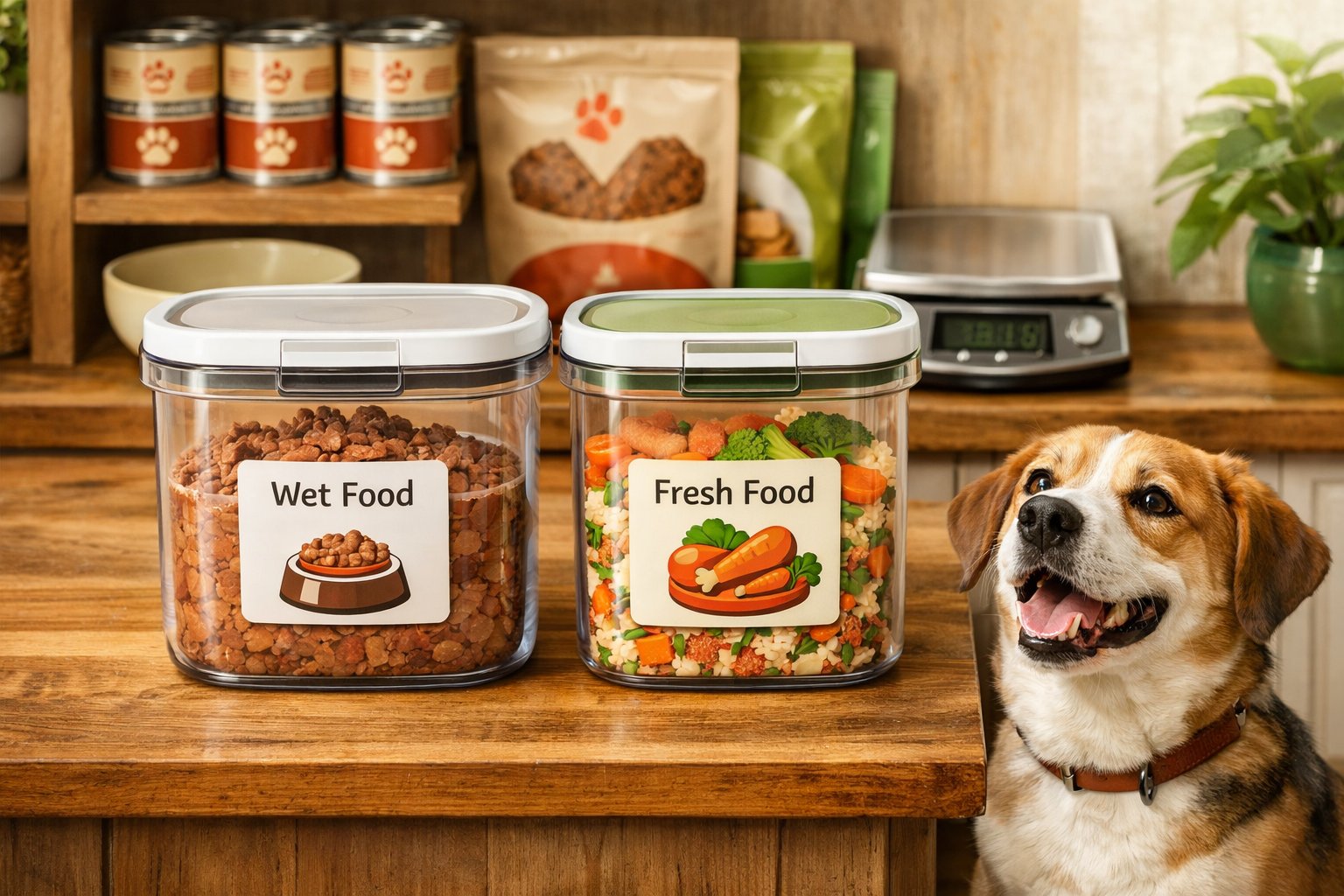
When I open a can of wet dog food or serve fresh meals to my pup, I know proper storage becomes critical within hours. Wet and fresh foods spoil faster than kibble because of their high moisture content.
Knowing how to refrigerate opened portions, seal containers effectively, and use your freezer can save money and keep your dog safe.
Refrigeration Rules for Opened Cans and Bags
Once I crack open a can or pouch of wet dog food, bacteria start multiplying fast at room temperature. I always transfer leftovers to an airtight container and refrigerate them within two hours.
How long does dog food last in the fridge? Most opened wet food stays fresh for 3 to 5 days when stored at 40°F or below.
I label each container with the date so I don’t lose track. Never leave wet food sitting in your dog’s bowl for more than 4 hours.
If my pup doesn’t finish his meal, I toss what’s left or refrigerate it immediately. Research on pet food storage and preservation shows that improper handling creates bacterial risks for both pets and people.
Fresh or raw diets need even more care. I keep them refrigerated and use them within 2 to 3 days max.
Sealing and Portioning Tips
I never store wet dog food in its original can after opening. Metal cans can leach into the food once exposed to air, changing the taste and potentially harming my dog.
Instead, I use glass or BPA-free plastic containers with tight-fitting lids. This keeps odors contained and prevents cross-contamination with human food in my fridge.
Portioning makes life easier. When I buy large cans or fresh food in bulk, I divide servings into individual containers before refrigerating.
This way, I only open what my dog needs for one meal. Press plastic wrap directly onto the food’s surface before sealing the lid.
This extra barrier reduces air exposure and keeps moisture locked in.
Freezing for Extra Shelf Life
Freezing wet and fresh dog food can stretch its shelf life by months if you do it right. I portion meals into freezer-safe bags or silicone trays, then scribble the date and type of food on each one.
Store wet dog food in the freezer for up to 6 months. Fresh or raw diets last even longer if you vacuum-seal them well.
When I need to thaw a meal, I move it to the fridge the night before. Never thaw at room temperature or zap it in the microwave—it creates hot spots, ruins nutrients, and bacteria love it.
Ice cube trays are a lifesaver for small dogs or meal toppers. I freeze single servings, pop them out, and toss the cubes in a freezer bag for easy grab-and-go meals.
Pet Food Storage Hacks and Safety Tips
Smart pet food storage isn’t just about keeping kibble fresh. It’s about protecting your pet from spoiled food, pests, and bacteria that can make them sick.
I’ve learned even tiny storage mistakes can mean wasted food, weird smells, and health risks you never saw coming.
Avoiding Common Mistakes
One of the biggest mistakes I see is pouring kibble straight into storage containers and tossing the original bag. That bag actually has a liner that helps prevent lipid oxidation in dry pet foods, which causes rancid flavors and saps nutrition.
Instead, try these habits:
- Keep food in its original bag and put the whole bag inside an airtight container
- Wash and dry containers thoroughly between refills to stop bacteria from building up
- Store dog food in cool, dry spots—no direct sunlight or heat
- Don’t mix old and new food in the same container
Lots of people leave wet food out too long after opening. Once you open a can or pouch, pop what your pet doesn’t eat in the fridge within 30 minutes to 1 hour.
Cover it tightly and use it up within 2-3 days, tops.
Another issue? Buying huge bags you can’t finish fast enough. Dry food starts losing freshness as soon as you open it.
For small dogs and cats, I stick to bag sizes we can finish in 4-6 weeks.
Travel and On-the-Go Storage Solutions
When I’m traveling with my pet, I need storage that keeps food fresh but doesn’t hog all my trunk space. Small, portable airtight containers work great for road trips and vet visits.
Here’s what I do:
For short trips (1-3 days):
- Use silicone collapsible bowls with lids
- Pre-portion meals in small ziplock bags
- Pack wet food in insulated lunch bags with ice packs
For longer travel:
- Get travel pet food containers with secure latches
- Bring shelf-stable food options to skip the fridge hassle
- Pack just what you need plus 2-3 extra days, just in case
I always label containers with my pet’s name and feeding amounts. It helps if someone else has to feed them, and avoids overfeeding when routines go sideways.
For air travel, stash food in your checked bag in sealed containers to dodge leaks and weird smells.
Signs Food Has Gone Bad
Spotting spoiled pet food can save your pet from getting sick. I check every bag and can before feeding because sometimes you just can’t tell by looking.
Warning signs to watch for:
- Rancid or sour smell—fresh kibble should smell mild and a bit grainy
- Visible mold or weird discoloration—green, black, or white fuzzy spots are a no-go
- Clumping or moisture in dry food means humidity got in
- Bulging cans or broken seals scream bacteria
- Bugs like weevils or moths around your storage area
If wet food’s been in the fridge for more than 5 days, I toss it—no matter how it looks. Same with kibble that smells off, even if I don’t see mold—spoilage microorganisms can grow and make toxins.
I check expiration dates when I buy food and rotate bags so the older stuff gets used first. I write the purchase date on bags with a marker so I always know how long they’ve been open.
Frequently Asked Questions
Storing pet food the right way can feel overwhelming when you’re juggling bags, bins, and bowls. The truth is, proper storage protects your furry friend’s food from spoilage, pests, and nutrient loss—all while keeping mealtime safe and fresh.
Have you wondered what’s the safest material for a dog food container?
I always tell pet parents to go with airtight containers made from food-grade plastic or stainless steel. These materials don’t leach chemicals into your dog’s kibble and they block out moisture and air.
Look for containers labeled BPA-free if you’re choosing plastic. Stainless steel is my top pick because it’s durable, easy to clean, and doesn’t hold odors.
Skip those cute ceramic jars unless they seal tight. And never store food in containers that previously held chemicals or cleaning products.
The goal is simple: keep your pup’s food in something that won’t contaminate it and will lock out everything that makes it go bad faster.
Let’s talk containers – how can you tell which ones will keep Fido’s food fresh the longest?
The best containers have airtight, locking lids that create a real seal—not just a loose-fitting top. I learned this the hard way when my dog’s food got stale in under a week.
Test the seal by pressing down on the lid. If it clicks or locks into place, you’re golden.
Opaque containers work better than clear ones because light speeds up fat breakdown in kibble. That’s what causes that rancid smell nobody wants.
Size matters too. Choose a container that fits your bag size without tons of extra air space at the top.
You know that moment when you realize your pet’s food doesn’t smell quite right? How do we prevent that from happening?
That off smell usually means the fats in the food have oxidized—and yes, it happens faster than you’d think. I prevent this by storing food in a cool, dry place away from direct sunlight.
Heat is kibble’s worst enemy. Improper storage can lead to lipid oxidation, which ruins both taste and nutrition.
Keep the bag inside an airtight container instead of dumping kibble loose into the bin. The bag has protective layers that slow down oxidation.
Check expiration dates when you buy and write the purchase date on the bag with a marker. If food smells musty, sour, or just “off,” toss it.
Your nose knows—trust it.
What’s the deal with pet food storage temperatures – got any cool tips?
Room temperature is your sweet spot—ideally between 50°F and 70°F. I keep my dog’s food in a pantry away from the stove and any heat sources.
Never store pet food in the garage during summer or near heating vents in winter. Temperature swings create condensation inside containers, which invites mold and bacteria.
Freezing dry food isn’t necessary and can actually mess with texture when it thaws. But if you buy in bulk, you can freeze portions in smaller airtight bags for later use.
For wet food, refrigerate opened cans immediately and use within 3 days. Cover them tightly with plastic wrap or transfer to a sealed container.
Cold storage slows bacterial growth but won’t stop spoilage forever.
Seeing your pet’s food go to waste is the worst, right? What’s the best way to store large quantities without losing quality?
Buying in bulk saves money, but only if the food stays fresh. I split large bags into smaller, sealed portions right when I get home.
Use vacuum-sealed bags or small airtight containers for weekly portions. This limits air exposure each time you open a container.
Keep the original packaging—even if you’re using bins. The bag protects against oxidation better than most containers alone.
Store bulk food in a climate-controlled space, not the basement or garage where humidity and temperature fluctuate. Pet owners often overlook how domestic storage affects food quality.
Label each portion with the date you divided it up. This helps you use older food first.
Why is it important to keep kibble off the floor? Here’s why that matters more than you’d think.
When you store food right on the floor, it faces moisture, pests, and temperature swings. I stick a raised shelf or even just a wooden plank under my storage bin—it’s not fancy, but it works.
Concrete floors in garages and basements? They’re almost always damp. That dampness creeps into containers, and suddenly you’ve got the perfect setup for mold, even if you never see it.
Pests like mice and bugs love easy meals. If your food sits at ground level, they’re more likely to chew through bags and make a mess. Lifting containers up just a bit makes it way tougher for them to get in.
Understanding how owners handle pet food at home suggests that even tiny tweaks in storage habits can really boost food safety.
Honestly, a cheap wire shelf costs way less than tossing out a whole bag of ruined kibble.