

When I started looking into pet supplements for my own dogs and cats, I ran into a confusing mess of “natural” and “synthetic” labels. Turns out, those words often mean less than you’d expect.
Natural supplements come from whole food sources, while synthetic ones are made in labs. But both can work just as well for your pet’s health.
The real difference isn’t always about which one’s “better.” It’s about what your specific pet needs and how each type works in their body.
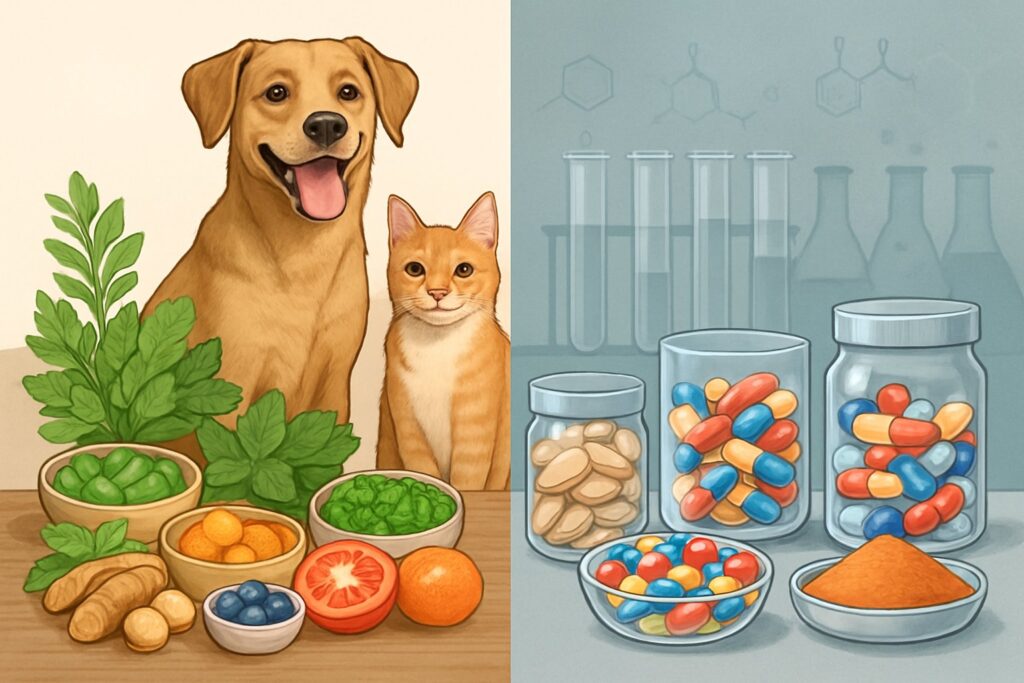
Table of Contents
The pet supplement aisle? Overwhelming. You’re standing there, staring at a natural omega-3 supplement made from fish oil and a synthetic version, trying to guess what’s best for your dog or cat.
Marketing screams that natural is always better, but honestly, the science is a lot messier.
Your pet’s body often can’t tell the difference between a vitamin from food and the same vitamin made in a lab. What really matters is how well your pet absorbs it, the quality of the supplement, and whether it actually helps their health. Sometimes, synthetic supplements are even more reliable than natural ones. But there are times when natural options really do shine.
Key Takeaways
- Natural supplements come from whole foods; synthetic ones are lab-made, but both can help your pet stay healthy
- Your pet often absorbs synthetic vitamins just as well as natural ones, so effectiveness matters more than the source
- The best choice depends on your pet, the specific nutrient, and the manufacturer’s standards—not just the label
What Makes a Supplement ‘Natural’ or ‘Synthetic’?
People ask me this all the time, and honestly, it’s not as obvious as you’d hope. Natural supplements come from food—plants or animals. Synthetic ones are built in labs with chemical processes.
How Natural Pet Supplements Are Made
Natural pet supplements start with real ingredients you’d probably recognize. Fish oil from salmon, glucosamine from shellfish shells, or probiotics from fermented foods.
Here’s what makes them “natural”:
- Whole food sources: Vitamins from fruits, veggies, or animal tissues
- Minimal processing: Gentle drying, grinding, or cold-pressing to keep nutrients intact
- Co-factors included: Natural vitamins come with helper compounds for better absorption
I love that natural supplements provide essential nutrients in forms your pet’s body already knows. Kind of like the difference between eating an orange and popping a vitamin C pill.
The extraction process usually goes like this:
- Harvest raw materials (kelp, organ meats, herbs)
- Gently dry or freeze-dry
- Grind into powder
- Test for purity and strength
But natural doesn’t always mean better. Some natural ingredients can be all over the place in strength or even have contaminants if the source isn’t great.
The Science Behind Synthetic Pet Supplements
Synthetic supplements are lab-made versions of nutrients. Think of them as pharmaceutical-grade copies of what nature gives us.
Synthetic vitamins are isolated, man-made chemical compounds that copy natural nutrients. Scientists create them using chemical synthesis or fermentation.
Key advantages of synthetic pet supplements:
- Consistent potency: Every batch has the same amount of active ingredient
- Cost-effective: Usually cheaper than natural options
- Longer shelf life: More stable and don’t break down as fast
- Targeted dosing: Exact amounts for specific health needs
The manufacturing process goes something like this:
- Chemical synthesis in a controlled lab
- Purification to get rid of unwanted stuff
- Quality testing for purity and strength
- Standardization to exact specs
Synthetic doesn’t always mean worse. Many synthetic vitamins have the same molecular structure as natural ones. Your dog’s body often can’t even tell the difference between synthetic vitamin E and the natural kind.
The main drawback? Synthetic supplements don’t include the extra helper compounds you’d get from whole foods. That can sometimes change how well your pet absorbs them.
Key Differences: Natural vs. Synthetic Pet Supplements

Natural and synthetic pet supplements work differently in your pet’s body. The biggest differences? How well your pet absorbs them and how steady their strength stays over time.
Bioavailability and Absorption
I’ve met so many pet parents frustrated that their pricey supplement isn’t helping. Here’s the deal—bioavailability is everything.
Natural supplements often come with extra compounds that help absorption. For example, when your dog gets vitamin C from rose hips, they also get bioflavonoids that help their body use that vitamin.
Synthetic vitamins are just the isolated compound. Your dog’s digestive system has to work harder to recognize and use them.
Natural advantages:
- Come with co-factors to help absorption
- Look like nutrients found in food
- Usually gentler on sensitive stomachs
Synthetic benefits:
- Higher dose per serving
- Sometimes absorbed faster
- More predictable strength
I notice pets often do better with natural dog supplements because their bodies seem to recognize the nutrients more easily.
Consistency and Potency
Consistency matters when you’re trying to help your pet feel better.
Synthetic supplements win here. Each tablet has the same amount of active ingredient. No surprises, no changes from batch to batch.
Natural supplements are more unpredictable. The vitamin C in one bottle of acerola cherry extract might be 10-15% higher or lower than another bottle.
Why this matters:
- Synthetic vitamins give you predictable doses
- Natural supplements can vary in strength
- Quality control is simpler with synthetics
But here’s something I wonder about—synthetic vitamin C and other isolated nutrients don’t always work the same as their natural twins, even if the dose is higher.
Common Ingredients and Sources
The ingredient list tells you a lot.
Natural supplement sources I like:
- Fish oil from wild-caught salmon
- Vitamin E from sunflower seeds
- Probiotics from fermented foods
- Glucosamine from shellfish
Common synthetic ingredients:
- Ascorbic acid (synthetic vitamin C)
- dl-alpha tocopherol (synthetic vitamin E)
- Lab-made amino acids
- Factory-made minerals
I always tell people: flip that supplement bottle over. If you see long chemical names you can’t pronounce, it’s probably synthetic.
Natural vs synthetic pet supplements both have a place. I tend to prefer whole-food sources when I can find them. Dogs’ ancestors didn’t eat isolated nutrients—they got their vitamins from prey and plants.
The choice between natural and synthetic usually comes down to your goals, your budget, and what your pet needs.
How Do They Impact Your Pet’s Health?
The big difference between natural and synthetic pet supplements is how your pet’s body uses them. Both types can help your pet, but they work a bit differently when it comes to absorption, side effects, and long-term results.
Overall Vitality and Wellness
I’ve heard so many pet parents ask if natural pet food products really make a difference compared to synthetic ones. Honestly? It depends on your pet.
Natural supplements usually contain compounds that work together. For example, glucosamine from shellfish comes with other helpful stuff that might support your pet’s joints in ways we don’t fully understand yet.
Your dog’s body tends to recognize natural forms more easily. This leads to better absorption and fewer tummy troubles. I’ve noticed pets on natural supplements often show slow, steady improvements in energy and coat shine.
Synthetic supplements give precise doses of a specific nutrient. If your vet prescribes synthetic vitamin K, you know exactly what your pet is getting. No guessing.
Natural supplements support overall vitality by working with your pet’s natural systems. Synthetic ones target specific deficiencies with precision.
Potential Side Effects and Risks
Let’s talk honestly about the risks with both supplement types. Neither natural nor synthetic options guarantee safety—it really depends on quality and how much you use.
Natural supplement risks:
- Contamination from environmental toxins
- Inconsistent potency between batches
- Allergic reactions to plant-based ingredients
- Drug interactions you might not expect
Synthetic supplement risks:
- Few side effects when properly dosed
- Potential for overdosing due to concentrated forms
- Less bioavailable forms that pass through unused
- Artificial additives and preservatives
If you supplement without guidance, problems can crop up fast. Your cat definitely doesn’t need the same dosage as your neighbor’s Great Dane.
Watch for these warning signs:
- Digestive upset after starting any new supplement
- Changes in appetite or behavior
- Unusual lethargy or hyperactivity
Real-Life Scenarios: Choosing What Works
Imagine this: your 8-year-old Golden Retriever starts limping after walks. Do you grab natural glucosamine or reach for synthetic joint support?
Scenario 1: Chronic joint issues
I’d usually lean toward natural glucosamine with chondroitin. These slow-acting compounds support joints over time, and while it might take 6-8 weeks to notice improvement, the benefits often stick around.
Scenario 2: Post-surgery recovery
Synthetic supplements are the go-to here. Your vet can dial in the exact dosage for quicker healing, which is what you need after surgery.
Scenario 3: Senior cat with multiple health concerns
This one calls for a mixed approach. I like natural omega-3s for general wellness and synthetic B-vitamins for targeted deficiencies your vet finds in bloodwork.
Start with your vet’s advice. They know your pet’s health history and what meds they’re on. Natural doesn’t always mean better, and synthetic isn’t automatically worse.
Try one supplement at a time. That way, you’ll actually know what’s helping or causing issues. I keep a simple log of changes in appetite, energy, and behavior—makes it easier to spot patterns.
Frequently Asked Questions

Pet parents ask me all the time about the real differences between natural and synthetic supplements. Let’s dig into the most common questions about ingredient safety, effectiveness, and what those tricky labels really mean for your furry friend.
Ever wondered if your furry friend really benefits more from natural ingredients in their supplements?
Here’s what I’ve learned after years of poking around in pet nutrition. Natural supplements usually come with extra compounds that help your pet’s body actually use the nutrients better.u003cbru003eFor example, when your dog gets vitamin C from rose hips instead of a synthetic tablet, they’re getting bonus flavonoids and antioxidants too. Those extras can give the main vitamin a little boost.u003cbru003eBut honestly, some synthetic vitamins work just as well as natural ones in your pet’s digestive system. The difference isn’t always as dramatic as people think.u003cbru003eNatural supplements do tend to be gentler on sensitive stomachs. I’ve noticed fewer upset tummies when pets switch from synthetic to natural forms.
Why might some pet parents avoid synthetic vitamins in dog food, you ask?
Let me lay out the main worries I hear. Some synthetic vitamins can upset sensitive dogs’ stomachs, especially at higher doses.u003cbru003eu003ca href=u0022https://avmajournals.avma.org/view/journals/javma/245/11/javma.245.11.1241.xmlu0022u003ePet food regulationsu003c/au003e allow synthetic vitamins even in products labeled “natural,” which confuses a lot of folks. This happens because some nutrients are tough to get from natural sources alone.u003cbru003eAnother issue? Synthetic vitamins sometimes lack the helper nutrients found in whole foods, so your pup might not absorb them as well.u003cbru003eAnd honestly, some pet parents just want to avoid synthetic stuff because it matches their own natural lifestyle. It’s a personal choice—no right or wrong.
Heard about Sodium Selenite? Let’s chat about why it’s in your dog’s diet and what you should know.
Sodium selenite is a synthetic form of selenium that shows up in lots of commercial dog foods and supplements. Dogs need selenium for a healthy immune system and thyroid support.u003cbru003eManufacturers use this synthetic version because it’s stable and doesn’t break down during food processing. Natural selenium sources can be all over the map in terms of actual nutrient levels.u003cbru003eBut I always tell pet parents to watch the dosage. Too much selenium can be harmful, so stick to products with carefully measured amounts.u003cbru003eMost reputable pet food companies balance sodium selenite levels pretty well, so your dog gets what they need—nothing extra.
Natural verses manufactured supplements – curious about the real upsides for your cat’s health?
Honestly, I’ve seen some impressive changes when cats switch to natural supplements. Their bodies seem to recognize and use natural forms more efficiently than synthetic versions.u003cbru003eNatural supplements usually contain cofactors—those little helper compounds that boost nutrient absorption. It’s like your cat gets more value for the same dose.u003cbru003eSometimes, cats on natural supplements end up with shinier coats and a bit more pep within a few weeks. It’s not magic, but it’s noticeable.u003cbru003eThe catch? Natural supplements can cost more and sometimes the potency isn’t as consistent. You’re basically trading convenience for what a lot of folks see as better quality.
Caught yourself questioning the need for synthetic vitamins for your pup?
Here’s what I’ve picked up about when synthetic vitamins actually make sense. Some nutrients are almost impossible to get in enough quantity from natural sources alone.u003cbru003eTake vitamin B12—it’s a classic example. Most natural pet supplements just can’t provide enough B12 for dogs with absorption issues or certain health conditions.u003cbru003eIf your dog eats a balanced, high-quality diet, they might not need many synthetic vitamins at all. But working dogs, u003ca href=u0022https://www.peteatwell.com/senior-dog-nutrition-guideu0022u003esenior petsu003c/au003e, or those with health challenges often benefit from targeted synthetic supplements.u003cbru003eThe real trick is u003ca href=u0022https://www.peteatwell.com/health/vet-adviceu0022u003eworking with your vetu003c/au003e to figure out what your specific dog actually needs. There’s no one-size-fits-all answer here.
Looking at a supplement label can be confusing, right? Want to know what those vitamin names actually mean for your pet’s wellbeing?
I get this question all the time from frustrated pet parents staring at u003ca href=u0022https://www.peteatwell.com/reading-pet-food-labelsu0022u003ecomplicated labelsu003c/au003e. Those long chemical names? They usually mean synthetic vitamins.u003cbru003eIf you see u0022ascorbic acidu0022 instead of u0022vitamin C from acerola cherries,u0022 that’s a clue. The first one’s synthetic, the second’s natural.
Here’s a quick trick I like to share. Natural vitamins usually mention their food source, like “vitamin E from sunflower oil.”
Synthetics just list the vitamin name or some chemical-sounding thing. Not super helpful, honestly.
Natural indicators to look for:
- Whole food sources listed
- Terms like “derived from” or “extracted from”
- Recognizable plant or animal sources
Synthetic red flags:
- Long chemical names
- No source mentioned
- Terms ending in “-ate” or “-ide”


Leave a Reply
You must be logged in to post a comment.