
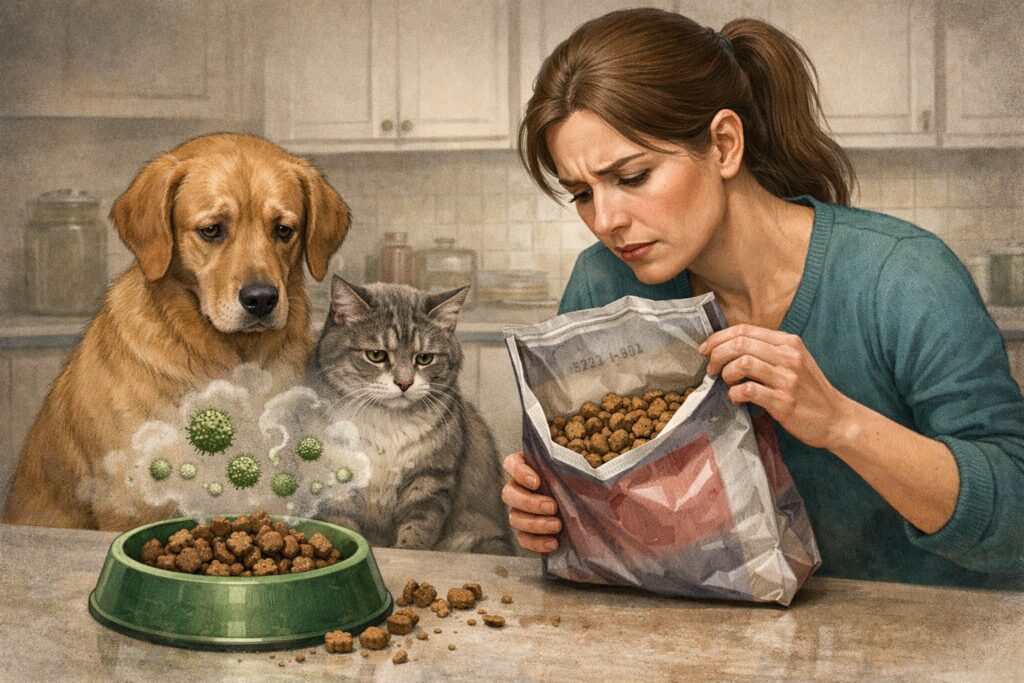
You reach for the kibble in the pantry and spot the date—expired three months ago. Your stomach drops as you realize how many bowls you’ve already poured.
Feeding expired pet food to your dog or cat can expose them to harmful bacteria like Salmonella, nasty mold toxins, and nutrients that have broken down to the point where they don’t support your pet’s health anymore.
I’ve chatted with a lot of pet parents who had no idea that pet food recalls happen way more often than you’d expect. Over 20 years, more than half of all pet food recalls were Class I—meaning they posed a real risk of serious health problems or even death.
Many of these problems come from contamination that just gets worse as food sits past its safe window.
So, what really happens inside that bag after it expires? I’ll break down what to watch for before your pet gets sick, and share a few storage tricks to help food stay fresh longer.
We’ll look at the real shelf life of different pet foods and how you can shop smarter. It’s honestly not as complicated as it seems, but it’s easy to overlook.
Expired Pet Food Dangers – Key Takeaways
- Expired pet food can harbor harmful bacteria and mold toxins that seriously threaten your pet’s health
- Checking dates and storing food the right way helps stop spoilage and keeps nutrients intact
- Spotting signs of contamination protects your pet and saves you from expensive vet visits
Why Expired Pet Food Is More Dangerous Than You Think
So many pet parents figure expired pet food is probably fine, thinking those dates are more like suggestions. But feeding expired dog food actually puts your furry friend at risk for bacterial infections, vitamin deficiencies, and nasty toxins that develop as food breaks down.
Health Risks from Spoiled Pet Food
Let’s be honest—spoiled dog food isn’t just gross. It’s dangerous.
When I found out about biological contamination in pet food, I couldn’t believe it makes up 35% of recalls. That’s a huge chunk.
Expired pet food is the perfect place for harmful bacteria to thrive. Once you break the seal or the food passes its date, moisture and air break down the food’s protection. Suddenly, your dog’s kibble becomes a breeding ground for pathogens.
Here’s what can happen when you feed expired dog food:
- Vomiting and diarrhea from bacterial overgrowth
- Food poisoning symptoms like lethargy and loss of appetite
- Severe infections that might need emergency vet care
- Dehydration from digestive upset
I’ve met pet owners who thought their dog just had a sensitive stomach. Turns out, they’d been feeding old kibble. Once they switched to fresh food, the stomach problems vanished in days.
Unsafe and expired food can trigger health problems that aren’t worth the risk.
Nutritional Value Loss Over Time
Most people don’t realize that pet food starts losing nutritional value even before it “expires.”
The vitamins and minerals in your dog’s food begin degrading right after it’s made. By the time you hit the expiration date, many nutrients have already dropped off a lot.
Fat-soluble vitamins like A, D, and E break down fast. Air and light speed up the process, making them less effective or totally useless. Your dog might eat the right amount but still miss out on real nutrition.
I always check food dates before buying because I want my pets to get what they actually need. Omega-3s fade quickly too, so expired pet food loses its anti-inflammatory benefits fast.
If you think about it, you’re paying for complete nutrition, but expired dog food means your pet gets less than you bargained for. Deficiencies can sneak up over time, and you might not even catch it until there’s a problem.
Toxins and Bacterial Contamination
This part honestly freaks me out as a pet parent.
Expired pet food doesn’t just lose nutrients—it can develop dangerous toxins. Molds create mycotoxins, and rancid fats form harmful compounds that can damage your dog’s liver and kidneys.
Salmonella caused 23% of pet food recalls over 20 years, with 94% of those being the most serious type. That’s not something I want anywhere near my pets.
These are the most common bacterial threats in spoiled dog food:
| Bacteria | Risk Level | Symptoms |
|---|---|---|
| Salmonella | High | Severe diarrhea, fever, lethargy |
| Listeria | High | Neurological issues, septicemia |
| E. coli | Medium to High | Bloody diarrhea, kidney failure |
| Mold toxins | High | Liver damage, seizures, tremors |
What makes me nervous is that these bacteria don’t just hurt your pet. Salmonella can easily spread to you or your family by handling contaminated food or even your dog’s saliva.
The melamine contamination scandal in 2007-2008 led to huge recalls and animal deaths. That case was intentional, but it shows how quickly tainted food can turn deadly.
Your nose won’t always warn you, either. Some contamination has zero obvious signs. Kibble can look and smell totally normal but still be dangerous.
Spotting Expired or Spoiled Pet Food Before Disaster Strikes
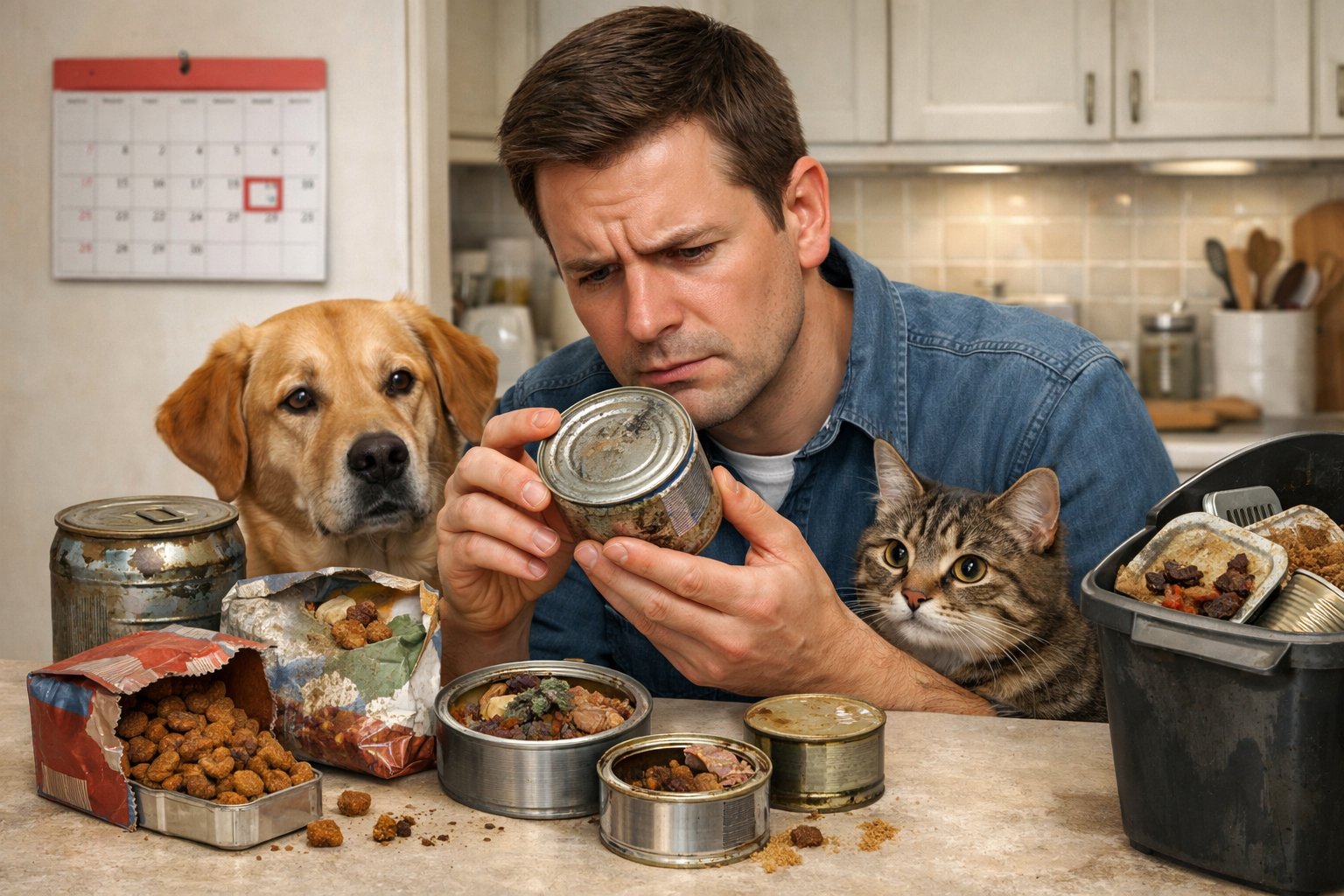
I’ve learned that just checking expiration dates isn’t enough to keep my pets safe. Expired dog food can hide bacteria like Salmonella before the date even hits, and spoiled food might smell fine but still have mold toxins that can wreck your pet’s health.
Key Signs of Expired or Bad Pet Food
The first thing I check when I open any bag or can is the “best by” date. But honestly, that date only matters if you’ve stored the food right.
Expired pet food loses nutritional value as it sits. Vitamins break down, fats go rancid, and proteins fall apart. I always write the opening date on my dog’s kibble bag because dry food usually stays fresh for just 4-6 weeks once opened.
Look for these visual red flags:
- Kibble that’s darker or lighter than normal
- Grease stains inside the bag
- Clumps or stuck-together pieces
- Wet food with weird discoloration
- Oils or liquids separating out
I once fed my Terrier from a bag that looked okay but had tiny white spots I thought were seasoning. It turned out to be early mold, and my pup had diarrhea for two days. Not fun.
Hidden Dangers: What Your Nose Misses
I trust my nose, but it’s definitely not perfect at catching contaminated pet food. Biological contamination is behind 35% of recalls, and a lot of dangerous bacteria don’t make food smell off.
Rancid fats smell sharp or like old oil, sometimes almost paint-like. Fresh kibble should smell neutral or just mildly pleasant. If I open a bag and get hit with a musty, sour, or chemical smell, I toss it right away.
Here’s the kicker: Salmonella contamination doesn’t always change the look or smell of food. Salmonella caused 23% of recalls over 20 years, and most were serious health risks.
Smell checks I do:
- Sniff when I first open the bag
- Check again after a few weeks
- Compare new bags to old ones
If I’m not sure, I just throw it out. Losing fifty bucks on dog food is way better than a $500 vet bill. Honestly, it’s not worth the gamble.
Pests, Mold, and Other Red Flags
I check every corner of the bag before I buy it. When I get home, I inspect it again. Tiny holes or tears? That usually means bugs found their way inside. Pantry moths, weevils—these pests love pet food like they love our snacks.
Mold is sneaky. It shows up as white, green, or black fuzzy spots, but sometimes it’s just dark streaks or powdery residue. I once found mold on kibble that got damp in my garage. Even if only one piece looks moldy, I toss the whole bag. Mold roots spread where you can’t see.
My storage checklist:
- Keep food in airtight containers (I transfer kibble right away)
- Store in cool, dry places away from sunlight
- Never mix old food with new food
- Check for condensation inside containers weekly
Dogs face higher risk than cats from spoiled food because they’re more likely to eat questionable things. My Labrador will try to eat anything I drop, so I have to stay extra cautious about what ends up in his bowl.
If the bag feels greasy, sticky, or shows any moisture damage, I just return it or toss it. Pet food companies deal with complex federal regulations to avoid recalls, but after purchase, storage is our responsibility as pet parents.
Shelf Life Secrets: How Long Does Pet Food Really Last?
Does dog food expire? And when does it actually become unsafe? Pet food definitely doesn’t last forever—and those dates stamped on the bag matter more than we think. Knowing how long dog food lasts, whether freezing helps, and what those printed dates really mean can protect your pet from spoiled food.
How Long Does Dog Food Last Unopened vs Opened?
Unopened dry dog food usually stays good for 12 to 18 months if you store it right. Once you break the seal, though, freshness disappears faster than you’d expect.
After opening, kibble starts losing freshness within four to six weeks. Air exposure kicks off oxidation, which breaks down fats and nutrients. This gets worse for foods high in omega fatty acids—lipid oxidation is a big spoilage risk for dry pet foods.
Opened kibble storage tips:
- Keep food in its original bag (the inner lining helps block moisture)
- Put the bag inside an airtight container
- Store in a cool, dry place away from heat and sunlight
- Never pour old food on top of new—wash the container between bags
Wet food works differently. Unopened cans last two to five years because heat processing makes a sterile seal. Once opened, refrigerate right away and use within three to five days. Leave wet food out at room temp for more than two hours and you’re just inviting bacteria.
Best By Dates vs Expired — What’s the Real Difference?
I see this all the time: people thinking “best by” means the food is dangerous after that date. Not exactly.
Best by dates just tell you when the food tastes freshest and keeps its nutrition. The kibble won’t turn toxic overnight, but vitamins start breaking down and fats go rancid. Modern pet foods are safer than before, but quality definitely drops after that date.
Expired or “use by” dates mean safety is more of a concern. Dry food rarely gets dangerous right after, but the risk of rancid fats and lost nutrients goes up. Rancid fats smell bad and can upset your pet’s stomach. In the long run, they might even cause health issues.
Here’s my rule: if it smells weird, looks off, or your dog suddenly won’t touch it, toss it. Trust your nose and your pet’s instincts. A survey showed 7.2% of owners admitted feeding expired kibble—let’s not be in that group.
Does Freezing Pet Food Make It Safe Longer?
Freezing dog food really can make it last longer—but only if you freeze it while it’s still fresh.
People don’t usually freeze kibble, but it actually works. Store it in airtight freezer bags or containers to avoid freezer burn. Frozen dry food can last six months to a year longer than normal. Just thaw what you’ll use in a week and don’t refreeze.
For wet food and raw diets:
- Freeze in portion-sized containers for easy thawing
- Raw meat-based diets stay safe frozen for two to three months
- Thaw in the fridge, not on the counter
- Use thawed food within 24 to 48 hours
But freezing doesn’t fix food that’s already spoiled. If the food was rancid or contaminated before freezing, you’re just locking in the problem. Only freeze food that’s still within its best-by window.
One heads-up about oils: if you add fish oil or other supplements, freezing won’t stop them from going rancid once you thaw and open them. Buy smaller bottles and keep opened oils in the fridge.
Safe Pet Food Storage and Smarter Shopping
Proper storage keeps nutrients intact. It also stops bacteria from growing. Smart shopping helps you avoid wasting money on food your pet can’t finish in time.
Storing Pet Food to Keep it Fresh and Safe
I always remind fellow pet parents: how you store dog food matters just as much as the brand you buy. Once you open a bag of kibble, freshness starts slipping away.
The golden rules I follow:
- Keep food in its original bag (it’s made to block moisture and air)
- Put the whole bag inside an airtight container
- Store in a cool, dry spot away from sunlight
- Never mix old food with new food in the same container
Temperature matters. I keep my dog’s food in a room that stays between 50-70°F. Heat and humidity speed up nutrient loss and make mold more likely.
For wet food, I stick opened cans in the fridge right away and use them within three to five days. I cover the can with plastic wrap or transfer it to a glass container with a lid.
Pet owners who store food right rarely have spoilage issues. Yet, so many people skip basic steps that keep pets safe.
Avoiding Spoilage When Buying in Bulk or On Sale
Let’s be honest—those bulk deals look tempting when you’re trying to save. But I’ve learned the hard way that buying more than my little dog can eat in four to six weeks just leads to wasted food and wasted money.
Here’s my shopping checklist:
Calculate before you buy:
- Small dogs (under 20 lbs) eat one to two cups a day
- A 15-lb bag lasts about two to three weeks for most small breeds
- Expired dog food loses nutrition even if it looks okay
I always check expiration dates. The food should have at least six months left. That gives me plenty of time to use it while it’s still fresh.
If I spot a great sale, I only stock up if my dog can finish the bag within a month of opening. Dry kibble starts breaking down as soon as it’s exposed to air, no matter how tight you seal it.
What to Do With Food That’s Past Its Prime
If my pet’s food smells rancid, looks moldy, or is past its expiration date, I throw it out. No exceptions.
Expired pet food can carry harmful bacteria or lose vitamins that my dog needs. I’ve seen friends try to use up old bags to avoid wasting money, but the vet bills afterward cost much more.
Warning signs I watch for:
- Unusual or sour smell
- Change in color or texture
- Visible mold or insects
- Bag shows moisture damage
Food safety experts point out that pet food manufacturing relies on strict safety protocols. But those only work if we follow good storage habits at home.
I donate unopened bags that are still within their expiration date to local animal shelters. They’re always grateful, and honestly, it feels better than throwing away perfectly good food.
Frequently Asked Questions
Expired pet food is a real worry for safety, illness risk, and how to get rid of it. Most pet owners don’t realize that feeding food past its date can cause digestive problems or even bacterial contamination that affects both pets and people.
Seeing any odd behaviors after your pooch snacked on old kibble? Could be more than just an off day. How risky is it if your pet’s food is past its prime?
I’ve seen dogs act totally different after eating expired food. Your pup might seem lethargic or refuse meals.
Stomach troubles like vomiting and diarrhea are pretty common when this happens. The real risk comes from bacteria that grow when food goes bad.
Pet food can harbor dangerous bacteria like Salmonella and E. coli that make both pets and people sick.
If your dog shows unusual behavior after eating old kibble, watch for signs like excessive drooling or restlessness. Changes in bathroom habits could mean the food made them sick.
Ever ponder what goes into your pet’s bowl and how long it can actually sit there? Exactly how long can you trust that bag of dry dog food after the ‘best by’ date?
Most dry dog food stays safe for about six weeks after its best-by date if you store it properly. That’s the general rule I follow with my own pets.
Storage matters more than you’d think. Food kept in a cool, dry place in its original bag lasts longer than food left in humid areas or moved to containers.
Once you open that bag, try to use it within six weeks, no matter what the printed date says. Air exposure speeds up spoilage and makes fats go rancid.
Here’s a head-scratcher: that dog food bag you forgot in the pantry — it’s a bit out-of-date. Should I just toss it, or is there a safer way to handle unused, stale dog chow?
Tossing expired dog food is the safest choice when you’re unsure about its condition. I know it feels wasteful, but your pet’s health isn’t worth the gamble.
Before you throw it away, check the food carefully. If it smells rancid, looks moldy, or feels oily, definitely trash it.
When you get rid of old pet food, seal it in a bag before putting it in your outdoor trash. This keeps wild animals from eating potentially contaminated food and getting sick.
Let’s get to the bottom of this: your four-legged best friend’s health is non-negotiable. If the food’s ‘freshness date’ slipped by, what are we looking at — potential tummy troubles or something more serious?
Expired pet food can cause anything from mild stomach upset to serious bacterial infections. The severity depends on how old the food is and what grew in it.
Mild cases usually involve vomiting or diarrhea that clears up in a day or two. Your dog might also get gas, stomach pain, or lose their appetite.
Serious issues show up when pathogenic bacteria contaminate the food. Research shows pet food outbreaks have infected over 150 people in the United States through Salmonella-contaminated treats.
Serious talk – those treats weren’t as fresh as you thought, and now Fido’s not feeling top-notch. Could outdated dog food really lead to serious health issues?
Yes, outdated dog food can absolutely cause serious health problems. I’ve learned that bacterial contamination is the biggest threat with expired pet products.
Dogs can develop severe food poisoning from expired food that contains harmful bacteria. This might lead to dehydration from vomiting and diarrhea, which can be life-threatening for small dogs or puppies.
The scary part? Many pet owners are unaware of pet food recalls or outbreaks linked to foodborne pathogens. If your dog seems really sick after eating old food, call your vet right away.
Here’s a curious thought: Your canine’s chow has been around longer than intended. Does feeding it to them present a danger or just a taste no one would wag a tail at?
Feeding old pet food isn’t just about bad flavor—it can actually put your dog at risk. Sure, your pup might just ignore stale kibble, but the health issues go further than that.
Expired food often contains rancid fats, which can upset your dog’s stomach. Over time, the vitamins break down, so your pet misses out on important nutrients.
Bacterial growth and mold are bigger problems lurking in old food. Studies on pet food storage habits show plenty of owners feed expired kibble without realizing how risky it is.
Even if the food looks okay, invisible bacteria might be multiplying inside. It’s a gamble most would rather avoid.