
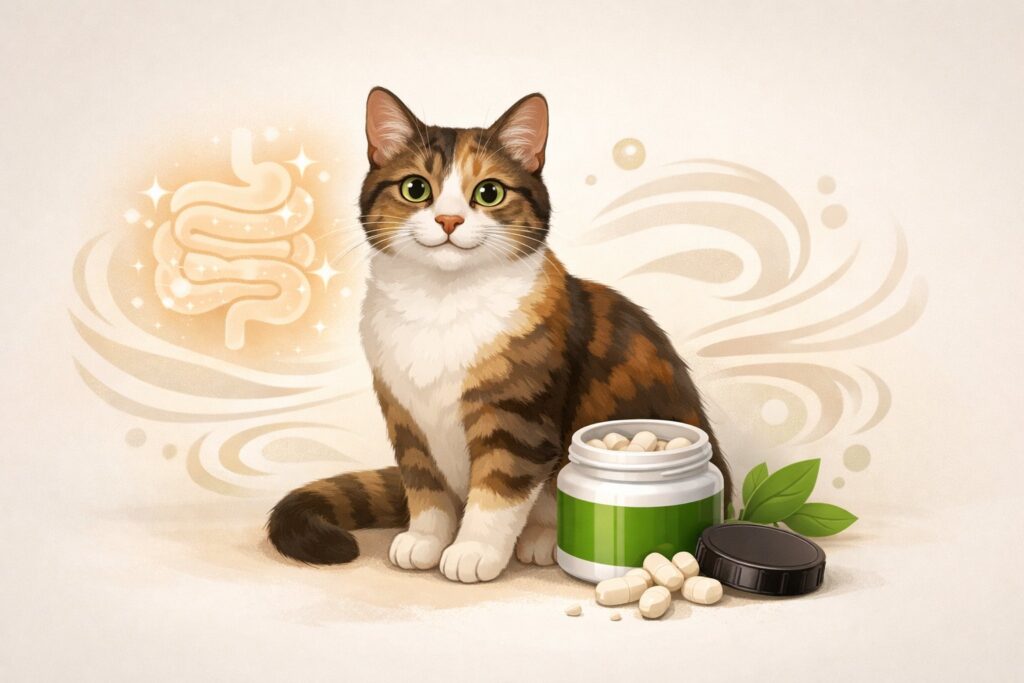
If your cat has diarrhea, you’re probably worried and searching for safe ways to help. Probiotics can reduce diarrhea episodes in cats by restoring healthy gut bacteria, and some cats show improvement within just two days of starting treatment.
Research shows that cats given the probiotic SF68 had fewer diarrhea episodes compared to those that didn’t receive probiotics.
Diarrhea in cats can happen for so many reasons—stress, sudden food changes, infections, or just an imbalance in gut bacteria. While antibiotics are common treatments, they sometimes make things worse by disrupting the natural balance of microorganisms in your cat’s digestive system.
That’s where probiotics come in as a gentler alternative. You’re about to learn which probiotic strains work best for cats with diarrhea, how to pick quality products, and what you might see once you start giving them to your furry friend.
We’ll also touch on some wider health benefits probiotics offer beyond just fixing tummy troubles.
Key Takeaways
- Probiotics help cats with diarrhea by boosting good gut bacteria and reducing harmful bacteria that cause digestive upset.
- The best probiotics for cats include strains like SF68, Bacillus subtilis, and Lactobacillus acidophilus that are proven to improve fecal quality.
- Beyond treating diarrhea, probiotics support your cat’s immune system, digestive health, and overall wellness when used regularly.
Why Probiotics Are a Game-Changer for Cats with Diarrhea
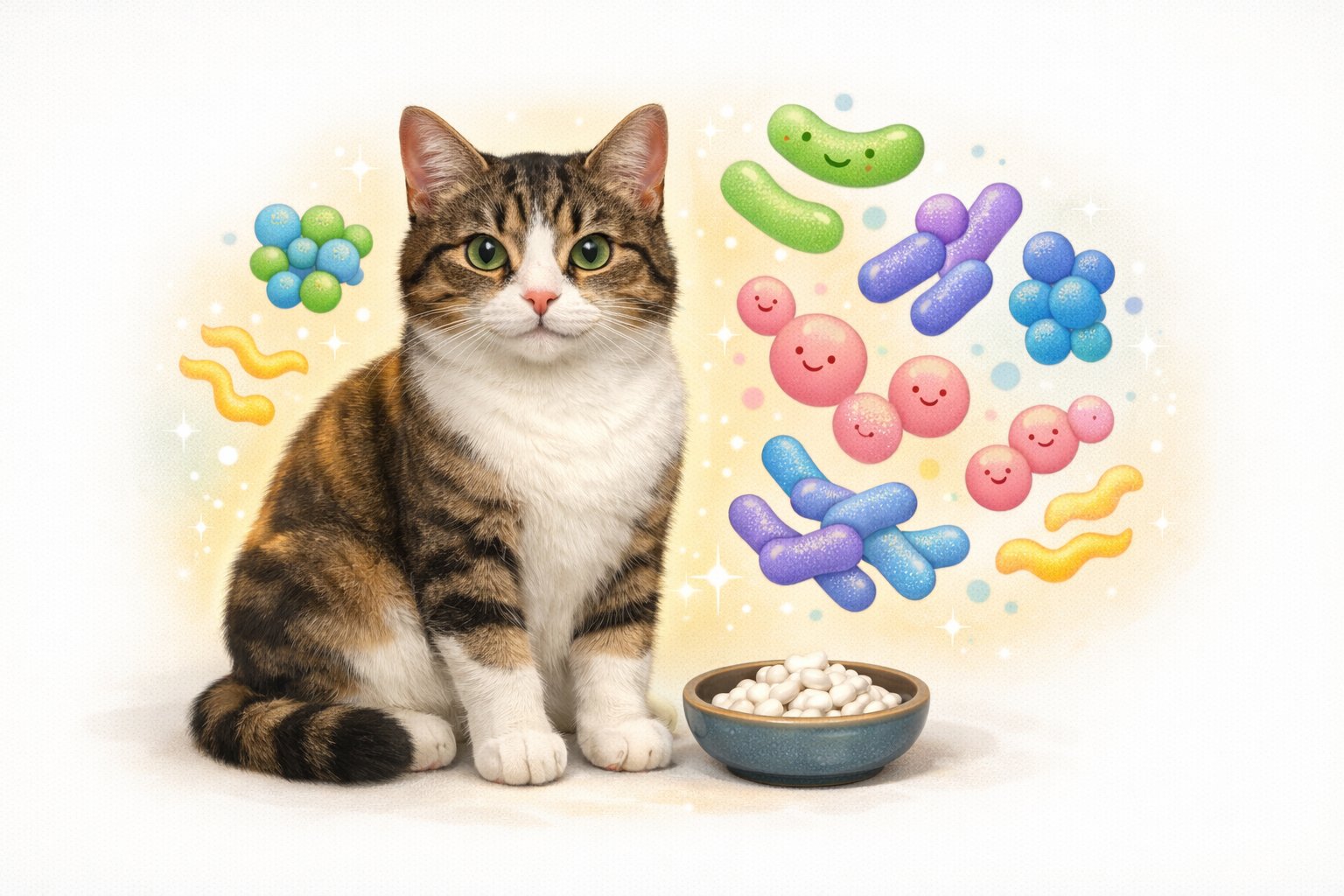
Probiotics for cats with diarrhea work by replenishing good bacteria that help your cat’s digestive system get back on track. When your cat’s gut balance gets disrupted—maybe from stress, diet changes, or illness—probiotics step in to restore order and firm up those loose stools.
How Probiotics Restore Gut Balance in Diarrhea
Your cat’s gut is home to trillions of bacteria, both good and bad. When diarrhea strikes, this delicate balance gets thrown off.
Good bacteria get outnumbered by harmful microbes, leading to inflammation and digestive chaos. That’s where cat probiotics for diarrhea come in.
They flood your cat’s intestines with beneficial strains like Lactobacillus and Bifidobacterium that crowd out the troublemakers. Think of it like reinforcements showing up when you need them most.
These helpful bacteria attach to your cat’s intestinal walls and create a protective barrier. They produce substances that lower gut pH, making life tough for the bad bacteria while keeping things comfortable for the good guys.
Probiotics also help your cat absorb nutrients better. When diarrhea damages the intestinal lining, your cat can’t properly pull vitamins and minerals from food.
The beneficial bacteria in probiotics support healing of that gut lining, which means better nutrient absorption and a quicker recovery.
Here’s what happens when you give probiotics for cats:
- Good bacteria colonize the gut within 24-48 hours
- Intestinal inflammation starts decreasing
- Stool consistency begins to improve
- Your cat’s immune response gets regulated
Key Causes of Diarrhea in Cats
Understanding why your cat has diarrhea helps you see why probiotics work so well. Let’s be real—cats are sensitive creatures with equally sensitive stomachs.
Diet changes are one of the biggest culprits. If you switch your cat’s food too quickly, their gut bacteria can’t keep up.
The result? Loose, messy stools that leave you reaching for the paper towels. Stress can also throw your cat’s digestive system into chaos.
Moving to a new home, adding a new pet, or even rearranging furniture can trigger stress-related diarrhea in cats. Your cat’s gut and brain are connected, so emotional upset often becomes digestive upset.
Common triggers include:
- Infections: Bacterial, viral, or parasitic invaders disrupt normal gut function
- Antibiotics: They kill bad bacteria but wipe out good ones too
- Food sensitivities: Your cat might react poorly to certain proteins or ingredients
- Inflammatory bowel disease: Chronic inflammation keeps the gut in constant turmoil
Ever get that panicked feeling when you see your cat making multiple litter box trips? That’s your cue to figure out what’s behind the digestive distress.
Probiotics for cat diarrhea address many of these root causes by restoring what’s been lost or disrupted.
Benefits of Using Probiotics During Digestive Upsets
The benefits of probiotics for cats go way beyond just firming up stool. When your cat’s dealing with diarrhea, these little microbes become digestive superheroes.
Faster recovery time is the big win. Cats given probiotics usually bounce back from diarrhea 1-2 days quicker than those without them.
That means less cleanup for you and less discomfort for your furry friend. Probiotics strengthen your cat’s immune system where it matters most.
About 70% of immune cells live in the gut, so supporting that area helps your cat fight off whatever caused the diarrhea in the first place.
Here’s what you’ll notice when using probiotics for cats with diarrhea:
| Benefit | Timeline | What You’ll See |
|---|---|---|
| Reduced stool frequency | 1-2 days | Fewer litter box visits |
| Firmer consistency | 2-3 days | Stools start taking shape |
| Better appetite | 3-5 days | Your cat shows interest in food again |
| Increased energy | 5-7 days | More playfulness and normal behavior |
Less gas and bloating make your cat more comfortable. If your cat’s been experiencing digestive discomfort, probiotics help reduce fermentation in the gut that causes those issues.
The beauty of cat probiotics for diarrhea is that they work with your cat’s body, not against it. They’re not masking symptoms—they’re actually fixing the underlying problem by restoring gut balance.
Choosing the Best Probiotics for Cats with Diarrhea
Picking the right probiotic for your cat’s upset stomach means looking beyond fancy labels and marketing promises. The best probiotics for cats with diarrhea contain specific bacterial strains proven to work and deliver enough live organisms to make a difference.
Brands that prioritize safety and quality testing matter more than the packaging. Not all probiotics work the same way for cats with diarrhea.
You need specific bacterial strains that research shows actually help feline digestive issues.
Key strains to look for:
- Enterococcus faecium – Studies show cats given this probiotic experienced fewer diarrhea episodes within 2 days
- Bacillus subtilis – Reduces diarrhea rates and improves nutrient digestion
- Lactobacillus acidophilus – Increases beneficial gut bacteria while reducing harmful E. coli
- Bifidobacterium animalis – Supports overall digestive health
The CFU count (colony-forming units) tells you how many live bacteria you’re getting. Most effective cat probiotics contain between 1 billion to 10 billion CFU per serving.
Higher isn’t always better, but you need enough active organisms to colonize your cat’s gut. Watch for these helpful additions:
- Prebiotics like inulin or FOS – These feed the good bacteria and help them thrive
- Postbiotics – Beneficial compounds produced by probiotics that support gut health
- Digestive enzymes – Help break down food while probiotics restore balance
Skip probiotics loaded with fillers, artificial colors, or unnecessary additives. Your cat’s sensitive stomach doesn’t need extra ingredients right now.
Importance of NASC Seal and Safety Standards
You’re trusting this supplement to help your sick cat, so quality matters big time.
The NASC seal (National Animal Supplement Council) on a product means the manufacturer follows strict quality control standards.
Companies with this certification get regular facility audits, test their products for purity, and verify what’s on the label actually matches what’s in the bottle.
Why this matters for your cat:
Quality-tested probiotics ensure you’re getting live, active bacteria at the promised CFU count. Unregulated supplements might contain dead bacteria, wrong strains, or contaminants that could make your cat’s diarrhea worse.
Look for products made in facilities that follow Good Manufacturing Practices (GMP). These companies test for harmful bacteria like Salmonella and verify their probiotic strains through DNA analysis.
Check the expiration date too. Probiotics are living organisms, and they die over time, especially if stored incorrectly.
Buy from retailers who store supplements properly and choose products with dates far in the future.
Top-Rated Brands and Products for Relief
Several cat probiotic supplements have a strong track record for helping with diarrhea.
Purina Pro Plan FortiFlora is probably the probiotic vets recommend most often for cats. Each packet has Enterococcus faecium at 100 million CFU, plus a mix of vitamins and antioxidants.
It comes as a powder you just sprinkle on your cat’s food. Even picky eaters usually accept it without a fuss.
Nutramax Proviable gives you options: capsules or a tasty paste. Proviable uses multiple strains, including Bifidobacterium and Enterococcus, and delivers billions of CFU to help restore gut balance fast.
SalutePet Probiotics for Cats has a multi-strain formula designed for feline digestive issues. They also include prebiotics to support the good bacteria once they reach your cat’s gut.
Think about your cat’s eating habits when choosing. Some do better with powder mixed into wet food, while others handle capsules opened and sprinkled over meals.
The best probiotic is the one your cat will actually eat, day after day, until things settle down.
Practical Tips: Giving Probiotics to Your Cat (and What to Expect)
Starting probiotics for cats with diarrhea doesn’t have to be complicated. The trick is picking the form your cat will accept, starting slow, and knowing what to watch for during the first few days.
How to Safely Start Probiotics for Diarrhea Episodes
When your cat has diarrhea, introduce probiotics slowly to avoid stressing their digestive system further.
Begin with half the recommended dose for 2-3 days. This lets your cat’s gut get used to the new bacteria without extra upset.
Research shows that cats with chronic diarrhea benefit from specific probiotic strains, but going too fast can make things worse.
Keep probiotics in the fridge if the label says so. Heat destroys the live bacteria, so storage matters.
Always give probiotics with food if you can. Food helps protect the bacteria as they pass through your cat’s stomach. If your cat’s on antibiotics, separate the probiotic dose by at least 2-3 hours.
Watch for these positive signs:
- Firmer stools within 3-5 days
- More energy and appetite
- Less frequent bathroom trips
Probiotic Forms: Powders, Chews, Liquids, and Food-Added
You actually have several options for giving your cat probiotics. The form you choose can make a surprising difference.
Probiotic powder is the most flexible. Sprinkle it over wet food, mix it into a little tuna juice, or blend it with baby food. Most cats don’t even notice it’s there. Look for best probiotics for cats that come in an unflavored powder.
Chews are great if your cat will eat anything, but let’s be real—many cats are fussier than toddlers. If your cat snubs the chew, crush it and use it like powder.
Liquids allow for precise dosing, but some cats hate syringes. If your cat puts up a fight, try mixing the liquid into wet food instead.
Probiotic-enriched foods are the easiest if your cat already eats that brand. The drawback? You can’t fine-tune the dose as much during a diarrhea flare-up.
Dosage, Duration, and Troubleshooting Side Effects
Getting the dose right can be the difference between relief and disappointment.
Most cat probiotics have 1-5 billion CFUs (colony-forming units) per serving. For active diarrhea, give the probiotic once or twice daily.
Studies on probiotic treatment effectiveness suggest continuing for at least 2-4 weeks to let your cat’s gut fully recover.
Your cat’s weight matters. A 15-pound cat needs more than an 8-pound kitten. Check the label for specific dosing instructions.
If things aren’t better in 5-7 days, it’s time to call your vet. Probiotics help, but they’re not magic, and sometimes your cat needs more than just a supplement.
Rare side effects include:
- Mild gas or bloating (usually passes in 2-3 days)
- Temporary increase in bowel movements
- Slight change in stool appearance
These are usually signs the probiotics are doing their job. But if you see vomiting, severe lethargy, or bloody diarrhea, stop the probiotic and get your vet on the phone.
Beyond Diarrhea: Wider Health Benefits of Cat Probiotics
Probiotics for cats offer more than just relief from an upset stomach. These helpful bacteria support your cat’s immune function and help with recovery from chronic digestive issues.
They also work alongside newer options like postbiotics to boost your cat’s whole-body wellness.
Immune System Boost & Overall Wellbeing
Your cat’s gut holds about 70% of their immune system. A healthy microbiome means your cat can fight off infections and bounce back faster.
Studies show that probiotics modulate immune function by regulating cytokines and antimicrobial peptides. These proteins help your cat’s body know when to ramp up defenses or calm down inflammation.
Strains like Lactobacillus and Bifidobacterium are especially good at boosting immune response in both healthy cats and those recovering from illness.
Here’s what the benefits of probiotics for cats look like in real life:
- Reduced inflammation throughout the body
- Better stress response during changes like boarding or moving
- Stronger defense against respiratory and urinary infections
- Improved coat quality and energy levels
Honestly, cat probiotics are like a behind-the-scenes wellness crew, keeping things running smoothly even when you don’t notice.
Support for Chronic Digestive Conditions and Recovery
If your cat struggles with ongoing gut issues like inflammatory bowel disease (IBD) or chronic enteropathy, probiotics can make a big difference.
Cats with IBD often have lower levels of good bacteria and less diversity, which can trigger flare-ups. Regular probiotics help by crowding out bad bacteria and strengthening the gut lining.
Benefits for chronic conditions include:
- Fewer flare-ups
- Less need for medications
- Better nutrient absorption during recovery
- Stronger gut lining
Multi-strain synbiotics (probiotics plus prebiotics) look promising for managing chronic diarrhea if you stick with them. Some cats need ongoing support, not just a quick fix.
Cutting-Edge Trends: Postbiotics and Synbiotics
The latest in cat gut health moves beyond live bacteria. Postbiotics and synbiotics offer new ways to help, without worrying about refrigeration or whether the bacteria survive the trip.
Postbiotics are the good stuff probiotic bacteria make, like short-chain fatty acids and antimicrobial peptides. Your cat gets the immune and anti-inflammatory perks without needing live cultures. They’re shelf-stable and handy for cats who don’t do well with regular probiotics.
Synbiotics mix probiotics with prebiotics (the fiber that feeds good bacteria). This combo gives those helpful bacteria exactly what they need to thrive in your cat’s gut.
| Option | Best For | Key Advantage |
|---|---|---|
| Probiotics | Active gut rebalancing | Live bacteria colonize the gut |
| Postbiotics | Sensitive cats, long-term maintenance | No live cultures needed |
| Synbiotics | Maximum effectiveness | Probiotics + their food source |
With these new options, you’ve got more ways than ever to support your cat’s digestive and immune health in a way that fits their needs.
Frequently Asked Questions
Probiotics for cats with diarrhea bring up lots of practical questions about safety, timing, and real results. Cat owners want to know what actually works, how fast they can expect changes, and whether daily use is safe for their feline friends.
Noticed your feline friend’s tummy is out of sorts? What natural remedies can you whip up for cat diarrhea relief?
You can start with some basic dietary tweaks before looking at supplements. Plain, cooked chicken or turkey (no seasoning) with white rice or plain pumpkin puree might help firm up your cat’s stool.
Keep your cat hydrated with fresh water or a splash of low-sodium chicken broth. Diarrhea can dehydrate cats quickly, so it’s worth keeping a close eye on their water intake.
If your vet gives the green light, fasting for 12-24 hours gives your cat’s digestive system a much-needed break. When you start food again, go slow and stick to bland, gentle options.
If diet changes don’t do the trick, probiotics are a natural next step. They help restore good bacteria in your cat’s gut without needing harsh meds.
Ever wondered if those tiny microorganisms could work wonders for your kitty’s gut health? How effective are probiotics for cats with IBD, really?
Probiotics show promise for cats with inflammatory bowel disease, but every cat responds a little differently. Research on probiotics for cats with IBD suggests they can help manage symptoms alongside other treatments.
The specific probiotic strains you pick matter a lot. Multi-strain formulas seem to help more than single-strain ones for stubborn digestive issues.
Probiotics aren’t a cure-all for IBD. They work best as part of a bigger plan that includes diet and veterinary care.
Does your cat give you that pitiful glance when their stomach’s rumbling? So, how quick can you expect probiotics to soothe your cat’s diarrhea?
Most cats start to improve within 3-7 days of starting probiotics, though some bounce back faster. In a study of cats with chronic diarrhea, owners saw firmer stools after 21 days of daily use.
Acute diarrhea usually clears up faster than the chronic kind. If your cat’s had loose stools for weeks, you’ll need a bit more patience.
Watch for small wins like firmer stools or fewer litter box trips. These little changes mean the probiotics are starting to kick in, even if things aren’t perfect yet.
You know that look of dread when it’s another trip to the litter box? What are the must-know side effects of probiotics for our feline pals?
Most cats handle probiotics just fine with hardly any side effects. The most common thing you’ll notice is a bit of extra gas or mild bloating when you first start giving them.
Some picky eaters might turn their nose up at food with probiotics mixed in. This happened to one cat in a study on synbiotics, where the owner had to stop because their cat wouldn’t eat it.
Rarely, you might see more diarrhea or even vomiting in the first few days. If that happens, stop the probiotic and check in with your vet before trying again.
Let’s be real, is your whiskered friend getting more than their fair share of probiotics? Can giving your cat probiotics daily cause more issues than it solves?
Daily probiotics are generally safe for cats as long as you stick to the recommended dose. Long-term studies haven’t found problems from regular daily use in healthy cats.
The dose matters. Give your cat the right amount for their size—too much can upset their stomach, though it’s usually less risky than not giving enough during active diarrhea.
Quality trumps quantity every time. A solid probiotic with billions of CFUs at a normal dose beats a cheap one at higher amounts.
Considering your cat’s delicate digestion, what are the insider vet opinions on probiotics as a go-to solution for feline diarrhea?
Vets often recommend probiotics as an early step for mild to moderate cat diarrhea. They see them as low-risk, especially compared to heavier medications.
Some folks find probiotics surprisingly helpful, while others notice barely any change. Research shows mixed results, so it really depends on the cat.
Most veterinarians suggest giving probiotics a shot for about 2-3 weeks. If your cat doesn’t get better, it might be time for more tests to rule out things like parasites or inflammatory bowel disease.