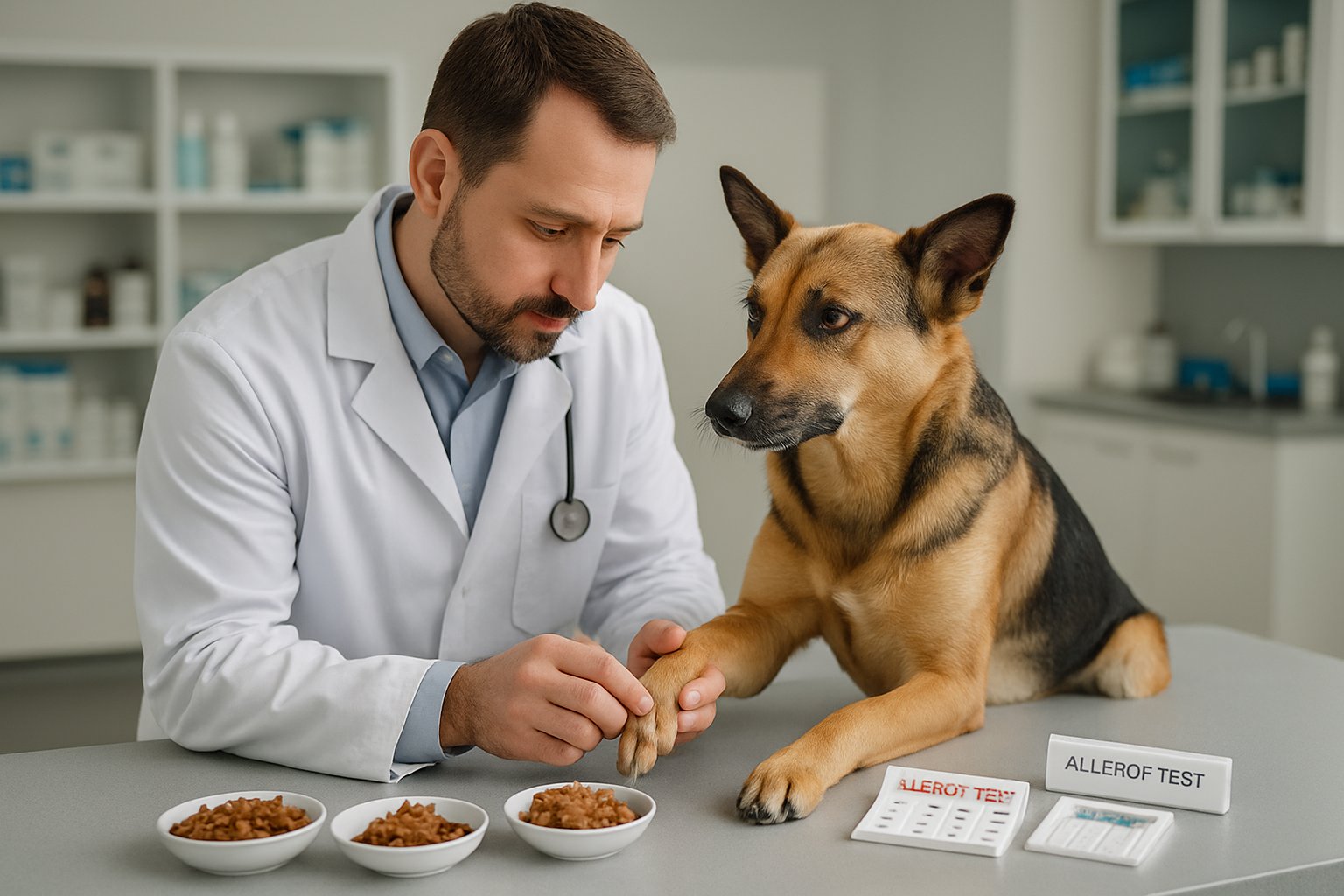

When your dog won’t stop scratching, licks their paws all day, or suddenly has weird skin issues, food allergies might be the hidden culprit behind these uncomfortable symptoms like itchy skin, ear infections, and digestive upset. I’ve seen so many pet parents chase surface-level symptoms for months, not realizing the real problem might be what’s in the food bowl.
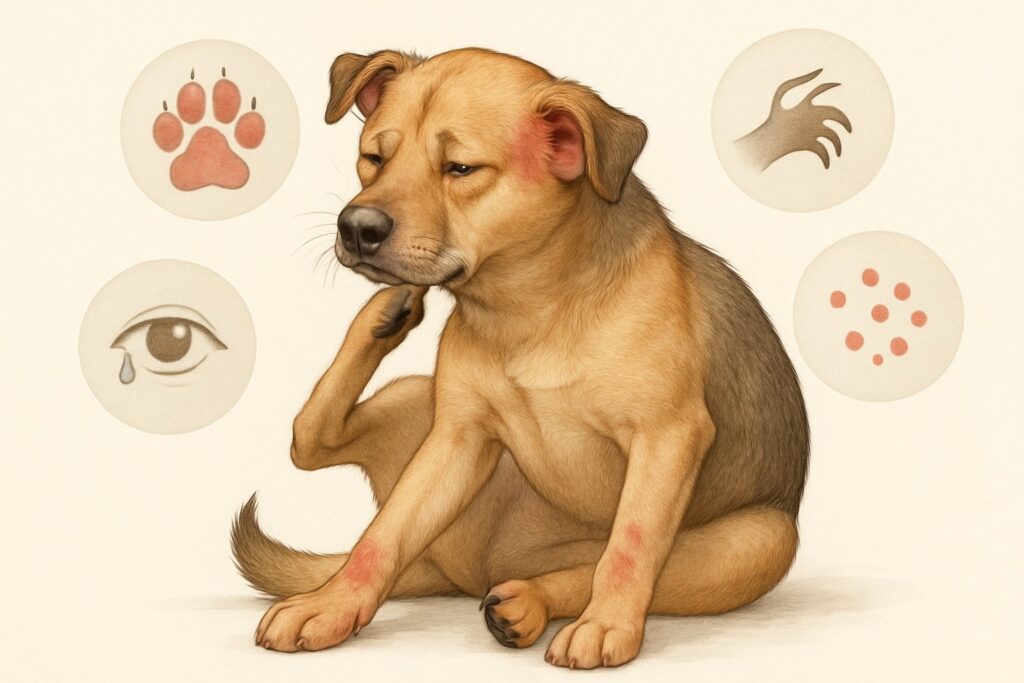
Food allergies in dogs can kick off a frustrating cycle. Skin and ear infections are common complications, which makes it tough to figure out what’s really going on.
Your dog might seem totally fine one day, then be miserable the next. It’s enough to make you wonder what changed overnight.
Here’s what I’ll get into: how to spot the signs that suggest food allergies (and not something else), what vets actually do to diagnose these issues, and steps you can take to help your dog feel better. There’s a reason why elimination trials and provocation tests are still the go-to for real answers.
Food Allergies in Dogs Symptoms: Key Takeaways
- Food allergies in dogs usually cause itchy skin, ear infections, and digestive problems that stick around all year
- Elimination diets for 6-8 weeks are the best way to diagnose food allergies in dogs
- Managing food allergies means figuring out the triggers and switching to hypoallergenic or limited-ingredient diets
What Are Food Allergies in Dogs?
Food allergies in dogs happen when their immune system decides certain proteins in their diet are dangerous. This isn’t like a simple upset stomach—these allergies sneak up over time and are different from food intolerances, both in how they work and how they look.
How Food Allergies Develop Over Time
This might surprise you: your dog doesn’t just wake up one day with a food allergy. Most dogs eat the same protein for a year or two before symptoms show up.
I’ve watched this play out so many times. Your pup is fine with chicken kibble for ages, then suddenly can’t stop scratching. What gives?
The sensitization process goes something like this:
- Initial exposure – Your dog’s immune system meets a protein (maybe beef or chicken)
- Recognition phase – The immune system starts to “remember” that protein
- Sensitization period – Over months or years, the immune system gets more reactive
- Symptom onset – Eventually, the immune system overreacts and symptoms start
The age when symptoms start can be anywhere from 3 months to 10 years. No wonder food allergies catch people off guard.
Breed matters too. Research points out that Labradors and German Shepherds get food allergies more often than other breeds.
Food Allergies vs. Food Intolerance
This one trips up a lot of dog parents. Food allergies and food intolerances aren’t the same, even if they look similar at first glance.
Food allergies involve your dog’s immune system overreacting. It’s like their body thinks chicken protein is an enemy.
Food intolerances are all about digestion. Your dog’s gut just can’t handle certain ingredients—like a dog that can’t deal with dairy.
Here’s the kicker: food intolerances can show up the very first time your dog eats the offending food. Allergies need repeated exposure over a while.
Symptom patterns look different:
| Food Allergies | Food Intolerances |
|---|---|
| Skin itching and scratching | Mostly digestive upset |
| Ear infections | Diarrhea or loose stools |
| Hot spots | Gas and bloating |
| Year-round symptoms | Symptoms appear quickly after eating |
Most dogs with food allergies have constant itching that doesn’t match up with when they eat. That makes it extra tough to diagnose.
Common Allergens in Dog Food
You might guess that weird or fancy ingredients cause most food allergies. Actually, it’s usually the everyday proteins your dog eats all the time.
Top troublemakers include:
- Chicken – The most common allergen (even though it’s in nearly every dog food)
- Beef – Another frequent problem
- Dairy products – Especially for lactose-intolerant pups
- Wheat and grains – Less common than people think, but still a factor
- Eggs – Some dogs react to these, too
- Soy – Often hidden in processed foods
Here’s what stood out to me in the research: even basic food ingredients can trigger allergies. “Hypoallergenic” doesn’t always mean forever safe.
The single-ingredient thing is real. Studies show that 13 out of 25 dogs with food allergies reacted to just one ingredient in their usual diet.
Something else: the timing between eating the trigger and symptoms starting can change depending on the allergen. Dogs with cereal allergies react at different speeds than those with dairy issues.
Don’t assume expensive or exotic proteins are safer. Your dog’s more likely to react to whatever they eat most often.
Recognizing Symptoms of Food Allergies in Dogs
Food allergies in dogs can show up as itchy skin, stomach problems, and stubborn ear infections. These symptoms often creep in slowly, making them hard to catch at first.
Itchy Skin and Chronic Scratching
Dog food allergy symptoms usually start with nonstop scratching that seems to come out of nowhere. Some dogs scratch so much they end up with raw patches.
I’ve noticed that food allergies in dogs symptoms often include:
- Red, inflamed skin on the face, ears, and paws
- Constant licking of feet or legs
- Scratching that gets worse at night
This itching doesn’t follow the seasons like pollen allergies. It sticks around all year, with the same intensity.
Dog allergies from food can cause a cycle: scratching leads to skin damage, which gets itchy and infected, making everything worse.
Unlike flea bites or seasonal allergies, food allergy itching tends to stick to certain body parts. The face, ears, armpits, groin, and feet get hit hardest.
Research shows that most dogs with food allergies itch constantly, no matter when they eat.
Digestive Upsets: Vomiting and Diarrhea
Symptoms of food allergies in dogs can also show up as stomach issues that happen regularly after meals. Sometimes these digestive problems are subtle at first.
Common digestive signs look like:
- Loose stools a couple times a week
- Vomiting within a few hours of eating
- Too much gas or bloating
- Changes in appetite or refusing food
Studies show that food allergies can trigger both skin and stomach issues in dogs.
Timing matters. Vomiting from a food allergy usually happens 4-6 hours after eating the trigger. Diarrhea might show up 6-12 hours later.
These stomach symptoms can come and go depending on what your dog eats. You might see good days and bad days with no obvious reason.
If you notice blood or mucus in your dog’s stool, it could mean the allergy has caused gut inflammation. That’s a sign to call your vet right away.
Ear Infections and Hair Loss
Chronic ear infections are sneaky dog food allergy symptoms that many people miss. Dogs shake their heads a lot or scratch at their ears until they bleed.
Food allergy ear problems might look like:
- Dark, waxy discharge with a strong odor
- Red, swollen ear canals
- Head shaking that just won’t stop
- Hair loss around the ears from scratching
These ear infections keep coming back, even after antibiotics. That repeat pattern often points to food allergies as the real problem.
Hair loss usually shows up in patches where your dog scratches or licks nonstop. Spots around the ears, eyes, and paws go bald first.
Some dogs get hot spots—sudden, round patches of irritated, hairless skin. These can spread fast if you don’t treat them.
Research suggests that breeds like Labradors and German Shepherds get these symptoms more often.
Hair can grow back once you remove the trigger food, but it usually takes 6-8 weeks to see a difference.
Diagnosing and Identifying Dog Food Allergies
Getting to the root of your dog’s food allergies takes a methodical approach. In my experience, you’ll want three main steps: a thorough vet exam, a good old elimination diet trial, and then careful food challenges to actually figure out what’s causing trouble.
Veterinary Exams and History
I always tell pet owners: start by ruling out everything else. Your vet needs to check for things like flea issues, environmental triggers, or skin infections before blaming food.
Bring a detailed food diary to your appointment. Seriously, jot down every treat, table scrap, or bit of food your dog’s grabbed in the last few months—even that cookie they nabbed off the floor.
Your vet will probably ask when the symptoms started and whether they’re seasonal. Food allergies usually cause year-round itching, not just flare-ups when pollen’s high.
Here’s what most vets check for:
- Skin scraping tests to rule out mites or parasites
- Bacterial culture if there’s a secondary infection
- Complete medical history with all foods and treats
- Physical exam of irritated skin
Blood tests and skin prick tests? Honestly, they’re not reliable for diagnosing food allergies in dogs. I’ve seen way too many false positives send people on wild goose chases.
Elimination Diet Trials
This is where things get interesting. An elimination diet is the gold standard for tracking down food allergies—I can’t stress that enough.
The idea’s simple, but it takes patience. Feed your dog a diet with proteins and carbs they’ve never had before, and stick with it for 8-12 weeks.
The only accurate diagnosis of canine food allergy comes from this process, along with symptom improvement.
Common elimination diet proteins:
- Venison
- Duck
- Fish (salmon, whitefish)
- Rabbit
- Kangaroo
Safe carbohydrate sources:
- Sweet potato
- Peas
- Tapioca
During the trial, no treats, table scraps, or flavored meds—not even once. I’ve seen months of work undone by a well-meaning family member slipping a chicken treat.
Most dogs get better in 4-6 weeks if food’s the culprit. Some take up to 13 weeks to show real results, so hang in there.
The Role of Food Challenges
Once your dog’s symptoms improve on the elimination diet, it’s time for the final step: food challenges. This part confirms which ingredient is actually causing the issue.
I know, it’s nerve-wracking—you’re basically reintroducing the thing that made your dog sick. But it’s the only way to know for sure and plan their diet long-term.
Here’s how food challenges usually go:
Week 1: Add back one old protein (like chicken).
Week 2: Watch for reactions—itching, digestive upset, ear infections.
Week 3: If there’s no reaction, try the next ingredient.
If symptoms come back in 1-14 days, you’ve found the problem. Pull that ingredient, let things settle, then move on to the next test if needed.
Typical reaction timeline:
- Skin symptoms: 1-7 days
- Digestive issues: 24-48 hours
- Ear infections: 3-10 days
Some dogs react to more than one protein, so patience is everything. Test only one ingredient at a time, even if it feels slow.
Keep notes as you go. Snap photos of any skin flare-ups and jot down exactly when symptoms appear after each new food.
Managing Food Allergies: Diets and Next Steps
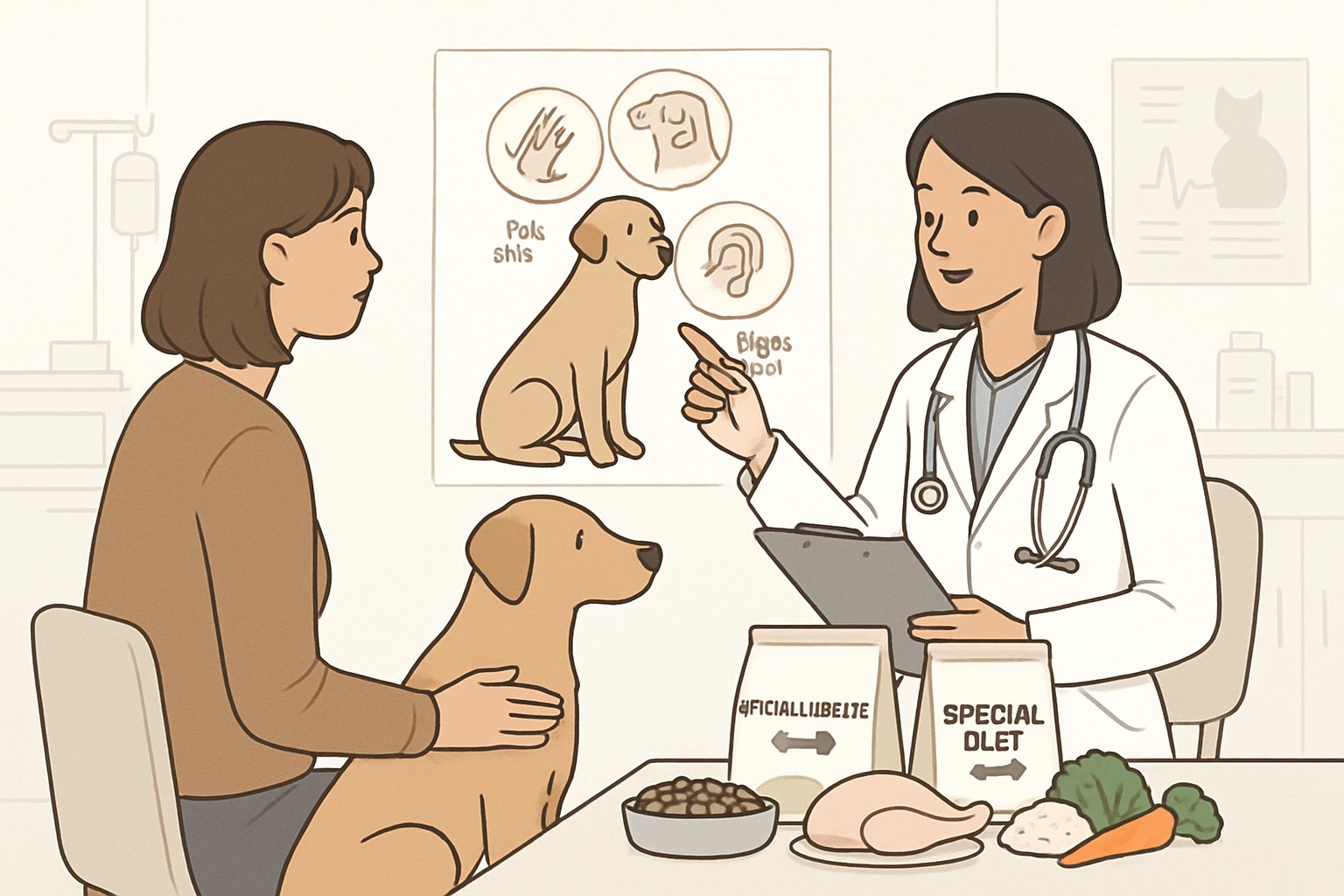
Once you know for sure your dog’s got a food allergy, the real work starts. You’ll need to find the right diet and create a plan that actually works in daily life. Usually, it’s a choice between novel protein diets or hydrolyzed options, and then building habits that keep your pup happy and itch-free.
Novel Protein Diets as Solutions
Let’s talk about novel protein diets—they’re usually my go-to for confirmed food allergies. A novel protein diet uses meat sources your dog’s never had, so their immune system doesn’t recognize it as a threat.
Think venison, duck, rabbit, or even kangaroo. These aren’t your everyday chicken or beef, which are the usual suspects for allergies.
It works because your dog’s immune system can’t react to something brand new. It’s like meeting a stranger—no grudges, no drama.
Elimination diets with novel proteins mean feeding only the new protein and carb for 8-12 weeks. No exceptions—no treats, no table scraps, not even a “just this once.”
Popular combos:
- Venison and sweet potato
- Duck and pea
- Rabbit and potato
- Fish and rice (if fish is new for your pup)
I’ve seen some amazing turnarounds—itchy, miserable pups turning into happy, relaxed dogs. But you have to be patient; it takes a few weeks to see real change.
Hydrolyzed Protein Diet Options
Hydrolyzed protein diets are where science gets pretty clever. These foods break proteins down into tiny bits so your dog’s immune system can’t even recognize them as allergens.
Picture your dog’s immune system as a bouncer. Hydrolyzed proteins are so tiny, they just slip past without setting off alarms.
Commercial hydrolyzed diets are lab-tested and balanced for long-term feeding. Hill’s z/d and Royal Canin Hydrolyzed Protein are some of the big names you’ll hear from vets.
Why people pick hydrolyzed diets:
- Immediate safety – proteins are already broken down
- Complete nutrition – safe for long-term meals
- Consistent results – no mystery ingredients
The downside? They’re expensive, and some dogs don’t love the taste. But if your dog’s got multiple allergies, these diets can be a lifesaver.
I always say—work with your vet here. They’ll help you choose between hydrolyzed chicken, soy, or other options based on your dog’s needs.
Daily Life and Allergy Prevention
Managing food allergy in dogs day-to-day means you’ve got to be part detective, part treat police. Every snack, every reward, every dropped crumb counts.
Set up a safe zone at home. Keep approved treats separate, and make sure everyone in the house actually follows the rules—no sneaky handouts.
Daily must-dos:
- Read every ingredient label (seriously, twice)
- Carry safe treats everywhere
- Let family and friends know the restrictions
- Keep your vet’s number handy, just in case
Keeping a food diary for the first few months helps a lot. Write down any changes in skin, digestion, or behavior. It’s the best way to spot patterns before things get out of hand.
Long-term management means strict allergen avoidance—but you’ll get the hang of it. Shopping gets easier, and you’ll find brands that work for your dog.
Pro tip: Always introduce new foods slowly. Even “safe” foods can cause upset if you rush, and it gives you time to spot any weird reactions.
Don’t aim for perfection. Just build a routine that keeps your dog comfy and lets them enjoy life—including training treats and special meals now and then.
Frequently Asked Questions
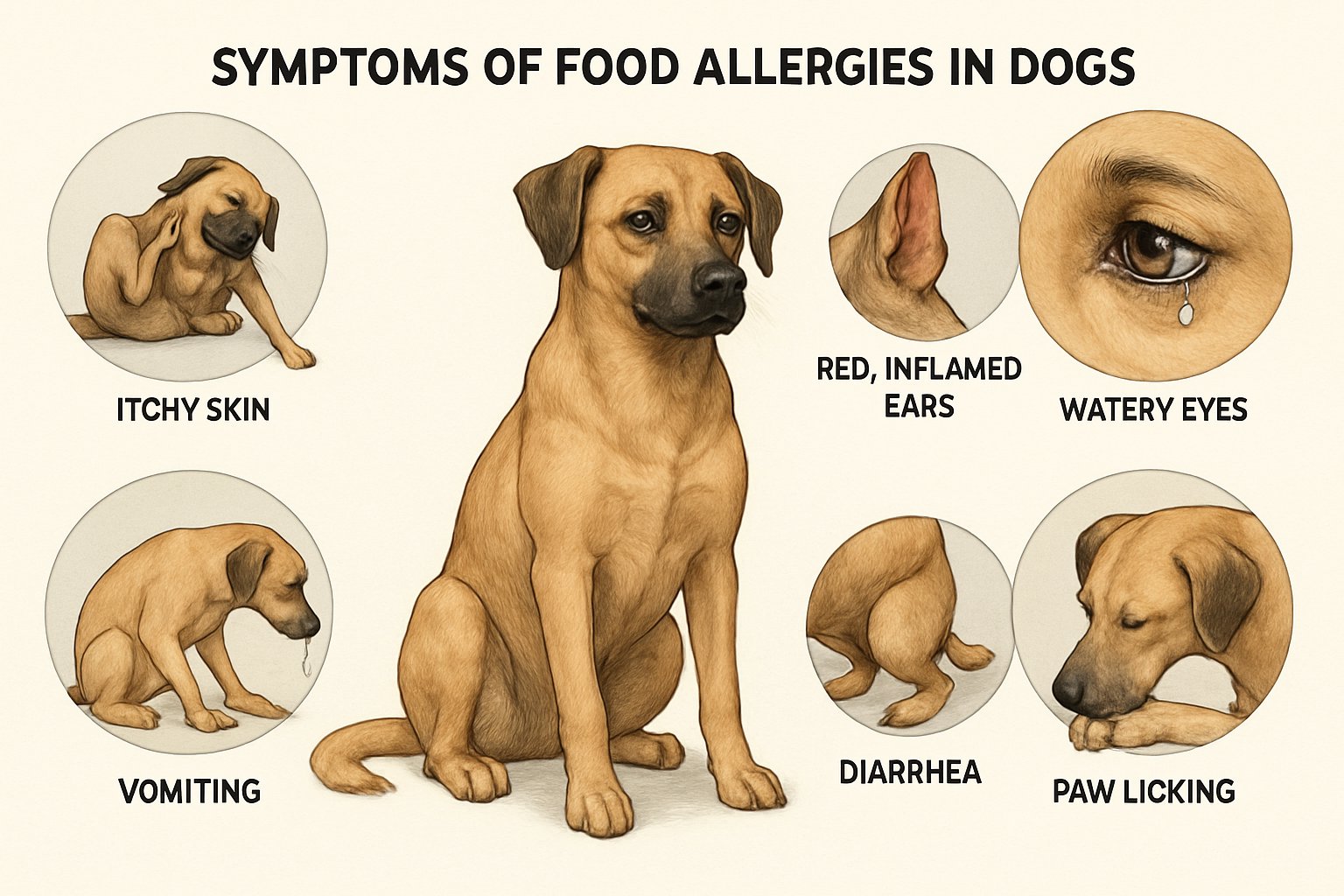
Dog food allergies can show up as anything from nonstop scratching to a seriously upset stomach. Knowing what to look for helps you catch reactions early. Here’s what I usually tell people about the most common signs and what they mean for your pup.
What signs should you look for if you suspect your pup’s kibble is making them sick?
Watch for the big three: skin trouble, tummy issues, and ear infections that just keep coming back.
Skin symptoms are usually the easiest to spot. Your dog might get red, inflamed patches, hot spots, or even hives. You’ll probably see them licking their paws nonstop or rubbing their face on the couch.
Digestive signs include loose poop, vomiting, or gas that’s way worse than usual. Some dogs just lose interest in food or look uncomfortable after meals.
Chronic ear infections are a sneaky clue. If you’re always treating ear problems that won’t quit, food allergies could be the hidden reason.
You know that relentless scratching Fido’s been doing? Could it be a telltale sign of a food allergy?
Absolutely—and honestly, it’s usually the first thing I hear from worried dog parents.
Food allergy symptoms in dogs often show up as intense itching that just doesn’t improve with flea meds or seasonal allergy treatments.
The scratching tends to hit certain spots: paws, ears, face, armpits, and groin. Unlike environmental allergies that come and go, food allergy itching sticks around all year.
What makes it different? The scratching is usually more intense and just doesn’t let up. Some dogs scratch until they’ve got open wounds or hot spots. It’s tough to watch, but with the right steps, you can help them feel better.
Ever wondered how quickly a dog can react to a problem ingredient in their bowl?
Food allergies in dogs don’t work like the immediate reactions you might see with bee stings or peanuts in humans.
Most dogs need contact with the offending food allergen during 1–2 years before the first symptoms occur. This delayed timeline catches a lot of pet parents off guard.
Acute reactions can show up within hours or maybe a couple days after eating the trigger food. You might notice vomiting, diarrhea, or a sudden skin flare-up.
Chronic symptoms develop over weeks or even months of repeated exposure. These include persistent itching, ear infections, and digestive issues that just won’t let up.
Let’s get into it: what typical symptoms do dogs with protein sensitivities display?
Protein allergies are tricky because the symptoms often look just like other common dog health issues.
The most common food allergen sources for dogs are beef (34%), chicken (17%), milk, and other proteins they’ve eaten over and over.
Skin manifestations include chronic itching, red inflamed skin, and hair loss from all the scratching. Labrador and German shepherd dogs are more prone to food allergies.
Recurring hot spots can pop up too.
Digestive symptoms range from soft stools and diarrhea to vomiting and excessive flatulence.
Some dogs just stop eating as much or seem uncomfortable after meals.
What’s the lowdown on dogs getting upset stomachs from their treats — could it be more than just a bad batch?
If your dog keeps getting stomach upset from treats, it might not be a quality issue — it could be a food sensitivity brewing.
Pattern recognition is key here. Does your dog get sick from treats with the same protein as their regular food? That’s a red flag worth checking out.
I’ve seen dogs handle their regular kibble just fine but react to treats because the treats have concentrated versions of their trigger ingredients.
Watch for these signs: loose stools within 6-12 hours of treat time, excessive drooling, or your dog acting nauseous after their favorite snacks.
Think your pooch might have a food allergy? What’s the scoop on handling their tummy troubles and itchiness?
The gold standard for diagnosing food allergies in dogs is an elimination diet trial.
But honestly, you can start with a few comfort measures right away.
For immediate relief: you might give your dog’s system a 12-24 hour break from food (definitely check with your vet first).
After that, try a bland diet—think boiled chicken and rice. It’s simple, but it usually helps calm things down.
Document everything: jot down what your dog eats and any symptoms you notice.
That food diary? It’s gold when you talk to your vet.
Work with professionals: successful diagnosis and treatment requires working with dog owners and veterinarians together.
Don’t try to figure this out completely on your own. It’s just not worth the risk.
Long-term solutions usually mean figuring out trigger ingredients with controlled elimination diets.
Then you can switch to a limited ingredient or hydrolyzed protein food that avoids those triggers.